Glycolysis:
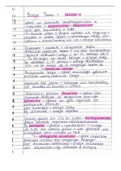
Glucose is phosphorylated by 2 ATP molecules to form hexose bisphosphate, which is split
into two molecules of triose phosphate. Dehydrogenase enzyme removes two hydrogen
atoms from each TP to produce one molecule of reduced NAD per TP. 2 ATP molecules are
also produced, so TP is oxidised to pyruvate. The pyruvate and 2 x reduced NAD are
actively transported into the matrix of the mitochondria for the link reaction.
Link Reaction:
Pyruvate is decarboxylated, and then oxidised to form acetate. A hydrogen atom is removed
from pyruvate and combines with NAD to form reduced NAD. Acetate combines with CoA to
form acetyl CoA.
Krebs Cycle:
Acetyl CoA combines with a 4C compound to form a 6C compound. CoA goes back to the
link reaction. The 6C compound is converted to a 5C compound due to decarboxylation and
dehydrogenation. The removed hydrogen combines with NAD to form reduced NAD. The 5C
compound is converted into a 4C compound due to decarboxylation and dehydrogenation,
producing 1 reduced FAD and 2 reduced NAD. ATP is produced by substrate-level
phosphorylation.
Oxidative Phosphorylation:
Reduced NAD and reduced FAD are oxidised into NAD and FAD. The hydrogen atoms
released split into protons and electrons. The electrons move down the ETC and lose energy
at each carrier. The energy lost through this movement is used to pump protons from the
matrix into the intermembrane space, creating an electrochemical gradient. The protons
move down the electrochemical gradient via ATP synthase, which stimulates chemiosmosis.
At the end of the ETC, the protons, electrons and oxygen combine to form water. Oxygen is
the final electron acceptor.
Glucose is phosphorylated by 2 ATP molecules to form hexose bisphosphate, which is split
into two molecules of triose phosphate. Dehydrogenase enzyme removes two hydrogen
atoms from each TP to produce one molecule of reduced NAD per TP. 2 ATP molecules are
also produced, so TP is oxidised to pyruvate. The pyruvate and 2 x reduced NAD are
actively transported into the matrix of the mitochondria for the link reaction.
Link Reaction:
Pyruvate is decarboxylated, and then oxidised to form acetate. A hydrogen atom is removed
from pyruvate and combines with NAD to form reduced NAD. Acetate combines with CoA to
form acetyl CoA.
Krebs Cycle:
Acetyl CoA combines with a 4C compound to form a 6C compound. CoA goes back to the
link reaction. The 6C compound is converted to a 5C compound due to decarboxylation and
dehydrogenation. The removed hydrogen combines with NAD to form reduced NAD. The 5C
compound is converted into a 4C compound due to decarboxylation and dehydrogenation,
producing 1 reduced FAD and 2 reduced NAD. ATP is produced by substrate-level
phosphorylation.
Oxidative Phosphorylation:
Reduced NAD and reduced FAD are oxidised into NAD and FAD. The hydrogen atoms
released split into protons and electrons. The electrons move down the ETC and lose energy
at each carrier. The energy lost through this movement is used to pump protons from the
matrix into the intermembrane space, creating an electrochemical gradient. The protons
move down the electrochemical gradient via ATP synthase, which stimulates chemiosmosis.
At the end of the ETC, the protons, electrons and oxygen combine to form water. Oxygen is
the final electron acceptor.