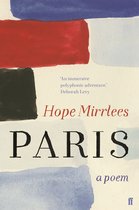
“I Wade Knee-Deep in Dreams”: A Freudian
Insight into the Fluidity Between the Dream-
Like State and Reality in Hope Mirrlees’ Paris:
A Poem
Module: The Stuff of Poetry: 1900 - present
Tutor: Daniel Matore
Referencing: MLA 8th Edition
Word Count: 2998
1
, A dream is “not senseless, not absurd” but instead “a psychic phenomenon of full value, and
indeed the fulfilment of a wish” (Freud 103). Sigmund Freud highlights a justification of the
supposed nonsense of dreams and challenges their meaninglessness. As Mirrlees writes,
“Freud has dredged the river, and grinning horribly, / waves his garbage in a glare of
electricity” (lines 414-415) it is impossible to separate the “great analyst of dreams” from
“Paris” (Briggs 87). The audience is encouraged to apply Freud’s dream-work to the poem,
delve beneath the surface level randomness, and unearth dream-like imagery in the same way
Freud dredges the river. This reveals the processes of dream-work such as compression,
displacement, and absurdity, hidden beneath the questionable imagery. By applying Freud’s
dream-work to “Paris”, Mirrlees’ presentations of the persona’s desires, images of
journeying, and unsettling imagery that debunks reality all challenge the notion that the poem
is set solely in present reality. This proposes a fluidity between the dream-like state and
reality, as if the persona is truly “knee-deep in dreams” (Mirrlees 310). Karl Marx’s argument
on commodities assists with disputing the triviality of the commodities in the poem and
instead highlights their underlying details, such as human desires for commodities. This
bolsters the presentation of Freud’s wish-fulfilment present in the poem in how it is anchored
in consumer desire. Thus, through revealing the persona’s desires the dream-like state of the
poem is heightened. Similarly, Eric Gill's “Introduction to Typography” gives “full value” to
the changes in point size, spacing, and layout of the poem and enables typography to mirror
the processes of dreams, thus augmenting the presentations of the persona’s dream-like state.
Mirrlees’ interest in experimentalism and modernism techniques invites the audience to view
the typography as an “exploration of space and vision” (Briggs 84). This, combined with
Freud’s dream-work, enables the audience to view “Paris” as a dream-like space in which the
persona, “knee-deep”, is on her way to transcending normalities, human and gender-based
realities, and language, as if exiting reality and entering a dream.
2
Insight into the Fluidity Between the Dream-
Like State and Reality in Hope Mirrlees’ Paris:
A Poem
Module: The Stuff of Poetry: 1900 - present
Tutor: Daniel Matore
Referencing: MLA 8th Edition
Word Count: 2998
1
, A dream is “not senseless, not absurd” but instead “a psychic phenomenon of full value, and
indeed the fulfilment of a wish” (Freud 103). Sigmund Freud highlights a justification of the
supposed nonsense of dreams and challenges their meaninglessness. As Mirrlees writes,
“Freud has dredged the river, and grinning horribly, / waves his garbage in a glare of
electricity” (lines 414-415) it is impossible to separate the “great analyst of dreams” from
“Paris” (Briggs 87). The audience is encouraged to apply Freud’s dream-work to the poem,
delve beneath the surface level randomness, and unearth dream-like imagery in the same way
Freud dredges the river. This reveals the processes of dream-work such as compression,
displacement, and absurdity, hidden beneath the questionable imagery. By applying Freud’s
dream-work to “Paris”, Mirrlees’ presentations of the persona’s desires, images of
journeying, and unsettling imagery that debunks reality all challenge the notion that the poem
is set solely in present reality. This proposes a fluidity between the dream-like state and
reality, as if the persona is truly “knee-deep in dreams” (Mirrlees 310). Karl Marx’s argument
on commodities assists with disputing the triviality of the commodities in the poem and
instead highlights their underlying details, such as human desires for commodities. This
bolsters the presentation of Freud’s wish-fulfilment present in the poem in how it is anchored
in consumer desire. Thus, through revealing the persona’s desires the dream-like state of the
poem is heightened. Similarly, Eric Gill's “Introduction to Typography” gives “full value” to
the changes in point size, spacing, and layout of the poem and enables typography to mirror
the processes of dreams, thus augmenting the presentations of the persona’s dream-like state.
Mirrlees’ interest in experimentalism and modernism techniques invites the audience to view
the typography as an “exploration of space and vision” (Briggs 84). This, combined with
Freud’s dream-work, enables the audience to view “Paris” as a dream-like space in which the
persona, “knee-deep”, is on her way to transcending normalities, human and gender-based
realities, and language, as if exiting reality and entering a dream.
2