

Population
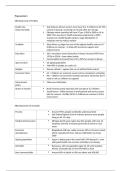
Affecting levels of fertility
Death rate, Sub-Saharan African women must have 8 or 9 children to be 95%
infant mortality certain of having a surviving son to look after her old age
Ethiopia infant mortality fell from 97 per 1,000 in 2000 to 36 in
2020. This was due to health extension programme in 2003
trained over 40,000 health workers, large distribution of
mosquito nets to reduce malaria
Tradition West Africa e.g Niger has one of the highest fertility rates at 6-7
children per woman - to help with economic support and
cultural norms
Education Girl's secondary school education in Kenya increased 40% from
1970s to 2010s - learn about safety
Contraception increased from 5% to 50% for women in Kenya
Age structure Uk ageing population
Mali 48% of people are under 16
Religion Roman catholic = oppose the use of artificial birth control
Economic factor LIC = children are economic assets and no compulsory schooling
HIC = children are economic burdens (pensions mean they don’t
need to rely on children to support)
Government China one child policy
policy
Status of women Brazil women poorly educated and average of 6.5 children
South Korea = 1960s increase in professional and service sector
jobs for women - fertility fell for 6 children per women to 0.8 in
recent years
Affecting levels of mortality
Poverty Around 795m people worldwide undernourished
Sub-Sahara highest level of extreme poverty many people
living on $2.15 a day
Medical infrastructure Ethiopia North-west region has 20m people with only 16
hospitals and 96% of women give birth at home in rural
areas
Economic Bangladesh GDP per capita increase 20% in 20 years meant
development infant mortality fell from 134 per 1000 births to 24 per
1000
Ageing population Japan is oldest pop in the world with 29% being 65+, even
with good health care services mortality is increasing
HIV/AIDS Botswana, 25% of population aged 15-49 is HIV positive.
Almost 16 people day a from HIV/AIDS in 2010
Non-communicable Around 40% of adults in USA are obese and 300,000
, diseases deaths per year are obesity related
Injury related deaths Jamaica has 1,400 murders a year and account for 8% of all
deaths
Ageing population - UK
Stage in the DTM and why Transitioning into Stage 5 - persistent low and slowly falling birth
rate = ageing pop and slowly rising death rate
Why did the brith rate fall Increase use of contraception
more employment opportunities for women (no
longer stay at home mums)
growing perception children are an economic
burden rather than an asset
rise in urban society that no longer saw any
advantage in having large number of children
Introduction of contraceptive pill in 1963
Cost of housing and child rearing have increased
(cost around £260,000 to raise a child to 18
Ageing population on . Lower brith rates of stage 4 = ageing pop = smaller % of pop in
fertility/status of women reproductive age range = lower fertility
. Gender roles have been redefined, and women increasingly
expect to have a career
. Marriage is less popular
Increasing life expectancy led Non-communicable diseases fell massively:
to aging population Deaths from CHD fell by around 40% for men and women
Lung cancer deaths fell by 28%
Number of stroke victims fell by 30%
This led to in 2009 - number of old dependents out numbered the
number of new dependents for the first time
Problems to UK Pressure on NHS
Increase in pension spending - is over £110b per
year (can result in potential higher taxes)
Smaller workforce - 2043 about 24% of UK will be
over 65
Increase in social care - 1.6m people in UK receive
care support
Approx 1.3m unpaid carers
Over 65s account for 50% of NHS bed users
Medium age of the UK is 40
Youthful population - Uganda
Stage in DTM Stage 2
Facts about youth 2010, 50% of population were under 15 and only 2.5% over
population 65
Affecting levels of fertility
Death rate, Sub-Saharan African women must have 8 or 9 children to be 95%
infant mortality certain of having a surviving son to look after her old age
Ethiopia infant mortality fell from 97 per 1,000 in 2000 to 36 in
2020. This was due to health extension programme in 2003
trained over 40,000 health workers, large distribution of
mosquito nets to reduce malaria
Tradition West Africa e.g Niger has one of the highest fertility rates at 6-7
children per woman - to help with economic support and
cultural norms
Education Girl's secondary school education in Kenya increased 40% from
1970s to 2010s - learn about safety
Contraception increased from 5% to 50% for women in Kenya
Age structure Uk ageing population
Mali 48% of people are under 16
Religion Roman catholic = oppose the use of artificial birth control
Economic factor LIC = children are economic assets and no compulsory schooling
HIC = children are economic burdens (pensions mean they don’t
need to rely on children to support)
Government China one child policy
policy
Status of women Brazil women poorly educated and average of 6.5 children
South Korea = 1960s increase in professional and service sector
jobs for women - fertility fell for 6 children per women to 0.8 in
recent years
Affecting levels of mortality
Poverty Around 795m people worldwide undernourished
Sub-Sahara highest level of extreme poverty many people
living on $2.15 a day
Medical infrastructure Ethiopia North-west region has 20m people with only 16
hospitals and 96% of women give birth at home in rural
areas
Economic Bangladesh GDP per capita increase 20% in 20 years meant
development infant mortality fell from 134 per 1000 births to 24 per
1000
Ageing population Japan is oldest pop in the world with 29% being 65+, even
with good health care services mortality is increasing
HIV/AIDS Botswana, 25% of population aged 15-49 is HIV positive.
Almost 16 people day a from HIV/AIDS in 2010
Non-communicable Around 40% of adults in USA are obese and 300,000
, diseases deaths per year are obesity related
Injury related deaths Jamaica has 1,400 murders a year and account for 8% of all
deaths
Ageing population - UK
Stage in the DTM and why Transitioning into Stage 5 - persistent low and slowly falling birth
rate = ageing pop and slowly rising death rate
Why did the brith rate fall Increase use of contraception
more employment opportunities for women (no
longer stay at home mums)
growing perception children are an economic
burden rather than an asset
rise in urban society that no longer saw any
advantage in having large number of children
Introduction of contraceptive pill in 1963
Cost of housing and child rearing have increased
(cost around £260,000 to raise a child to 18
Ageing population on . Lower brith rates of stage 4 = ageing pop = smaller % of pop in
fertility/status of women reproductive age range = lower fertility
. Gender roles have been redefined, and women increasingly
expect to have a career
. Marriage is less popular
Increasing life expectancy led Non-communicable diseases fell massively:
to aging population Deaths from CHD fell by around 40% for men and women
Lung cancer deaths fell by 28%
Number of stroke victims fell by 30%
This led to in 2009 - number of old dependents out numbered the
number of new dependents for the first time
Problems to UK Pressure on NHS
Increase in pension spending - is over £110b per
year (can result in potential higher taxes)
Smaller workforce - 2043 about 24% of UK will be
over 65
Increase in social care - 1.6m people in UK receive
care support
Approx 1.3m unpaid carers
Over 65s account for 50% of NHS bed users
Medium age of the UK is 40
Youthful population - Uganda
Stage in DTM Stage 2
Facts about youth 2010, 50% of population were under 15 and only 2.5% over
population 65


