

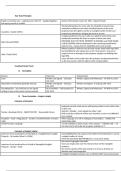
Key Trust Principles
Equity vs Common Law – Judicature Act 1873-75 – Applied together, Section 49(1) Senior Courts Act 1981 – Equity Prevails
but equity prevails in conflict
The beneficiary(ies) of a trust, who are all adults of sound mind,
collectively entitled to the entire beneficial interest in the trust
Saunders v Vautier [1841] property, have the right to call for an outright transfer of the trust
property to themselves, bringing the trust to an end.
A single beneficiary of a trust, who is an adult of sound mind, may
unilaterally terminate the trust in respect of their own share
Batt v Boswell [2002] PROVIDED THAT THE TRUST PROPERTY IS DIVISIBLE and THEIR SHARE
CAN BE SEVERED without detriment to the remaining beneficiaries’
interests (e.g., money, but not indivisible asset such as land).
Where property is held on trust by bare trustee (only holds legal title),
the beneficiaries who equity sees as the “real owners” may sue in
Shell v Total [2010] respect of loss or damage to that property, despite not holding their
legal title.
Court will look at who really owns the property, treating beneficiaries
as the true owners with the right to claim compensation.
Creating Private Trusts
1) Formalities
Express Intervivos Testamentary
Land Written and Signed – S53(1)(b) Written, Signed and Witnessed – S9 Wills Act 1837
LPA 1925
Disposition of Subsisting Equitable Interest Written and Signed – S53(1)(c) Written and Signed - S S53(1)(c) LPA 1925
LPA 1925
Everything Else – but could say to use signed No Formalities – Fall Outside S53 Written, Signed and Witnessed – S9 Wills Act 1837
writing in view of how much money involved LPA 1925
2) Three Certainties – Knight v Knight
Certainty of Intention
Husband and wife made mirror wills leaving estate to each other, then
to their son.
Marley v Rawlings [2014] – OBJECTIVE TEST – Reasonable Person Solicitor’s Mistake – Each signed the other’s will.
Wills could be rectified to reflect true intention as error was OBVIOUS
from context.
Exception – Eade v Hogg [2021] – Section 21 Administration of Justice When language of a will is ambiguous/meaningless – SUBJECTIVE
1982 INTENTION USED.
Avoid Precatory Language “In full confidence, desire, hope, wish, request” – INSTEAD USE – “on
the basis that X will make the property available to Y”
Certainty of Subject Matter
Intervivos Trust involving Part of the Bulk of a Tangible/Non-Fungible Must SEGREGATE trust property from REST of the bulk before it can be
Property – Re London Wine Co [1986] a subject matter of a trust.
MUST be specifically IDENTIFIABLE for a trust to be VALID.
No need to segregate from bulk.
Intervivos Trust involving Part of a Bulk of Intangible/Fungible Trust can simply arise over the relevant share of the intangible
Property – Hunter v Moss property.
No need to specify which part exactly is on trust as all units are
identical and interchangeable.
Fungible/intangible property seen as SINGLE ASSET shared among ALL
, Professor Goode’s Co-Ownership Theory – Adopted in Pearson v beneficiaries.
Lehman Bros [2010] Beneficiaries acquires a beneficial co-ownership share of the whole
bulk.
Rules NOT APPLICABLE to Testamentary Trusts – Re Clifford (approved Executors pick which part of a tangible bulk is to go on trust.
in Hunter v Moss)
Certainty of Objects
Certainty of Objects (Beneficiaries) Test
Fixed Trust Complete List – All Beneficiaries
IRC v Broadway Cottages [1955]
Discretionary Trust Any Given Person – Be able to confirm who can qualify – “conceptually
McPhail v Doulton – trust for residents of greater London = certain” – Re Baden’s Deed Trusts (No 2) – disagreed on meaning of
unworkable, but McPhail + Re Baden WERE NOT ADMINISTRAVELY relatives, majority (Sachs and Megaw LJJ) = sharing common ancestor.
UNWORKABLE. McPhail v Doulton [1971] – ‘employees, relatives, dependants.’
Fiduciary Power – Reflecting Interests of Beneficiaries – CANNOT BE Any Given Person
ADMINISTRATIVELY UNWORKABLE – OPTIONAL TO USE (Re Mainstry) McPhail v Doulton [1971]
Gift Over (Re Last) – If trustee DOES NOT USE POWER, can be divided Re Gulkbenkian’s [1970]
between beneficiaries. Powers must be accompanied with Gift Over – Obligations:
If none, goes back to the settlor as automatic resulting trust. - Periodically consider whether to exercise the power.
Inhabitants of geographical area = sufficiently certain to pass Any - To consider the range of objects.
Given Person test (ex.p. West Yorkshire – inhabitants of Yorkshire). - To consider the suitability of any individual exercise of the
power
Fixed Trust STC Precedent One Person - Re Barlow’s - “friend” viewed as sufficiently certain,
operated as condition precedent
3) Nature of Trust
Administratively Unworkability – Re Mainstry’s [1974] Only a discretionary trust can be administratively unworkable.
Capriciousness – Sensible Link Needed – Re Hay’s [1982] Only a fiduciary power can be + (maybe – discretionary trust).
Creating Purpose Trusts
1) General Rule Regarding Trusts for Purposes – CANNOT BE CREATED due to Beneficiary Principle
Re Astor’s [1952] - There must be an ascertainable beneficiary with the right to enforce the trust
(absent which, the trust is invalid).
2) Exception to General Rule for Trusts for Purposes – If it Falls into 1 of the 3 Exceptions
Requirement 1: Purpose must NOT BE ABSTRACT or IMPERSONAL – Re
Endacott [1960] – Must confer ‘tangible’ benefit.
Exception 1 – Re Denley’s Trust – List 3 requirements and apply Requirement 2: Must benefit ascertainable individuals who can
enforce it.
Requirement 3: Must end within the ‘perpetuity period’ (125 years)
Exception 2 – Trusts of Imperfect Obligation – Identify Category, Step 1 – Identifies if it fits into one of the categories – 3 recognised
Highlight Effect of Being a Trust of Imperfect Obligation areas only: Re Endacott [1960] – Lord Evershed described exceptions
(Usually Testamentary) as “anomalous” and “ought not be extended” – ONLY WORKS if it fits
in one of these three categories.
Re Pinion – testator left his studio full of his own artwork on trust to
be displayed to the public as a museum. Court held was not charitable Categories
as the art itself lacked merit and was simply a ‘mass of junk.’ Care of Specific Animals (Pets) – Pettingall v Pettingall [1842] and Re
Dean [1889]
Maintenance of Graves or Monuments – Trimmer v Danby [1856] vs Re
Endacott [1960] – “some useful memorial to myself” – too vague!
Saying of Private Masses – Bourne v Keane [1919]
Equity vs Common Law – Judicature Act 1873-75 – Applied together, Section 49(1) Senior Courts Act 1981 – Equity Prevails
but equity prevails in conflict
The beneficiary(ies) of a trust, who are all adults of sound mind,
collectively entitled to the entire beneficial interest in the trust
Saunders v Vautier [1841] property, have the right to call for an outright transfer of the trust
property to themselves, bringing the trust to an end.
A single beneficiary of a trust, who is an adult of sound mind, may
unilaterally terminate the trust in respect of their own share
Batt v Boswell [2002] PROVIDED THAT THE TRUST PROPERTY IS DIVISIBLE and THEIR SHARE
CAN BE SEVERED without detriment to the remaining beneficiaries’
interests (e.g., money, but not indivisible asset such as land).
Where property is held on trust by bare trustee (only holds legal title),
the beneficiaries who equity sees as the “real owners” may sue in
Shell v Total [2010] respect of loss or damage to that property, despite not holding their
legal title.
Court will look at who really owns the property, treating beneficiaries
as the true owners with the right to claim compensation.
Creating Private Trusts
1) Formalities
Express Intervivos Testamentary
Land Written and Signed – S53(1)(b) Written, Signed and Witnessed – S9 Wills Act 1837
LPA 1925
Disposition of Subsisting Equitable Interest Written and Signed – S53(1)(c) Written and Signed - S S53(1)(c) LPA 1925
LPA 1925
Everything Else – but could say to use signed No Formalities – Fall Outside S53 Written, Signed and Witnessed – S9 Wills Act 1837
writing in view of how much money involved LPA 1925
2) Three Certainties – Knight v Knight
Certainty of Intention
Husband and wife made mirror wills leaving estate to each other, then
to their son.
Marley v Rawlings [2014] – OBJECTIVE TEST – Reasonable Person Solicitor’s Mistake – Each signed the other’s will.
Wills could be rectified to reflect true intention as error was OBVIOUS
from context.
Exception – Eade v Hogg [2021] – Section 21 Administration of Justice When language of a will is ambiguous/meaningless – SUBJECTIVE
1982 INTENTION USED.
Avoid Precatory Language “In full confidence, desire, hope, wish, request” – INSTEAD USE – “on
the basis that X will make the property available to Y”
Certainty of Subject Matter
Intervivos Trust involving Part of the Bulk of a Tangible/Non-Fungible Must SEGREGATE trust property from REST of the bulk before it can be
Property – Re London Wine Co [1986] a subject matter of a trust.
MUST be specifically IDENTIFIABLE for a trust to be VALID.
No need to segregate from bulk.
Intervivos Trust involving Part of a Bulk of Intangible/Fungible Trust can simply arise over the relevant share of the intangible
Property – Hunter v Moss property.
No need to specify which part exactly is on trust as all units are
identical and interchangeable.
Fungible/intangible property seen as SINGLE ASSET shared among ALL
, Professor Goode’s Co-Ownership Theory – Adopted in Pearson v beneficiaries.
Lehman Bros [2010] Beneficiaries acquires a beneficial co-ownership share of the whole
bulk.
Rules NOT APPLICABLE to Testamentary Trusts – Re Clifford (approved Executors pick which part of a tangible bulk is to go on trust.
in Hunter v Moss)
Certainty of Objects
Certainty of Objects (Beneficiaries) Test
Fixed Trust Complete List – All Beneficiaries
IRC v Broadway Cottages [1955]
Discretionary Trust Any Given Person – Be able to confirm who can qualify – “conceptually
McPhail v Doulton – trust for residents of greater London = certain” – Re Baden’s Deed Trusts (No 2) – disagreed on meaning of
unworkable, but McPhail + Re Baden WERE NOT ADMINISTRAVELY relatives, majority (Sachs and Megaw LJJ) = sharing common ancestor.
UNWORKABLE. McPhail v Doulton [1971] – ‘employees, relatives, dependants.’
Fiduciary Power – Reflecting Interests of Beneficiaries – CANNOT BE Any Given Person
ADMINISTRATIVELY UNWORKABLE – OPTIONAL TO USE (Re Mainstry) McPhail v Doulton [1971]
Gift Over (Re Last) – If trustee DOES NOT USE POWER, can be divided Re Gulkbenkian’s [1970]
between beneficiaries. Powers must be accompanied with Gift Over – Obligations:
If none, goes back to the settlor as automatic resulting trust. - Periodically consider whether to exercise the power.
Inhabitants of geographical area = sufficiently certain to pass Any - To consider the range of objects.
Given Person test (ex.p. West Yorkshire – inhabitants of Yorkshire). - To consider the suitability of any individual exercise of the
power
Fixed Trust STC Precedent One Person - Re Barlow’s - “friend” viewed as sufficiently certain,
operated as condition precedent
3) Nature of Trust
Administratively Unworkability – Re Mainstry’s [1974] Only a discretionary trust can be administratively unworkable.
Capriciousness – Sensible Link Needed – Re Hay’s [1982] Only a fiduciary power can be + (maybe – discretionary trust).
Creating Purpose Trusts
1) General Rule Regarding Trusts for Purposes – CANNOT BE CREATED due to Beneficiary Principle
Re Astor’s [1952] - There must be an ascertainable beneficiary with the right to enforce the trust
(absent which, the trust is invalid).
2) Exception to General Rule for Trusts for Purposes – If it Falls into 1 of the 3 Exceptions
Requirement 1: Purpose must NOT BE ABSTRACT or IMPERSONAL – Re
Endacott [1960] – Must confer ‘tangible’ benefit.
Exception 1 – Re Denley’s Trust – List 3 requirements and apply Requirement 2: Must benefit ascertainable individuals who can
enforce it.
Requirement 3: Must end within the ‘perpetuity period’ (125 years)
Exception 2 – Trusts of Imperfect Obligation – Identify Category, Step 1 – Identifies if it fits into one of the categories – 3 recognised
Highlight Effect of Being a Trust of Imperfect Obligation areas only: Re Endacott [1960] – Lord Evershed described exceptions
(Usually Testamentary) as “anomalous” and “ought not be extended” – ONLY WORKS if it fits
in one of these three categories.
Re Pinion – testator left his studio full of his own artwork on trust to
be displayed to the public as a museum. Court held was not charitable Categories
as the art itself lacked merit and was simply a ‘mass of junk.’ Care of Specific Animals (Pets) – Pettingall v Pettingall [1842] and Re
Dean [1889]
Maintenance of Graves or Monuments – Trimmer v Danby [1856] vs Re
Endacott [1960] – “some useful memorial to myself” – too vague!
Saying of Private Masses – Bourne v Keane [1919]


