
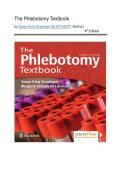
The Phlebotomy Textbook
by Susan King Strasinger DA MT(ASCP) (Author)
4th Edition
,TABLE OF CONTENTS
Section One: Phlebotomy and the Health-Care Field
Chapter 1 Phlebotomy and the Health-Care Delivery System
Chapter 2 The Clinical Laboratory
Chapter 3 Safety and Infection Control
Section Two: Body Systems
Chapter 4 Basic Medical Terminology
Chapter 5 Basic Anatomy and Physiology
Chapter 6 The Circulatory System
Section Three: Phlebotomy Techniques
Chapter 7 Venipuncture Equipment
Chapter 8 Routine Venipuncture
Chapter 9 Preexamination Variables and Venipuncture Complications
Chapter 10 Special Blood Collection
Chapter 11 Dermal Puncture
Chapter 12 Arterial Blood Collection
Section Four: Additional Techniques
Chapter 13 Point-of-Care Testing
Chapter 14 Additional Duties of the Phlebotomist
Section Five: Quality Phlebotomy
Chapter 15 Ethical and Legal Issues
Chapter 16 Quality Management in Phlebotomy
,Original Phlebotomy Practice Test Bank
MULTIPLE CHOICE
CHAPTER 1: Introduction to Phlebotomy & Healthcare
1. The term "phlebotomy" is derived from Greek words meaning:
A) Blood and to cut
B) Vein and to draw
C) Blood and to flow
D) Vein and to open
Answer: A
2. Which organization is responsible for accrediting phlebotomy training programs?
A) OSHA
B) NAACLS
C) CDC
D) FDA
Answer: B
3. The primary role of a phlebotomist in the healthcare setting is to:
A) Diagnose blood disorders
B) Collect blood specimens for laboratory testing
C) Prescribe medications
D) Interpret laboratory results
Answer: B
4. Which of the following is an example of a reference laboratory?
A) A hospital bedside lab
B) A physician's office lab
C) A large independent laboratory serving multiple facilities
, D) A clinic's point-of-care testing area
Answer: C
5. The clinical laboratory department that performs blood cell counts is:
A) Chemistry
B) Microbiology
C) Hematology
D) Immunology
Answer: C
6. Which department would process a specimen for cholesterol testing?
A) Hematology
B) Chemistry
C) Coagulation
D) Blood Bank
Answer: B
7. The department responsible for blood typing and crossmatching is:
A) Serology
B) Hematology
C) Blood Bank (Immunohematology)
D) Microbiology
Answer: C
8. A requisition form must include all of the following EXCEPT:
A) Patient's full name
B) Date and time of collection
C) Patient's social security number only
D) Ordering physician's name
by Susan King Strasinger DA MT(ASCP) (Author)
4th Edition
,TABLE OF CONTENTS
Section One: Phlebotomy and the Health-Care Field
Chapter 1 Phlebotomy and the Health-Care Delivery System
Chapter 2 The Clinical Laboratory
Chapter 3 Safety and Infection Control
Section Two: Body Systems
Chapter 4 Basic Medical Terminology
Chapter 5 Basic Anatomy and Physiology
Chapter 6 The Circulatory System
Section Three: Phlebotomy Techniques
Chapter 7 Venipuncture Equipment
Chapter 8 Routine Venipuncture
Chapter 9 Preexamination Variables and Venipuncture Complications
Chapter 10 Special Blood Collection
Chapter 11 Dermal Puncture
Chapter 12 Arterial Blood Collection
Section Four: Additional Techniques
Chapter 13 Point-of-Care Testing
Chapter 14 Additional Duties of the Phlebotomist
Section Five: Quality Phlebotomy
Chapter 15 Ethical and Legal Issues
Chapter 16 Quality Management in Phlebotomy
,Original Phlebotomy Practice Test Bank
MULTIPLE CHOICE
CHAPTER 1: Introduction to Phlebotomy & Healthcare
1. The term "phlebotomy" is derived from Greek words meaning:
A) Blood and to cut
B) Vein and to draw
C) Blood and to flow
D) Vein and to open
Answer: A
2. Which organization is responsible for accrediting phlebotomy training programs?
A) OSHA
B) NAACLS
C) CDC
D) FDA
Answer: B
3. The primary role of a phlebotomist in the healthcare setting is to:
A) Diagnose blood disorders
B) Collect blood specimens for laboratory testing
C) Prescribe medications
D) Interpret laboratory results
Answer: B
4. Which of the following is an example of a reference laboratory?
A) A hospital bedside lab
B) A physician's office lab
C) A large independent laboratory serving multiple facilities
, D) A clinic's point-of-care testing area
Answer: C
5. The clinical laboratory department that performs blood cell counts is:
A) Chemistry
B) Microbiology
C) Hematology
D) Immunology
Answer: C
6. Which department would process a specimen for cholesterol testing?
A) Hematology
B) Chemistry
C) Coagulation
D) Blood Bank
Answer: B
7. The department responsible for blood typing and crossmatching is:
A) Serology
B) Hematology
C) Blood Bank (Immunohematology)
D) Microbiology
Answer: C
8. A requisition form must include all of the following EXCEPT:
A) Patient's full name
B) Date and time of collection
C) Patient's social security number only
D) Ordering physician's name


