
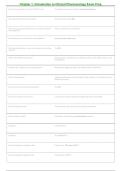
Chapter 1: Introduction to Clinical Pharmacology Exam Prep
What is an important part of the LPN/LVN role? Providing nursing care, including drug administration.
Who does the LPN/LVN work under? The supervision of the RN.
What nursing process activities can an LPN/LVN perform Assess, implement, and evaluate.
with guidance?
What determines an LPN/LVN's responsibilities? Licensure and experience.
Who has the authority to carry out all steps of the nursing The RN.
process?
Where can LPNs/LVNs practice? Nursing homes, assisted living, outpatient clinics, home health, hospice, and
rehabilitation.
What are the 5 steps of the nursing process? Assessment, Diagnosis, Planning, Implementation, Evaluation
What is assessment? Gathering information about the patient, their problems, and factors that may
affect drug therapy.
Who performs the initial full assessment? The RN.
What does assessment involve? Looking and listening carefully and gathering patient information.
What is subjective data? The information the patient tells us through questioning
What is objective data? Information obtained through observation (seeing)
Subjective patient SAYS it
Objective You OBSERVE it
Give an example of subjective data. Patient says, "My pain is 8/10."
Give an example of objective data. Temperature is 101°F.
, Chapter 1: Introduction to Clinical Pharmacology Exam Prep
What are the sources of patient information? Patient, family, medical records, history, healthcare providers, and lab reports.
What is palpation? Feeling with the hands..
What is inspection? Close observation.
What is percussion? Detecting differences in vibrations through the skin.
What is auscultation? Listening with a stethoscope.
I.P.P.A I = Inspect/look P = Palpate/feel P = Percuss/tap A = Auscultate/listen
What should the nurse assess before drug therapy? Symptoms, diseases, medications, allergies, chronic conditions, alcohol/street
drug use, and alternative therapies.
What medication information should be collected? Current and sometimes past medications, including names and dosages.
Should OTC drugs be included in the medication history? Yes.
Should alcohol and street drug use be assessed? Yes.
Should alternative therapies be included in the Yes.
assessment?
What problems with drug therapy should be identified? Allergies, diseases, and chronic conditions.
What is a diagnosis? A conclusion about the patient's problems.
Who makes a medical diagnosis? The healthcare provider.
Who makes a nursing diagnosis? The nurse.
What should the nurse consider when making a nursing The patient's health problems, medications, special needs, knowledge, cultural
diagnosis? beliefs, and ability to care for themselves.
What is an important part of the LPN/LVN role? Providing nursing care, including drug administration.
Who does the LPN/LVN work under? The supervision of the RN.
What nursing process activities can an LPN/LVN perform Assess, implement, and evaluate.
with guidance?
What determines an LPN/LVN's responsibilities? Licensure and experience.
Who has the authority to carry out all steps of the nursing The RN.
process?
Where can LPNs/LVNs practice? Nursing homes, assisted living, outpatient clinics, home health, hospice, and
rehabilitation.
What are the 5 steps of the nursing process? Assessment, Diagnosis, Planning, Implementation, Evaluation
What is assessment? Gathering information about the patient, their problems, and factors that may
affect drug therapy.
Who performs the initial full assessment? The RN.
What does assessment involve? Looking and listening carefully and gathering patient information.
What is subjective data? The information the patient tells us through questioning
What is objective data? Information obtained through observation (seeing)
Subjective patient SAYS it
Objective You OBSERVE it
Give an example of subjective data. Patient says, "My pain is 8/10."
Give an example of objective data. Temperature is 101°F.
, Chapter 1: Introduction to Clinical Pharmacology Exam Prep
What are the sources of patient information? Patient, family, medical records, history, healthcare providers, and lab reports.
What is palpation? Feeling with the hands..
What is inspection? Close observation.
What is percussion? Detecting differences in vibrations through the skin.
What is auscultation? Listening with a stethoscope.
I.P.P.A I = Inspect/look P = Palpate/feel P = Percuss/tap A = Auscultate/listen
What should the nurse assess before drug therapy? Symptoms, diseases, medications, allergies, chronic conditions, alcohol/street
drug use, and alternative therapies.
What medication information should be collected? Current and sometimes past medications, including names and dosages.
Should OTC drugs be included in the medication history? Yes.
Should alcohol and street drug use be assessed? Yes.
Should alternative therapies be included in the Yes.
assessment?
What problems with drug therapy should be identified? Allergies, diseases, and chronic conditions.
What is a diagnosis? A conclusion about the patient's problems.
Who makes a medical diagnosis? The healthcare provider.
Who makes a nursing diagnosis? The nurse.
What should the nurse consider when making a nursing The patient's health problems, medications, special needs, knowledge, cultural
diagnosis? beliefs, and ability to care for themselves.


