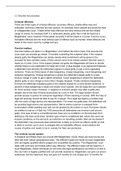
Cardiovascular System
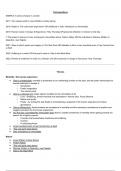
Overview
Distribution O2 and nutrients
of
Transportation of CO2 1 metabolic waste products
Distribution of water electrolytes water
Thermoregulation
Immune system RL
Pulmonary veins carry
The heart oxygenated blood back to
pump heart
pulmonaryartery carries
deoxygenated blood to
lungs
aortic pulmonary valves
Blood vessels
Pouiselle's Law
reducing the radius 1 diameter of a vessel will have a profound impact
increasing resistance to
on
Smooth muscle has contractile
flow
tone affects diameter and resistance
Elasticity will allow changes in flow determines volume of flow
Highest resistive element kidneys electrolytefluid balance
high blood pressure
ECG electrical stimuli of heart
not contractility
Lead 11 ECG waveform
Sum of all coordinated activity of heart 1 time average signal
P depolarisation of atria
QRS depolarisation of ventricles
1 repolarisation of ventricles
Fewer cells in atria smaller signal than ventricles
Einthoven's triangle
Heart lies at 600
, 12 lead ECG
Lead 1 2 3
I2 3 augmented limb leads vertical plane
Chest lead VI V2 V3 V 4 US VG horizontal plane
Amplitude and direction vary
Action potentials moving towards the positive input
of the amplifier give an upwards deflection
10 electrodes placed on patient
Lead electrical axis not wire
cardiac ventricular myocyte
2
callin
Depot
Re pot
N'atin
out
electrically coupled
intercalated discs
single nucleus
Long AP 300ms
calcium influx prolongs AP
cell is refractory to another AP
Aps cannot summate maintains discrete cycle of contraction
Ionic currents
sodium Nat upstroke of AP
L type calcium current smaller 1 slower plateauphase
Nex 3 Natl l ca't exchanger cat influx Ca H efflux
Kt channels returning to resting potential during repolarisation
blockage would prolong AP
pacemaker AP
unstable resting membrane potential
Depolarises over time triggers Ca't channels to open
Kt channel efflux underpins repolarisation
SAN fastest pacemaker
AVN can take over if needed
purkinje fibres intrinsic rhythm is slowest
don't normally control beating
A
HCN
Redundancy backup system can take over firing channel
HCN channels hyperpolarisation and cyclic
nucleotide gated channels a Rate of decay 1 threshold
Activated by polarisation
hyper 50mV reached to open Ca'tchannel
Generates inward current more tue will determine HR
Overview
Distribution O2 and nutrients
of
Transportation of CO2 1 metabolic waste products
Distribution of water electrolytes water
Thermoregulation
Immune system RL
Pulmonary veins carry
The heart oxygenated blood back to
pump heart
pulmonaryartery carries
deoxygenated blood to
lungs
aortic pulmonary valves
Blood vessels
Pouiselle's Law
reducing the radius 1 diameter of a vessel will have a profound impact
increasing resistance to
on
Smooth muscle has contractile
flow
tone affects diameter and resistance
Elasticity will allow changes in flow determines volume of flow
Highest resistive element kidneys electrolytefluid balance
high blood pressure
ECG electrical stimuli of heart
not contractility
Lead 11 ECG waveform
Sum of all coordinated activity of heart 1 time average signal
P depolarisation of atria
QRS depolarisation of ventricles
1 repolarisation of ventricles
Fewer cells in atria smaller signal than ventricles
Einthoven's triangle
Heart lies at 600
, 12 lead ECG
Lead 1 2 3
I2 3 augmented limb leads vertical plane
Chest lead VI V2 V3 V 4 US VG horizontal plane
Amplitude and direction vary
Action potentials moving towards the positive input
of the amplifier give an upwards deflection
10 electrodes placed on patient
Lead electrical axis not wire
cardiac ventricular myocyte
2
callin
Depot
Re pot
N'atin
out
electrically coupled
intercalated discs
single nucleus
Long AP 300ms
calcium influx prolongs AP
cell is refractory to another AP
Aps cannot summate maintains discrete cycle of contraction
Ionic currents
sodium Nat upstroke of AP
L type calcium current smaller 1 slower plateauphase
Nex 3 Natl l ca't exchanger cat influx Ca H efflux
Kt channels returning to resting potential during repolarisation
blockage would prolong AP
pacemaker AP
unstable resting membrane potential
Depolarises over time triggers Ca't channels to open
Kt channel efflux underpins repolarisation
SAN fastest pacemaker
AVN can take over if needed
purkinje fibres intrinsic rhythm is slowest
don't normally control beating
A
HCN
Redundancy backup system can take over firing channel
HCN channels hyperpolarisation and cyclic
nucleotide gated channels a Rate of decay 1 threshold
Activated by polarisation
hyper 50mV reached to open Ca'tchannel
Generates inward current more tue will determine HR