

Coasts: OCR A Level
1.a. Coastal landscapes = systems
Ø System = a set of interrelated components (stores) and processes (links) that are unified
as a whole
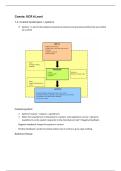
Coastal system:
Ø System’s inputs = outputs – equilibrium
Ø When this equilibrium is disturbed in a system, self-regulation occurs = dynamic
equilibrium as the system responds to the disturbance itself = Negative feedback
Negative feedback: Keeps the system in control
Positive feedback: sends the whole system out of control e.g ice caps melting
Sediment flows:
,Sediment cells:
Ø Length of coastline within which the movement of sediment is self-contained (semi-
closed system)
Ø Within SC LSD redistributes sediment within the system, sediment gained from
‘sources’ and lost to sections experiencing deposition ‘sinks’
Ø Sources of sediment = coastal cliM erosion, river erosion, deposition at the mouths of
rivers + movement of oMshore sediments (e.g sandbanks)
Ø Sediment sinks = accumulation of material = sand dunes, loss of sediment to oMshore
zones during storms, when transport paths meet (estuaries)
, Implications of sediment cells:
Ø Sediments gained or lost = quantified
Ø Sediment budget = diMerence between the amount of material added to the coast and
the amount removed from a stretch of coastline (a sediment cell)
Ø Positive sediment budgets = erosion added more material than is taken
Ø Negative sediment budgets = little erosion or a lot of material is transported away
Ø Determines the eMectiveness of artificial structures on beach erosion and beach
management
Problems with sediment cells:
Ø Based upon movement of coarser particles
Ø Easy for fine sediment to move cells
Ø Therefore, not fully closed system and is dynamic
1.b. Physical Factors a<ecting coastal landscapes
Ø factors vary in terms of their spatial and temporal impacts
Ø factors may be interrelated
Aeolian processes:
Ø Wave energy generated by frictional drag of winds
Ø Wind is a moving force carries out processes
Waves energy increases due to:
Ø High wind speed
Ø Long fetch
Ø Wind blowing for a greater amount of time = south westerlies large
fetch on the South West coast = larger waves
Waves:
Ø Waves possesses potential energy + kinetic energy
Ø Waves do not move water forward – circular motion
1.a. Coastal landscapes = systems
Ø System = a set of interrelated components (stores) and processes (links) that are unified
as a whole
Coastal system:
Ø System’s inputs = outputs – equilibrium
Ø When this equilibrium is disturbed in a system, self-regulation occurs = dynamic
equilibrium as the system responds to the disturbance itself = Negative feedback
Negative feedback: Keeps the system in control
Positive feedback: sends the whole system out of control e.g ice caps melting
Sediment flows:
,Sediment cells:
Ø Length of coastline within which the movement of sediment is self-contained (semi-
closed system)
Ø Within SC LSD redistributes sediment within the system, sediment gained from
‘sources’ and lost to sections experiencing deposition ‘sinks’
Ø Sources of sediment = coastal cliM erosion, river erosion, deposition at the mouths of
rivers + movement of oMshore sediments (e.g sandbanks)
Ø Sediment sinks = accumulation of material = sand dunes, loss of sediment to oMshore
zones during storms, when transport paths meet (estuaries)
, Implications of sediment cells:
Ø Sediments gained or lost = quantified
Ø Sediment budget = diMerence between the amount of material added to the coast and
the amount removed from a stretch of coastline (a sediment cell)
Ø Positive sediment budgets = erosion added more material than is taken
Ø Negative sediment budgets = little erosion or a lot of material is transported away
Ø Determines the eMectiveness of artificial structures on beach erosion and beach
management
Problems with sediment cells:
Ø Based upon movement of coarser particles
Ø Easy for fine sediment to move cells
Ø Therefore, not fully closed system and is dynamic
1.b. Physical Factors a<ecting coastal landscapes
Ø factors vary in terms of their spatial and temporal impacts
Ø factors may be interrelated
Aeolian processes:
Ø Wave energy generated by frictional drag of winds
Ø Wind is a moving force carries out processes
Waves energy increases due to:
Ø High wind speed
Ø Long fetch
Ø Wind blowing for a greater amount of time = south westerlies large
fetch on the South West coast = larger waves
Waves:
Ø Waves possesses potential energy + kinetic energy
Ø Waves do not move water forward – circular motion


