

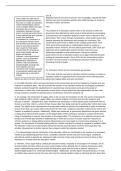
Item B
Since 1988, the main aim of Applying material from Item B and your own knowledge, evaluate the claim
government education policies that the main aim of education policies since 1988 has been to create an
has been to create an education education market. (30 marks)
market Marketisation policies
such as league tables and open Intro
enrolment aim to create
competition between schools The creation of an education market refers to the process in which the
and to increase parental choice. government has attempted to raise levels of achievement by encouraging
It was claimed that such policies a parentocracy and competition between schools which is based on neo-
would raise standards. liberal ideas. This is done through marketisation, where public sectors shift
Competition for 'customers' in towards operating like businesses and compete for consumers. The
the education market means
conservative government of 1988 and the coalition government, 2010-
that teachers and schools now
have to work hard to get the 2015, put a strong emphasis on marketisation policies to create an
best results for their pupils. education market. However, the new labour government, 1997-2010, did
Schools that do not produce implement some marketisation policies but their main focus was
good exam results will lose addressing inequality to raise achievement. During the coalition
pupils and funding. government, the aim of education policies once again redirected towards
However, some government
creating an education market. Since 2015, the aim of education policies
policies, such as Education
Maintenance Allowances has been not only focused on promoting an education market but also
(EMAs), help educationally increasing choice for pupils.
disadvantaged social groups.
Such policies are more
concerned with creating equality
of educational opportunity than P1- Education reform act and conservative government
with producing an education
P-The claim that the main aim of education policies has been to create an
market.
education market is supported by the introduction of the 1988 education
reform act which the item refers to by referencing “league tables and open enrolment”.
E-The 1988 education reform act was introduced by the conservative government headed by Thatcher and was
inspired by neoliberal ideas. The Act promoted the creation of an education market by encouraging competition
between schools through the establishment of a parentocracy where parents were given the power of
consumers, in which they could selectively choose which schools offered the best opportunities for their child,
forcing schools to compete for parental choice and therefore drive their standards up.
E- for example, the introduction of league tables in the act was the foundation for this new system of pushing for
high standards within schools. League tables are national rankings of schools and show the progress and
success of schools. Alongside this, open enrolment was introduced, in which parents were empowered with the
choice to send their child to a school of their choice rather than being restricted to sending their child to their local
school. This allows for the development of an education market as parents are empowered to make an informed
choice where they can choose what school is best for their child, creating an education market where choice and
freedom is enabled for parents. Additionally, Ofsted was introduced, a government department that gives schools
a rating which influences their position on the league table, further pushing for schools to compete for the best
rating of outstanding to improve their position on the league table. The introduction of a national curriculum with
GCSEs and A-levels also allowed an additional way in which the success of schools could be measured as
schools’ positions on league tables became influenced by how many pupils in a school were achieving C to A
grades. The introduction of formula funding acted as a further incentive for schools to compete for students within
the education market as formula funding meant that schools would be given money for each pupil they had
enrolled, allowing them to further improve their prospects within the education market.
L-This demonstrates how the introduction of the education reform act contributed to the creation of an education
market as by establishing parental choice, competition between schools has been encouraged, creating an
educational market as parents are empowered with consumer choice and schools are forced to drive up their
standards to compete within the education market.
E- However, Critics argue that by creating an education market, inequality is encouraged. For example, due to
formula funding, the best schools are given extra funding, further allowing them to improve themselves, while
poorer underachieving schools with mostly Working-class pupils lack the funds to improve, allowing for
disadvantaged pupils to be continually disadvantaged. Additionally, Gerwitz argues that parentocracy is a myth
as middle class parents are the only ones who have the cultural capital to make an informed decision about their
Since 1988, the main aim of Applying material from Item B and your own knowledge, evaluate the claim
government education policies that the main aim of education policies since 1988 has been to create an
has been to create an education education market. (30 marks)
market Marketisation policies
such as league tables and open Intro
enrolment aim to create
competition between schools The creation of an education market refers to the process in which the
and to increase parental choice. government has attempted to raise levels of achievement by encouraging
It was claimed that such policies a parentocracy and competition between schools which is based on neo-
would raise standards. liberal ideas. This is done through marketisation, where public sectors shift
Competition for 'customers' in towards operating like businesses and compete for consumers. The
the education market means
conservative government of 1988 and the coalition government, 2010-
that teachers and schools now
have to work hard to get the 2015, put a strong emphasis on marketisation policies to create an
best results for their pupils. education market. However, the new labour government, 1997-2010, did
Schools that do not produce implement some marketisation policies but their main focus was
good exam results will lose addressing inequality to raise achievement. During the coalition
pupils and funding. government, the aim of education policies once again redirected towards
However, some government
creating an education market. Since 2015, the aim of education policies
policies, such as Education
Maintenance Allowances has been not only focused on promoting an education market but also
(EMAs), help educationally increasing choice for pupils.
disadvantaged social groups.
Such policies are more
concerned with creating equality
of educational opportunity than P1- Education reform act and conservative government
with producing an education
P-The claim that the main aim of education policies has been to create an
market.
education market is supported by the introduction of the 1988 education
reform act which the item refers to by referencing “league tables and open enrolment”.
E-The 1988 education reform act was introduced by the conservative government headed by Thatcher and was
inspired by neoliberal ideas. The Act promoted the creation of an education market by encouraging competition
between schools through the establishment of a parentocracy where parents were given the power of
consumers, in which they could selectively choose which schools offered the best opportunities for their child,
forcing schools to compete for parental choice and therefore drive their standards up.
E- for example, the introduction of league tables in the act was the foundation for this new system of pushing for
high standards within schools. League tables are national rankings of schools and show the progress and
success of schools. Alongside this, open enrolment was introduced, in which parents were empowered with the
choice to send their child to a school of their choice rather than being restricted to sending their child to their local
school. This allows for the development of an education market as parents are empowered to make an informed
choice where they can choose what school is best for their child, creating an education market where choice and
freedom is enabled for parents. Additionally, Ofsted was introduced, a government department that gives schools
a rating which influences their position on the league table, further pushing for schools to compete for the best
rating of outstanding to improve their position on the league table. The introduction of a national curriculum with
GCSEs and A-levels also allowed an additional way in which the success of schools could be measured as
schools’ positions on league tables became influenced by how many pupils in a school were achieving C to A
grades. The introduction of formula funding acted as a further incentive for schools to compete for students within
the education market as formula funding meant that schools would be given money for each pupil they had
enrolled, allowing them to further improve their prospects within the education market.
L-This demonstrates how the introduction of the education reform act contributed to the creation of an education
market as by establishing parental choice, competition between schools has been encouraged, creating an
educational market as parents are empowered with consumer choice and schools are forced to drive up their
standards to compete within the education market.
E- However, Critics argue that by creating an education market, inequality is encouraged. For example, due to
formula funding, the best schools are given extra funding, further allowing them to improve themselves, while
poorer underachieving schools with mostly Working-class pupils lack the funds to improve, allowing for
disadvantaged pupils to be continually disadvantaged. Additionally, Gerwitz argues that parentocracy is a myth
as middle class parents are the only ones who have the cultural capital to make an informed decision about their


