
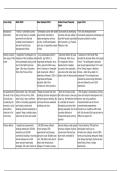
Case study Haiti 2010 New Zealand 2011 Indian Ocean Tsunami Japan 2011
2004
Background - Haiti is a vulnerable country - Developed country with stable - Surrounded by developing - Rich and developed nation-
information with a long history of unstable government and ability to countries with poor ability to Consistently exposed to earthquakes so
government and has had deploy emergency services deal with hazards associated has great protection in place
multiple severe disasters to quickly- 14,000 earthquakes with tsunamis e.g. Thailand,
deal with restricting its each year so population aware Malaysia, India
development further. of risks
Tectonic location - magnitude 7 earthquake- tiny - 2 big earthquakes within 6 - Epicentre 160km off coast - Subduction of the Pacific Plate
and causes of the fragment of the Caribbean plate months- Sep 2010 6.1 of Indonesia- 30km focus- beneath the Eurasian Plate at the Japan
event moving eastwards along a fault magnitude earthquake. focus 9.0 magnitude- Vertical Trench.- The earthquake's epicentre
next to the North American 10km, epicentre 40km away displacement of seabed was located approximately 72 km east
plate- 13km focus- Epicentre from Christchurch. Greendale occurred in the subduction of the Tōhoku region in Northern
25km from Port-au-Prince fault movements. 1000s of zone where the Indian plate Honshu.- 24km focus depth- 9.1
aftershocks followed.- 2011 6.2 slides under the Burma plate magnitude- The earthquake was
magnitude earthquake, preceded by several large foreshocks
epicentre 10km from and was followed by over 5000
Christchurch, 6km epicentre. aftershocks.
An assessment of Great extent- Out 2.5m people - People are aware and most - Much of the area around - 70% of Japan is mountainous, forcing
the level of risk in living in Port-au-Prince, 86% buildings had been designed to the Indian ocean is low-lying urban and industrial development into
the local area – were living in slum conditions- withstand ground shaking, But coast e.g. the Maldives which narrow, low-lying coastlines-
considering the Little to no building regulations continued tremors weakened is vulnerable to tsunamis- Underestimated level of risk and
economic, social and cheaply constructed buildings over time. Developing countries often overestimated preparedness-
and political buildings without foundations or densely populated- Out of all Fukushima on coastline unfit to deal
character of its support- Steep, unstable slopes countries affected on with 10m tsunami But huge tsunami so
community where lots of slums are located Thailand had early warning difficult to prepare for
systems
Primary effects - hospitals and government - 100,000 homes suffered Ground shaking- wide spread - Ground shaking -700 died from
buildings destroyed- 250,000 minor damage- CBD structural collapse of poorly earthquake mostly due to
residences and 30,000 experienced most damage constructed infrastructure, infrastructure collapse- Around 1000
commercial buildings- Incoming along the coast- NZ$4bn total even more vulnerable to homes and buildings destroyed- Roads
aid was delayed as control cost- 182 dead mostly due to tsunami and railways damaged- Fujinuma dam
tower and port were badly debris and infrastructure failed killing 8 from a village
damaged- 19m cubic metres of collapse- TV station severely downstream
, rubble and debris- Around $9bn damaged- Land raised by 50cm
in economic damage overall
Secondary effects - 3m affected- 1m homeless- - Liquefaction- 20,000 tonnes of Tsunami: extremely - Tsunami- up to 10m in height, killed
Killed over 300,000 people, saturated silt upwelled to the destructive secondary over 25,000 people.- Coastal
from initial damage + surface causing subsidence.- hazard- up to 50m (in Aceh), settlements destroyed- Over 700
subsequent chaos in unsanitary Landslides due to unstable killed 300,000, displaced aftershocks destabilised slopes leading
camps through cholera slopes 1.7m, vegetation and topsoil to landslides- Power cut off for
outbreaks, liquefaction- Looting removed up to 800m inland- Fukushima power station led to
and violence was common- Infrastructure destroyed e.g. explosions releasing nuclear fallout
820,000 infected with cholera Andaman and Nicobar which contaminated large areas,
due to poor sanitation- islands cut off from external leading to the evacuation of
Liquefaction due to loose help as jetties were approximately 150,000 residents.- total
sediment- A third of the destroyed.- Coastal damages estimated at $300bn
population lost their jobs as settlements destroyed e.g.
clothing factories were Banda Aceh, 500,000 people
destroyed. forced into refugee camps in
Aceh Province, Indonesia-
Thailand fishing industry
suffered £226m in losses
Short term - UN flash appeal for $1.5bn, - More than 1,000 New Zealand - More than 160 aid - Tsunami Warnings- The Japan
responses 60% was funded- Emergency Defence Force personnel led organisations + UN agencies Meteorological Agency issued warnings
shelter provided for 1.9m the response, aided by more with over $1.8 billion shortly after the earthquake, allowing
people- 300 truckloads of debris than 100 members of the pledged globally.- Foreign people to evacuate to higher ground.-
removed a day- DEC raised Singaporean armed forces.- military troops were 100,000 soldiers from Japan's self-
£101m to help provide clean Australia, Japan, Singapore, the provided- Search and rescue defence forces mobilised rescue
drinking water to 250,000 United Kingdom, the United teams deployed workers- 30-kilometer exclusion zone
States, and other countries also around the Fukushima plant.
sent hundreds of search-and-
rescue workers.- Rescue efforts
were at times hampered,
however, by the potential
dangers posed by the
aftershocks.
Long term - Over 57,000 families have - Canterbury Earthquake - Tsunami warning systems - Strict buildings code improvements-
been helped to rebuild their Recovery Authority (CERA) was introduced across the Indian Tsunami walls upgraded- Nuclear safety
2004
Background - Haiti is a vulnerable country - Developed country with stable - Surrounded by developing - Rich and developed nation-
information with a long history of unstable government and ability to countries with poor ability to Consistently exposed to earthquakes so
government and has had deploy emergency services deal with hazards associated has great protection in place
multiple severe disasters to quickly- 14,000 earthquakes with tsunamis e.g. Thailand,
deal with restricting its each year so population aware Malaysia, India
development further. of risks
Tectonic location - magnitude 7 earthquake- tiny - 2 big earthquakes within 6 - Epicentre 160km off coast - Subduction of the Pacific Plate
and causes of the fragment of the Caribbean plate months- Sep 2010 6.1 of Indonesia- 30km focus- beneath the Eurasian Plate at the Japan
event moving eastwards along a fault magnitude earthquake. focus 9.0 magnitude- Vertical Trench.- The earthquake's epicentre
next to the North American 10km, epicentre 40km away displacement of seabed was located approximately 72 km east
plate- 13km focus- Epicentre from Christchurch. Greendale occurred in the subduction of the Tōhoku region in Northern
25km from Port-au-Prince fault movements. 1000s of zone where the Indian plate Honshu.- 24km focus depth- 9.1
aftershocks followed.- 2011 6.2 slides under the Burma plate magnitude- The earthquake was
magnitude earthquake, preceded by several large foreshocks
epicentre 10km from and was followed by over 5000
Christchurch, 6km epicentre. aftershocks.
An assessment of Great extent- Out 2.5m people - People are aware and most - Much of the area around - 70% of Japan is mountainous, forcing
the level of risk in living in Port-au-Prince, 86% buildings had been designed to the Indian ocean is low-lying urban and industrial development into
the local area – were living in slum conditions- withstand ground shaking, But coast e.g. the Maldives which narrow, low-lying coastlines-
considering the Little to no building regulations continued tremors weakened is vulnerable to tsunamis- Underestimated level of risk and
economic, social and cheaply constructed buildings over time. Developing countries often overestimated preparedness-
and political buildings without foundations or densely populated- Out of all Fukushima on coastline unfit to deal
character of its support- Steep, unstable slopes countries affected on with 10m tsunami But huge tsunami so
community where lots of slums are located Thailand had early warning difficult to prepare for
systems
Primary effects - hospitals and government - 100,000 homes suffered Ground shaking- wide spread - Ground shaking -700 died from
buildings destroyed- 250,000 minor damage- CBD structural collapse of poorly earthquake mostly due to
residences and 30,000 experienced most damage constructed infrastructure, infrastructure collapse- Around 1000
commercial buildings- Incoming along the coast- NZ$4bn total even more vulnerable to homes and buildings destroyed- Roads
aid was delayed as control cost- 182 dead mostly due to tsunami and railways damaged- Fujinuma dam
tower and port were badly debris and infrastructure failed killing 8 from a village
damaged- 19m cubic metres of collapse- TV station severely downstream
, rubble and debris- Around $9bn damaged- Land raised by 50cm
in economic damage overall
Secondary effects - 3m affected- 1m homeless- - Liquefaction- 20,000 tonnes of Tsunami: extremely - Tsunami- up to 10m in height, killed
Killed over 300,000 people, saturated silt upwelled to the destructive secondary over 25,000 people.- Coastal
from initial damage + surface causing subsidence.- hazard- up to 50m (in Aceh), settlements destroyed- Over 700
subsequent chaos in unsanitary Landslides due to unstable killed 300,000, displaced aftershocks destabilised slopes leading
camps through cholera slopes 1.7m, vegetation and topsoil to landslides- Power cut off for
outbreaks, liquefaction- Looting removed up to 800m inland- Fukushima power station led to
and violence was common- Infrastructure destroyed e.g. explosions releasing nuclear fallout
820,000 infected with cholera Andaman and Nicobar which contaminated large areas,
due to poor sanitation- islands cut off from external leading to the evacuation of
Liquefaction due to loose help as jetties were approximately 150,000 residents.- total
sediment- A third of the destroyed.- Coastal damages estimated at $300bn
population lost their jobs as settlements destroyed e.g.
clothing factories were Banda Aceh, 500,000 people
destroyed. forced into refugee camps in
Aceh Province, Indonesia-
Thailand fishing industry
suffered £226m in losses
Short term - UN flash appeal for $1.5bn, - More than 1,000 New Zealand - More than 160 aid - Tsunami Warnings- The Japan
responses 60% was funded- Emergency Defence Force personnel led organisations + UN agencies Meteorological Agency issued warnings
shelter provided for 1.9m the response, aided by more with over $1.8 billion shortly after the earthquake, allowing
people- 300 truckloads of debris than 100 members of the pledged globally.- Foreign people to evacuate to higher ground.-
removed a day- DEC raised Singaporean armed forces.- military troops were 100,000 soldiers from Japan's self-
£101m to help provide clean Australia, Japan, Singapore, the provided- Search and rescue defence forces mobilised rescue
drinking water to 250,000 United Kingdom, the United teams deployed workers- 30-kilometer exclusion zone
States, and other countries also around the Fukushima plant.
sent hundreds of search-and-
rescue workers.- Rescue efforts
were at times hampered,
however, by the potential
dangers posed by the
aftershocks.
Long term - Over 57,000 families have - Canterbury Earthquake - Tsunami warning systems - Strict buildings code improvements-
been helped to rebuild their Recovery Authority (CERA) was introduced across the Indian Tsunami walls upgraded- Nuclear safety


