

CSFA Certified Surgical First Assistant Exam 2026 Latest
Comprehensive Study Guide with Practice Questions
Comprehensive Surgical First Assistant Review Detailed
Explanations, Verified Answers, Complete Success Workbook
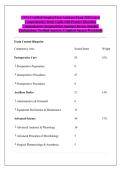
Exam Content Blueprint
Competency Area Scored Items Weight
Perioperative Care 83 55%
└ Preoperative Preparation 8
└ Intraoperative Procedures 67
└ Postoperative Procedures 8
Ancillary Duties 21 14%
└ Administrative & Personnel 6
└ Equipment Sterilization & Maintenance 15
Advanced Science 46 31%
└ Advanced Anatomy & Physiology 36
└ Advanced Principles of Microbiology 5
└ Surgical Pharmacology & Anesthesia 5
,DOMAIN 1: PERIOPERATIVE CARE — PREOPERATIVE
PREPARATION (Questions 1-18)
QUESTION 1
A surgical first assistant is preparing for a right hemicolectomy. During the
preoperative verification process, which of the following is the MOST critical
component of the Universal Protocol "Time Out"?
A) Reviewing the patient's laboratory results
B) Confirming the correct patient, correct procedure, and correct site/side
C) Checking the anesthesia machine settings
D) Verifying the availability of all surgical instruments
ANSWER: B) Confirming the correct patient, correct procedure, and correct
site/side
RATIONALE: The Universal Protocol "Time Out" requires the entire surgical
team to verbally confirm the correct patient identity, correct surgical site/side, and
correct procedure immediately before incision. This is the most critical patient
safety check to prevent wrong-patient, wrong-site, and wrong-procedure errors.
While reviewing laboratory results (A), checking anesthesia settings (C), and
verifying instruments (D) are important, they are not the core components of the
Time Out.
QUESTION 2
A surgical first assistant is positioning a patient for a lumbar laminectomy in the
prone position. Which of the following is the MOST important safety
consideration to prevent postoperative complications?
A) Padding all bony prominences and ensuring proper alignment of the cervical
spine
B) Placing the patient's arms at a 90-degree angle
C) Using a pillow under the patient's abdomen
D) Placing the patient in the Trendelenburg position
ANSWER: A) Padding all bony prominences and ensuring proper alignment
of the cervical spine
,RATIONALE: In the prone position, the patient's head, neck, and spine must be
properly aligned with padding to prevent nerve compression, pressure injuries, and
compartment syndrome. The cervical spine must be maintained in a neutral
position to avoid injury. Arm positioning should be at less than 90 degrees (B) to
prevent brachial plexus injury. The abdomen should be free (C) to allow for
ventilation, not supported by a pillow. The Trendelenburg position (D) is not used
for prone positioning.
QUESTION 3
During the preoperative preparation of a patient undergoing an open
cholecystectomy, the surgical first assistant notes that the informed consent form is
incomplete. Which of the following actions is MOST appropriate?
A) Have the patient sign the consent form in the operating room
B) Notify the surgeon and ensure the consent is completed before proceeding
C) Proceed with the procedure as scheduled
D) Document that verbal consent was obtained from the patient
ANSWER: B) Notify the surgeon and ensure the consent is completed before
proceeding
RATIONALE: Informed consent must be obtained and properly documented
before the patient enters the operating room. The surgical first assistant should
notify the surgeon and ensure the consent is completed before proceeding. Having
the patient sign in the OR (A) is not appropriate as the patient may be under the
influence of pre-medication. Proceeding without proper consent (C) is a legal and
ethical violation. Verbal consent (D) is insufficient for surgical procedures.
QUESTION 4
A surgical first assistant is preparing a patient for a total hip arthroplasty. Which
patient positioning device is MOST appropriate for this procedure?
A) Lateral position with a beanbag and hip positioning device
B) Supine position with arm boards
C) Prone position with chest rolls
D) Lithotomy position with stirrups
ANSWER: A) Lateral position with a beanbag and hip positioning device
, RATIONALE: Total hip arthroplasty is typically performed with the patient in the
lateral decubitus position, using a beanbag and specialized hip positioning devices
to stabilize the pelvis and maintain proper alignment. The supine position (B) is
used for anterior hip approaches but is less common. The prone position (C) is
used for posterior spinal procedures. The lithotomy position (D) is used for
gynecologic and urologic procedures.
QUESTION 5
A surgical first assistant is performing a surgical hand scrub. Which of the
following is the CORRECT sequence for the scrub procedure?
A) Wash hands only, rinse, then proceed to gowning
B) Clean under fingernails, wash hands to elbows, rinse from fingertips to elbows
C) Wash arms to elbows, clean under fingernails, rinse from elbows to fingertips
D) Wash hands and arms simultaneously, rinse in any direction
ANSWER: B) Clean under fingernails, wash hands to elbows, rinse from
fingertips to elbows
RATIONALE: The correct sequence for a surgical hand scrub is: (1) clean under
the fingernails with a disposable pick, (2) wash hands and arms up to the elbows
using the prescribed scrub technique (typically 3-5 minutes), and (3) rinse from the
fingertips to the elbows, allowing water to drip off the elbows. This sequence
ensures that the cleanest areas (hands) are not contaminated by water running from
the elbows.
QUESTION 6
A surgical first assistant is preparing the operating room for a procedure. The room
temperature should be maintained at which of the following ranges to balance
patient safety and team comfort?
A) 60-65°F
B) 68-73°F
C) 75-80°F
D) 85-90°F
ANSWER: B) 68-73°F
Comprehensive Study Guide with Practice Questions
Comprehensive Surgical First Assistant Review Detailed
Explanations, Verified Answers, Complete Success Workbook
Exam Content Blueprint
Competency Area Scored Items Weight
Perioperative Care 83 55%
└ Preoperative Preparation 8
└ Intraoperative Procedures 67
└ Postoperative Procedures 8
Ancillary Duties 21 14%
└ Administrative & Personnel 6
└ Equipment Sterilization & Maintenance 15
Advanced Science 46 31%
└ Advanced Anatomy & Physiology 36
└ Advanced Principles of Microbiology 5
└ Surgical Pharmacology & Anesthesia 5
,DOMAIN 1: PERIOPERATIVE CARE — PREOPERATIVE
PREPARATION (Questions 1-18)
QUESTION 1
A surgical first assistant is preparing for a right hemicolectomy. During the
preoperative verification process, which of the following is the MOST critical
component of the Universal Protocol "Time Out"?
A) Reviewing the patient's laboratory results
B) Confirming the correct patient, correct procedure, and correct site/side
C) Checking the anesthesia machine settings
D) Verifying the availability of all surgical instruments
ANSWER: B) Confirming the correct patient, correct procedure, and correct
site/side
RATIONALE: The Universal Protocol "Time Out" requires the entire surgical
team to verbally confirm the correct patient identity, correct surgical site/side, and
correct procedure immediately before incision. This is the most critical patient
safety check to prevent wrong-patient, wrong-site, and wrong-procedure errors.
While reviewing laboratory results (A), checking anesthesia settings (C), and
verifying instruments (D) are important, they are not the core components of the
Time Out.
QUESTION 2
A surgical first assistant is positioning a patient for a lumbar laminectomy in the
prone position. Which of the following is the MOST important safety
consideration to prevent postoperative complications?
A) Padding all bony prominences and ensuring proper alignment of the cervical
spine
B) Placing the patient's arms at a 90-degree angle
C) Using a pillow under the patient's abdomen
D) Placing the patient in the Trendelenburg position
ANSWER: A) Padding all bony prominences and ensuring proper alignment
of the cervical spine
,RATIONALE: In the prone position, the patient's head, neck, and spine must be
properly aligned with padding to prevent nerve compression, pressure injuries, and
compartment syndrome. The cervical spine must be maintained in a neutral
position to avoid injury. Arm positioning should be at less than 90 degrees (B) to
prevent brachial plexus injury. The abdomen should be free (C) to allow for
ventilation, not supported by a pillow. The Trendelenburg position (D) is not used
for prone positioning.
QUESTION 3
During the preoperative preparation of a patient undergoing an open
cholecystectomy, the surgical first assistant notes that the informed consent form is
incomplete. Which of the following actions is MOST appropriate?
A) Have the patient sign the consent form in the operating room
B) Notify the surgeon and ensure the consent is completed before proceeding
C) Proceed with the procedure as scheduled
D) Document that verbal consent was obtained from the patient
ANSWER: B) Notify the surgeon and ensure the consent is completed before
proceeding
RATIONALE: Informed consent must be obtained and properly documented
before the patient enters the operating room. The surgical first assistant should
notify the surgeon and ensure the consent is completed before proceeding. Having
the patient sign in the OR (A) is not appropriate as the patient may be under the
influence of pre-medication. Proceeding without proper consent (C) is a legal and
ethical violation. Verbal consent (D) is insufficient for surgical procedures.
QUESTION 4
A surgical first assistant is preparing a patient for a total hip arthroplasty. Which
patient positioning device is MOST appropriate for this procedure?
A) Lateral position with a beanbag and hip positioning device
B) Supine position with arm boards
C) Prone position with chest rolls
D) Lithotomy position with stirrups
ANSWER: A) Lateral position with a beanbag and hip positioning device
, RATIONALE: Total hip arthroplasty is typically performed with the patient in the
lateral decubitus position, using a beanbag and specialized hip positioning devices
to stabilize the pelvis and maintain proper alignment. The supine position (B) is
used for anterior hip approaches but is less common. The prone position (C) is
used for posterior spinal procedures. The lithotomy position (D) is used for
gynecologic and urologic procedures.
QUESTION 5
A surgical first assistant is performing a surgical hand scrub. Which of the
following is the CORRECT sequence for the scrub procedure?
A) Wash hands only, rinse, then proceed to gowning
B) Clean under fingernails, wash hands to elbows, rinse from fingertips to elbows
C) Wash arms to elbows, clean under fingernails, rinse from elbows to fingertips
D) Wash hands and arms simultaneously, rinse in any direction
ANSWER: B) Clean under fingernails, wash hands to elbows, rinse from
fingertips to elbows
RATIONALE: The correct sequence for a surgical hand scrub is: (1) clean under
the fingernails with a disposable pick, (2) wash hands and arms up to the elbows
using the prescribed scrub technique (typically 3-5 minutes), and (3) rinse from the
fingertips to the elbows, allowing water to drip off the elbows. This sequence
ensures that the cleanest areas (hands) are not contaminated by water running from
the elbows.
QUESTION 6
A surgical first assistant is preparing the operating room for a procedure. The room
temperature should be maintained at which of the following ranges to balance
patient safety and team comfort?
A) 60-65°F
B) 68-73°F
C) 75-80°F
D) 85-90°F
ANSWER: B) 68-73°F


