

[NSG-121 exam 2 completed]
NSG-121 exam 2 completed
Study online at https://quizlet.com/_gq20bx
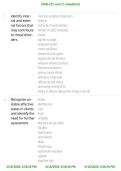
1. identify inter- -Hx of prior episodes of depression
nal and exter- -family hx
nal factors that -hx/fam hx of suicide attempts
may contribute -member of LGBTQ community
to mood disor- -Female
ders. -age 40 or younger
-postpartum period
-chronic med illness
-absence of social support
-negative stressful life events
-withdrawn behavior (isolation)
-Noncommunicativeness
-previous suicide attempt
-difficulty w/ simple tasks
-difficulty decision making
-questioning meaning of life
-feeling an ability to make positive change in ones life
2. Recognize un- -Anxiety
stable affective -Worthlessness
states in clients -Guilt
and identify the -Anger
need for further -irritability
assessment -May not make eye contact
-flat affect
-Slow thinking
-Indecisiveness
-delulu
-Physical signs:
-psychomotor retardation
-agitation
-vegetative signs
4/16/2026, 4:58:38 PM 4/16/2026,:58:36 PM 4/16/2026, 4:58:34 PM
, [NSG-121 exam 2 completed]
NSG-121 exam 2 completed
Study online at https://quizlet.com/_gq20bx
-sleep pattern changes
-Anergia- reduction in lack of energy)
-Communication style:
-monotone speech
-slow response
3. Identify nursing -Attempted suicide
diagnoses applic- -Risk for destructive behavior
able to clients -Risk for Suicide/self-mutilation
with Major De- -Despair
pressive Disorder -Hopelessness
(MDD). -Helplessness
-Self Care deficit
-Impaired sleep
-Impaired nutritional status
-Impaired socialization
-Impaired coping process, cognition, role performance, verbal communication
-Impaired thought process
4. Identify evi- Pharmacological Interventions
dence-based in- -SSRIs
terventions for -SNRIs
providing care to -atypical antidepressants
clients with MDD. -Tricyclics
(Emphasized) Psychotherapeutic Interventions
-Cognitive Behavioral Therapy (CBT)
-Interpersonal Therapy (IPT)
-Behavioral Activation
-Mindfulness-Based Cognitive Therapy (MBCT)
Lifestyle Modifications:
-Regular Physical Activity
-Healthy diet
4/16/2026, 4:58:38 PM 4/16/2026,:58:36 PM 4/16/2026, 4:58:34 PM
, [NSG-121 exam 2 completed]
NSG-121 exam 2 completed
Study online at https://quizlet.com/_gq20bx
-Sleep hygiene
-Educating Clients and Families
-Peer Support Programs
-Family Involvement
-Electroconvulsive Therapy (ECT)
-Transcranial Magnetic Stimulation (TMS)
-Regular Assessments
5. Priority diagnosis -Risk for Suicide
for a client at risk -Major Depressive Disorder (if applicable)
for suicide -Anxiety Disorders
-Substance Use Disorder
-Post-Traumatic Stress Disorder (PTSD)
6. Priority interven- Protective factors:
tions for a client -suicide precautions (removing anything harmful from room)
at risk for suicide -Support groups
-increasing coping skills
-minimizing isolation and loneliness
*if a suicidal pt ever makes comments about not wanting to be alive, you should
not leave them alone*
7. Cognitive way Increase pts knowledge
that a nurse -written material
can teach a -lecture
client about -discussion
brain-based dis- -Understanding the Disorder
orders -Treatment Options
-Self-Management Strategies
-Pamphlet providing knowledge of new medication: EMSAM (MAOI) patch
8. Affective way intent to change attitudes/opinions/feelings
that a nurse -Intended to change attitude
4/16/2026, 4:58:38 PM 4/16/2026,:58:36 PM 4/16/2026, 4:58:34 PM
NSG-121 exam 2 completed
Study online at https://quizlet.com/_gq20bx
1. identify inter- -Hx of prior episodes of depression
nal and exter- -family hx
nal factors that -hx/fam hx of suicide attempts
may contribute -member of LGBTQ community
to mood disor- -Female
ders. -age 40 or younger
-postpartum period
-chronic med illness
-absence of social support
-negative stressful life events
-withdrawn behavior (isolation)
-Noncommunicativeness
-previous suicide attempt
-difficulty w/ simple tasks
-difficulty decision making
-questioning meaning of life
-feeling an ability to make positive change in ones life
2. Recognize un- -Anxiety
stable affective -Worthlessness
states in clients -Guilt
and identify the -Anger
need for further -irritability
assessment -May not make eye contact
-flat affect
-Slow thinking
-Indecisiveness
-delulu
-Physical signs:
-psychomotor retardation
-agitation
-vegetative signs
4/16/2026, 4:58:38 PM 4/16/2026,:58:36 PM 4/16/2026, 4:58:34 PM
, [NSG-121 exam 2 completed]
NSG-121 exam 2 completed
Study online at https://quizlet.com/_gq20bx
-sleep pattern changes
-Anergia- reduction in lack of energy)
-Communication style:
-monotone speech
-slow response
3. Identify nursing -Attempted suicide
diagnoses applic- -Risk for destructive behavior
able to clients -Risk for Suicide/self-mutilation
with Major De- -Despair
pressive Disorder -Hopelessness
(MDD). -Helplessness
-Self Care deficit
-Impaired sleep
-Impaired nutritional status
-Impaired socialization
-Impaired coping process, cognition, role performance, verbal communication
-Impaired thought process
4. Identify evi- Pharmacological Interventions
dence-based in- -SSRIs
terventions for -SNRIs
providing care to -atypical antidepressants
clients with MDD. -Tricyclics
(Emphasized) Psychotherapeutic Interventions
-Cognitive Behavioral Therapy (CBT)
-Interpersonal Therapy (IPT)
-Behavioral Activation
-Mindfulness-Based Cognitive Therapy (MBCT)
Lifestyle Modifications:
-Regular Physical Activity
-Healthy diet
4/16/2026, 4:58:38 PM 4/16/2026,:58:36 PM 4/16/2026, 4:58:34 PM
, [NSG-121 exam 2 completed]
NSG-121 exam 2 completed
Study online at https://quizlet.com/_gq20bx
-Sleep hygiene
-Educating Clients and Families
-Peer Support Programs
-Family Involvement
-Electroconvulsive Therapy (ECT)
-Transcranial Magnetic Stimulation (TMS)
-Regular Assessments
5. Priority diagnosis -Risk for Suicide
for a client at risk -Major Depressive Disorder (if applicable)
for suicide -Anxiety Disorders
-Substance Use Disorder
-Post-Traumatic Stress Disorder (PTSD)
6. Priority interven- Protective factors:
tions for a client -suicide precautions (removing anything harmful from room)
at risk for suicide -Support groups
-increasing coping skills
-minimizing isolation and loneliness
*if a suicidal pt ever makes comments about not wanting to be alive, you should
not leave them alone*
7. Cognitive way Increase pts knowledge
that a nurse -written material
can teach a -lecture
client about -discussion
brain-based dis- -Understanding the Disorder
orders -Treatment Options
-Self-Management Strategies
-Pamphlet providing knowledge of new medication: EMSAM (MAOI) patch
8. Affective way intent to change attitudes/opinions/feelings
that a nurse -Intended to change attitude
4/16/2026, 4:58:38 PM 4/16/2026,:58:36 PM 4/16/2026, 4:58:34 PM


