

NSG-119 exam 4
Latest NSG-119 exam 4 (Answer Guide)
Study online at https://quizlet.com/_h1llt5
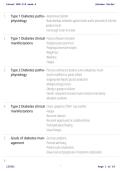
1. Type 1 Diabetes patho- -Autoimmune disorder
physiology -Body develops antibodies against insulin and/or pancreatic β cells that
produce insulin
-not enough insulin to survive
2. Type 1 Diabetes clinical -Polyuria (frequent urination)
manifestations -Polydipsia (excessive thirst)
-Polyphagia (excessive hunger)
-Weight loss
-Weakness
-Fatigue
3. Type 2 Diabetes patho- -Pancreas continues to produce some endogenous insulin
physiology -Insulin insufficient or poorly utilized
-Inappropriate hepatic glucose production
-Multiple etiologic factors
-Obesity is greatest risk factor
-Genetic component increases insulin resistance and obesity
-Metabolic syndrome
4. Type 2 Diabetes clinical -Classic symptoms of DM 1 may manifest
manifestations -Fatigue
-Recurrent infection
-Recurrent vaginal yeast or candida infection
-Prolonged wound healing
-Visual changes
5. Goals of diabetes man- -Decrease symptoms
agement -Promote well-being
-Prevent acute complications
-Delay onset and progression of long-term complications
6.
[2026] Page 1 of 24
, NSG-119 exam 4
Latest NSG-119 exam 4 (Answer Guide)
Study online at https://quizlet.com/_h1llt5
Patient teaching for di- -Nutritional therapy
abetes mellitus -Drug therapy
-Exercise
-Self-monitoring of blood glucose
7. Acute Complications of -Diabetic Ketoacidosis (DKA)
Diabetes mellitus -Hyperosmolar Hyperglycemic State (HHS)
-Hypoglycemia
8. Diabetic Ketoacidosis -Illness
(DKA) patho/precipitat- -Infection
ing factors -Inadequate insulin dosage
-Undiagnosed type 1 diabetes
-Poor self-management
-Neglect
9. Diabetic Ketoacidosis -Polyuria + polydipsia
(DKA) clinical manifes- -Enuresis
tations -Dehydration
-Tachycardia
-Orthostasis
-Abdominal pain
-Nausea
-Vomiting
-Fruity breath
-Acetone
-Kussmaul breathing
-Mental status chanes
-Combative
-Drunk
-Coma
10.
[2026] Page 2 of 24
, NSG-119 exam 4
Latest NSG-119 exam 4 (Answer Guide)
Study online at https://quizlet.com/_h1llt5
Hyperosmolar Hy- -Enough circulating insulin to prevent ketoacidosis
perglycemic State -Ketones absent
(HHS) patho/precipitat- -Precipitating factors:
ing factors -UTIs
-Pneumonia
-Sepsis
-Acute illness
-Newly diagnosed type 2 diabetes
-Impaired thirst sensation and/or inability to replace fluids
11. Hyperosmolar Hyper- -extreme thirst
glycemic State (HHS) -Polyuria
clinical manifestations -Hypotension
-dry mucous membranes
-altered mental status
-Coma
12. Hypoglycemia Patho Too much insulin in proportion to glucose in the blood
13. Hypoglycemia clinical -Shakiness
manifestations -Palpitations
-Nervousness
-Diaphoresis (sweating)
-Anxiety
-Hunger
-Pallor
-Altered mental functioning
-Difficulty speaking
-Visual disturbances
-Stupor
-Confusion
-Coma
[2026] Page 3 of 24
Latest NSG-119 exam 4 (Answer Guide)
Study online at https://quizlet.com/_h1llt5
1. Type 1 Diabetes patho- -Autoimmune disorder
physiology -Body develops antibodies against insulin and/or pancreatic β cells that
produce insulin
-not enough insulin to survive
2. Type 1 Diabetes clinical -Polyuria (frequent urination)
manifestations -Polydipsia (excessive thirst)
-Polyphagia (excessive hunger)
-Weight loss
-Weakness
-Fatigue
3. Type 2 Diabetes patho- -Pancreas continues to produce some endogenous insulin
physiology -Insulin insufficient or poorly utilized
-Inappropriate hepatic glucose production
-Multiple etiologic factors
-Obesity is greatest risk factor
-Genetic component increases insulin resistance and obesity
-Metabolic syndrome
4. Type 2 Diabetes clinical -Classic symptoms of DM 1 may manifest
manifestations -Fatigue
-Recurrent infection
-Recurrent vaginal yeast or candida infection
-Prolonged wound healing
-Visual changes
5. Goals of diabetes man- -Decrease symptoms
agement -Promote well-being
-Prevent acute complications
-Delay onset and progression of long-term complications
6.
[2026] Page 1 of 24
, NSG-119 exam 4
Latest NSG-119 exam 4 (Answer Guide)
Study online at https://quizlet.com/_h1llt5
Patient teaching for di- -Nutritional therapy
abetes mellitus -Drug therapy
-Exercise
-Self-monitoring of blood glucose
7. Acute Complications of -Diabetic Ketoacidosis (DKA)
Diabetes mellitus -Hyperosmolar Hyperglycemic State (HHS)
-Hypoglycemia
8. Diabetic Ketoacidosis -Illness
(DKA) patho/precipitat- -Infection
ing factors -Inadequate insulin dosage
-Undiagnosed type 1 diabetes
-Poor self-management
-Neglect
9. Diabetic Ketoacidosis -Polyuria + polydipsia
(DKA) clinical manifes- -Enuresis
tations -Dehydration
-Tachycardia
-Orthostasis
-Abdominal pain
-Nausea
-Vomiting
-Fruity breath
-Acetone
-Kussmaul breathing
-Mental status chanes
-Combative
-Drunk
-Coma
10.
[2026] Page 2 of 24
, NSG-119 exam 4
Latest NSG-119 exam 4 (Answer Guide)
Study online at https://quizlet.com/_h1llt5
Hyperosmolar Hy- -Enough circulating insulin to prevent ketoacidosis
perglycemic State -Ketones absent
(HHS) patho/precipitat- -Precipitating factors:
ing factors -UTIs
-Pneumonia
-Sepsis
-Acute illness
-Newly diagnosed type 2 diabetes
-Impaired thirst sensation and/or inability to replace fluids
11. Hyperosmolar Hyper- -extreme thirst
glycemic State (HHS) -Polyuria
clinical manifestations -Hypotension
-dry mucous membranes
-altered mental status
-Coma
12. Hypoglycemia Patho Too much insulin in proportion to glucose in the blood
13. Hypoglycemia clinical -Shakiness
manifestations -Palpitations
-Nervousness
-Diaphoresis (sweating)
-Anxiety
-Hunger
-Pallor
-Altered mental functioning
-Difficulty speaking
-Visual disturbances
-Stupor
-Confusion
-Coma
[2026] Page 3 of 24


