
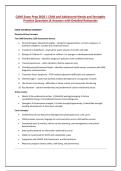
CANS Exam Prep 2026 | Child and Adolescent Needs and Strengths
Practice Questions & Answers with Detailed Rationales
EXAM COVERAGE SUMMARY
Domains & Key Concepts
Ten CANS Domains (139 Assessment Items):
1. Parent/Caregiver Needs & Strengths - ratings for legal guardians, current caregivers, or
potential caregivers; includes 8 IL protective factors
2. Transition to Adulthood - required for youth 14 years 6 months and older
3. Ratings of Children 0-5 - required for children 5 or younger or developmentally disabled
4. Child Risk Behaviors - identifies dangerous behaviors with modified timeframes
5. Trauma Experiences - static indicators; lifetime exposure only
6. Child Behavioral/Emotional Needs - identifies behavioral health needs; consistent with DSM
diagnostic communication
7. Traumatic Stress Symptoms - PTSD-related adjustment difficulties and symptoms
8. Child Strengths - assets that facilitate healthy development; not opposite of needs
9. Life Domain Functioning - difficulties in home, school, and community functioning
10. Acculturation - cultural membership and predominant culture relationship issues
Action Levels:
Needs: 0=No evidence/no action; 1=Watchful waiting/emerging; 2=Action
needed/interfering; 3=Immediate/Intensive action/dangerous
Strengths: 0=Centerpiece strength; 1=Useful strength/opportunity; 2=Identified strength
needing development; 3=No known strength
Core Concepts:
TCOM (Total Clinical Outcomes Management) philosophy by Dr. John Lyons
CANS provides common language for communication across child welfare system
Completed every 6 months; informs service planning, case management, and judicial
determinations
Data quality depends on information obtained by scorer
CANS 2.0 customized for IDCFS with stakeholder input
Integration with CERAP, Risk Assessment, and Social History
Measures progress toward safety, well-being, and permanency
,SECTION A: CAREGIVER NEEDS & STRENGTHS
Questions 1-50
1. When determining which caregivers to assess for CANS ratings, which three factors should be
primarily considered?
A) The caregiver's income, employment status, and education level
B) The current permanency goal, parent's availability, and child's current household
C) The child's age, gender, and developmental stage
D) The caregiver's marital status, housing situation, and transportation access
Rationale: The current permanency goal, parent/caregiver availability during the reporting period,
and the child's current household are the three specified factors for determining which caregivers to
assess according to CANS guidelines.
2. A child is currently living in a congregate setting such as a residential home or group home.
What is the requirement regarding substitute caregiver assessment?
A) The substitute caregiver must be assessed thoroughly every 30 days
B) The substitute caregiver should be assessed if they have contact with the child
C) You do not need to assess a substitute caregiver
D) Only the primary therapist should assess the substitute caregiver
Rationale: When a child resides in a congregate setting (residential home, group home, ILO, or TLP),
the CANS guidelines specify that a substitute caregiver does not need to be assessed.
3. For which permanency goals should parents be assessed whenever possible, even if the goal
suggests the parent may not be available?
A) Only when the goal is "return home"
B) Only when the goal is "guardianship"
C) When the goal is "return home", "guardianship", or "independence"
D) Only when the child is under 5 years old
Rationale: The parent should be assessed whenever possible, even when the goal is "return home,"
"guardianship," or "independence," or when the status is "pending."
4. In which permanency goal situations would caregiver ratings not be completed for parents?
A) When the goal is "return home" and the parent is incarcerated
,B) When the goal is "guardianship" or "independence" and the parent is not available
C) When the goal is "adoption" and the parent has terminated rights
D) When the parent lives in another state
Rationale: When the goal is "guardianship" or "independence," the parent may not be available to
assess, and therefore the ratings will not be completed.
5. Which of the following correctly identifies all eight IL protective factors within the Caregiver
Needs and Strengths domain?
A) Safety, parenting knowledge, concrete supports, social connections, nurturing ability, resilience,
commitment to permanency (caregivers), commitment to permanency (parents)
B) Safety, housing stability, employment, social connections, emotional regulation, resilience,
education, commitment
C) Physical health, mental health, substance use, financial stability, social support, coping skills,
parenting, commitment
D) Safety, nutrition, healthcare access, social connections, educational support, resilience, parenting,
permanency
Rationale: The eight IL protective factors are specifically: Safety, Knowledge of parenting and child
development, Identification and use of concrete supports, Positive family/community/social
connections, Ability to nurture social and emotional competence, Factors contributing to resilience,
Commitment to permanency plan goal (caregivers), and Commitment to permanency plan goal
(parents).
6. A caregiver demonstrates strong knowledge of child development milestones and age-
appropriate expectations. Which IL protective factor is being demonstrated?
A) Safety
B) Knowledge of parenting and child development
C) Ability to nurture social and emotional competence
D) Positive family and social connections
Rationale: Knowledge of parenting and child development specifically refers to the caregiver's
understanding of developmental milestones and age-appropriate expectations for children.
7. A caregiver consistently ensures the home environment is free from hazards and the child is
supervised appropriately. Which IL protective factor is being demonstrated?
A) Identification and use of concrete supports
B) Ability to nurture social and emotional competence
, C) Safety
D) Factors contributing to resilience
Rationale: Safety as an IL protective factor encompasses ensuring the home environment is safe and
children are appropriately supervised to prevent harm.
8. When a caregiver has a strong network of friends, family, and community members who
provide emotional and practical support, which IL protective factor is being addressed?
A) Positive family, community, and social connections
B) Identification and use of concrete supports
C) Factors contributing to resilience
D) Commitment to permanency plan goal
Rationale: Positive family, community, and social connections specifically refers to the caregiver's
network of supportive relationships that provide emotional and practical assistance.
9. A caregiver who can identify community resources, access financial assistance, and obtain
needed services when facing challenges demonstrates which IL protective factor?
A) Safety
B) Knowledge of parenting and child development
C) Ability to nurture social and emotional competence
D) Identification and use of concrete supports in times of need
Rationale: Identification and use of concrete supports refers to the caregiver's ability to recognize
and access community resources, financial assistance, and needed services during difficult times.
10. A caregiver who can bounce back from setbacks, manage stress effectively, and maintain hope
for the future demonstrates which IL protective factor?
A) Positive family and social connections
B) Factors contributing to parent/caregiver resilience
C) Commitment to permanency plan goal
D) Knowledge of parenting and child development
Rationale: Factors contributing to resilience encompasses the caregiver's ability to recover from
adversity, manage stress, and maintain a positive outlook despite challenges.
11. A caregiver who helps their child recognize emotions, develop empathy, and build healthy
relationships demonstrates which IL protective factor?
A) Safety
Practice Questions & Answers with Detailed Rationales
EXAM COVERAGE SUMMARY
Domains & Key Concepts
Ten CANS Domains (139 Assessment Items):
1. Parent/Caregiver Needs & Strengths - ratings for legal guardians, current caregivers, or
potential caregivers; includes 8 IL protective factors
2. Transition to Adulthood - required for youth 14 years 6 months and older
3. Ratings of Children 0-5 - required for children 5 or younger or developmentally disabled
4. Child Risk Behaviors - identifies dangerous behaviors with modified timeframes
5. Trauma Experiences - static indicators; lifetime exposure only
6. Child Behavioral/Emotional Needs - identifies behavioral health needs; consistent with DSM
diagnostic communication
7. Traumatic Stress Symptoms - PTSD-related adjustment difficulties and symptoms
8. Child Strengths - assets that facilitate healthy development; not opposite of needs
9. Life Domain Functioning - difficulties in home, school, and community functioning
10. Acculturation - cultural membership and predominant culture relationship issues
Action Levels:
Needs: 0=No evidence/no action; 1=Watchful waiting/emerging; 2=Action
needed/interfering; 3=Immediate/Intensive action/dangerous
Strengths: 0=Centerpiece strength; 1=Useful strength/opportunity; 2=Identified strength
needing development; 3=No known strength
Core Concepts:
TCOM (Total Clinical Outcomes Management) philosophy by Dr. John Lyons
CANS provides common language for communication across child welfare system
Completed every 6 months; informs service planning, case management, and judicial
determinations
Data quality depends on information obtained by scorer
CANS 2.0 customized for IDCFS with stakeholder input
Integration with CERAP, Risk Assessment, and Social History
Measures progress toward safety, well-being, and permanency
,SECTION A: CAREGIVER NEEDS & STRENGTHS
Questions 1-50
1. When determining which caregivers to assess for CANS ratings, which three factors should be
primarily considered?
A) The caregiver's income, employment status, and education level
B) The current permanency goal, parent's availability, and child's current household
C) The child's age, gender, and developmental stage
D) The caregiver's marital status, housing situation, and transportation access
Rationale: The current permanency goal, parent/caregiver availability during the reporting period,
and the child's current household are the three specified factors for determining which caregivers to
assess according to CANS guidelines.
2. A child is currently living in a congregate setting such as a residential home or group home.
What is the requirement regarding substitute caregiver assessment?
A) The substitute caregiver must be assessed thoroughly every 30 days
B) The substitute caregiver should be assessed if they have contact with the child
C) You do not need to assess a substitute caregiver
D) Only the primary therapist should assess the substitute caregiver
Rationale: When a child resides in a congregate setting (residential home, group home, ILO, or TLP),
the CANS guidelines specify that a substitute caregiver does not need to be assessed.
3. For which permanency goals should parents be assessed whenever possible, even if the goal
suggests the parent may not be available?
A) Only when the goal is "return home"
B) Only when the goal is "guardianship"
C) When the goal is "return home", "guardianship", or "independence"
D) Only when the child is under 5 years old
Rationale: The parent should be assessed whenever possible, even when the goal is "return home,"
"guardianship," or "independence," or when the status is "pending."
4. In which permanency goal situations would caregiver ratings not be completed for parents?
A) When the goal is "return home" and the parent is incarcerated
,B) When the goal is "guardianship" or "independence" and the parent is not available
C) When the goal is "adoption" and the parent has terminated rights
D) When the parent lives in another state
Rationale: When the goal is "guardianship" or "independence," the parent may not be available to
assess, and therefore the ratings will not be completed.
5. Which of the following correctly identifies all eight IL protective factors within the Caregiver
Needs and Strengths domain?
A) Safety, parenting knowledge, concrete supports, social connections, nurturing ability, resilience,
commitment to permanency (caregivers), commitment to permanency (parents)
B) Safety, housing stability, employment, social connections, emotional regulation, resilience,
education, commitment
C) Physical health, mental health, substance use, financial stability, social support, coping skills,
parenting, commitment
D) Safety, nutrition, healthcare access, social connections, educational support, resilience, parenting,
permanency
Rationale: The eight IL protective factors are specifically: Safety, Knowledge of parenting and child
development, Identification and use of concrete supports, Positive family/community/social
connections, Ability to nurture social and emotional competence, Factors contributing to resilience,
Commitment to permanency plan goal (caregivers), and Commitment to permanency plan goal
(parents).
6. A caregiver demonstrates strong knowledge of child development milestones and age-
appropriate expectations. Which IL protective factor is being demonstrated?
A) Safety
B) Knowledge of parenting and child development
C) Ability to nurture social and emotional competence
D) Positive family and social connections
Rationale: Knowledge of parenting and child development specifically refers to the caregiver's
understanding of developmental milestones and age-appropriate expectations for children.
7. A caregiver consistently ensures the home environment is free from hazards and the child is
supervised appropriately. Which IL protective factor is being demonstrated?
A) Identification and use of concrete supports
B) Ability to nurture social and emotional competence
, C) Safety
D) Factors contributing to resilience
Rationale: Safety as an IL protective factor encompasses ensuring the home environment is safe and
children are appropriately supervised to prevent harm.
8. When a caregiver has a strong network of friends, family, and community members who
provide emotional and practical support, which IL protective factor is being addressed?
A) Positive family, community, and social connections
B) Identification and use of concrete supports
C) Factors contributing to resilience
D) Commitment to permanency plan goal
Rationale: Positive family, community, and social connections specifically refers to the caregiver's
network of supportive relationships that provide emotional and practical assistance.
9. A caregiver who can identify community resources, access financial assistance, and obtain
needed services when facing challenges demonstrates which IL protective factor?
A) Safety
B) Knowledge of parenting and child development
C) Ability to nurture social and emotional competence
D) Identification and use of concrete supports in times of need
Rationale: Identification and use of concrete supports refers to the caregiver's ability to recognize
and access community resources, financial assistance, and needed services during difficult times.
10. A caregiver who can bounce back from setbacks, manage stress effectively, and maintain hope
for the future demonstrates which IL protective factor?
A) Positive family and social connections
B) Factors contributing to parent/caregiver resilience
C) Commitment to permanency plan goal
D) Knowledge of parenting and child development
Rationale: Factors contributing to resilience encompasses the caregiver's ability to recover from
adversity, manage stress, and maintain a positive outlook despite challenges.
11. A caregiver who helps their child recognize emotions, develop empathy, and build healthy
relationships demonstrates which IL protective factor?
A) Safety


