
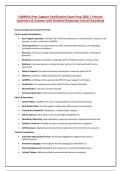
CalMHSA Peer Support Certification Exam Prep 2026 | Practice
Questions & Answers with Detailed Rationales Instant Download
Exam Coverage Summary (Point Form)
Core Concepts & Definitions
Peer Support Specialist: Individual 18+ with lived experience of mental illness, substance use
disorder, or both, certified by CalMHSA
Lived Experience: First-hand experience with mental health/substance use challenges,
including recovery and resiliency
Recovery: Process of change improving health/wellness, self-directed life, reaching full
potential
Resiliency: Capacity to meet life's challenges with self-determination, mastery, hope
Wellness: Conscious process creating behavior patterns for improved health across
dimensions
Natural Supports: Personal community connections enhancing quality of life
Medi-Cal: California's Medicaid program for qualifying individuals
CalMHSA: Certifying entity approved by DHCS for peer support certification
Certification: All requirements met for Medi-Cal Peer Support Specialist
Recertification: Two-year renewal intervals
Continued Education: Professional development for best practices, updated laws
Ethics & Boundaries
Code of Ethics: Guidelines for roles, responsibilities, professional functioning
Dual Relationship: Non-therapeutic relationship with recipient (not allowed)
Professional Standards: Boundaries, confidentiality, integrity
Gift Acceptance: Must decline but acknowledge thoughtfulness
Mandatory Reporting: Legal obligations requiring reporting to appropriate authorities
Conflict of Interest: Avoiding situations compromising professional judgment
Self-Disclosure: Appropriate sharing of lived experience when beneficial to consumer
Cultural Competency
Culturally Appropriate Services: Promoting engagement aligned with cultural
beliefs/practices
Prevalent Languages: Non-English threshold languages under Medi-Cal
Diverse Backgrounds: Respectful and responsive to cultural beliefs/practices
Cultural Taboos: Addressing family communication barriers sensitively
, Language Access: Providing services in consumer's preferred language
Recovery Support
Person-Centered Planning: Individualized recovery goals and objectives
Wellness Plans: Tools and models for creating personal wellness strategies
Harm Reduction: Decreasing overdose risk, improving system access
Self-Advocacy: Promoting personal needs, goals, objectives as focal points
Trauma-Informed Care: Awareness of trauma impact on choices and behavior
Strengths-Based Approach: Identifying and building on individual strengths
Empowerment: Supporting consumer autonomy and self-determination
Advocacy & Community Inclusion
Self-Advocacy: Consumer-directed communication of needs
System Advocacy: Navigating service systems and care coordination
Community Resources: Accessing social services, benefits, housing
Liaison Role: Collaborating with stakeholders, agencies, community partners
Community Participation: Supporting involvement in work, school, relationships
Disability Rights: Educating consumers on legal protections
Employment Advocacy: Supporting employment and workplace accommodations
Crisis Management
Pre-Crisis Planning: Wellness toolbox and potential stressor identification
Crisis Response: Emergency protocols and de-escalation techniques
Safety Planning: Individualized safety strategies
Support Networks: Utilizing natural supports during crises
Interpersonal Skills
Self-Awareness: Ensuring consumer resiliency and recovery remain focal
Active Listening: Engaging presence and empathic understanding
Role Modeling: Demonstrating effective communication and coping strategies
Team Collaboration: Working with care teams, supervising staff
Administrative Responsibilities
Documentation: Maintaining accurate records
Staff Meetings: Participation in professional meetings
Supervision: Individual and group supervision
Care Coordination: Collaboration across service providers
, Training: Continuing education requirements
Domain 1: Administrative Responsibilities
Question 1
A Peer Support Specialist is documenting a session with a consumer and realizes they made an error
in the progress note regarding medication information. What is the most appropriate action to take?
A. Cross out the error and write the correct information above it
B. Leave the error and add a separate note with the correction
C. Follow agency protocol for correcting documentation errors
D. Rewrite the entire note without mentioning the error
Answer: C
Correcting documentation errors must follow agency protocols to maintain legal and professional
standards. Striking through errors or rewriting notes without proper protocol could compromise the
integrity of clinical records.
Question 2
A consumer asks their Peer Support Specialist to serve as a character witness in their custody
hearing. How should the specialist respond?
A. Agree to serve as a character witness to support the consumer
B. Explain that this would create a dual relationship and decline
C. Offer to write a letter but not appear in court
D. Refer the consumer to their therapist for this request
Answer: B
Serving as a character witness creates a dual relationship that violates the Code of Ethics. Peer
Support Specialists must maintain professional boundaries and avoid roles outside their defined
scope.
, Question 3
During a supervision meeting, a Peer Support Specialist discusses a challenging interaction with a
consumer. The supervisor suggests an alternative approach. What should the specialist do?
A. Implement the supervisor's suggestion immediately
B. Critically evaluate the suggestion with the supervisor
C. Continue using the original approach that feels comfortable
D. Ask the consumer which approach they prefer
Answer: B
Supervision is a collaborative process where specialists should actively engage in evaluating
feedback. While supervisor input is valuable, peer providers bring lived experience perspectives to the
discussion.
Question 4
A Peer Support Specialist has been asked to attend a care coordination meeting for a consumer they
support. What is the specialist's primary role in this meeting?
A. To advocate for the consumer's treatment plan preferences
B. To provide clinical recommendations to the treatment team
C. To report the consumer's progress toward recovery goals
D. To represent the consumer's perspective from peer support experience
Answer: D
The peer support specialist's unique role is to share the consumer's perspective based on lived
experience and the peer support relationship, not to provide clinical recommendations or solely
report progress.
Question 5
A Peer Support Specialist discovers that a colleague has been gossiping about a mutual consumer in
the break room. What action should the specialist take?
A. Join the conversation to gather more information
B. Report the colleague to their supervisor immediately
Questions & Answers with Detailed Rationales Instant Download
Exam Coverage Summary (Point Form)
Core Concepts & Definitions
Peer Support Specialist: Individual 18+ with lived experience of mental illness, substance use
disorder, or both, certified by CalMHSA
Lived Experience: First-hand experience with mental health/substance use challenges,
including recovery and resiliency
Recovery: Process of change improving health/wellness, self-directed life, reaching full
potential
Resiliency: Capacity to meet life's challenges with self-determination, mastery, hope
Wellness: Conscious process creating behavior patterns for improved health across
dimensions
Natural Supports: Personal community connections enhancing quality of life
Medi-Cal: California's Medicaid program for qualifying individuals
CalMHSA: Certifying entity approved by DHCS for peer support certification
Certification: All requirements met for Medi-Cal Peer Support Specialist
Recertification: Two-year renewal intervals
Continued Education: Professional development for best practices, updated laws
Ethics & Boundaries
Code of Ethics: Guidelines for roles, responsibilities, professional functioning
Dual Relationship: Non-therapeutic relationship with recipient (not allowed)
Professional Standards: Boundaries, confidentiality, integrity
Gift Acceptance: Must decline but acknowledge thoughtfulness
Mandatory Reporting: Legal obligations requiring reporting to appropriate authorities
Conflict of Interest: Avoiding situations compromising professional judgment
Self-Disclosure: Appropriate sharing of lived experience when beneficial to consumer
Cultural Competency
Culturally Appropriate Services: Promoting engagement aligned with cultural
beliefs/practices
Prevalent Languages: Non-English threshold languages under Medi-Cal
Diverse Backgrounds: Respectful and responsive to cultural beliefs/practices
Cultural Taboos: Addressing family communication barriers sensitively
, Language Access: Providing services in consumer's preferred language
Recovery Support
Person-Centered Planning: Individualized recovery goals and objectives
Wellness Plans: Tools and models for creating personal wellness strategies
Harm Reduction: Decreasing overdose risk, improving system access
Self-Advocacy: Promoting personal needs, goals, objectives as focal points
Trauma-Informed Care: Awareness of trauma impact on choices and behavior
Strengths-Based Approach: Identifying and building on individual strengths
Empowerment: Supporting consumer autonomy and self-determination
Advocacy & Community Inclusion
Self-Advocacy: Consumer-directed communication of needs
System Advocacy: Navigating service systems and care coordination
Community Resources: Accessing social services, benefits, housing
Liaison Role: Collaborating with stakeholders, agencies, community partners
Community Participation: Supporting involvement in work, school, relationships
Disability Rights: Educating consumers on legal protections
Employment Advocacy: Supporting employment and workplace accommodations
Crisis Management
Pre-Crisis Planning: Wellness toolbox and potential stressor identification
Crisis Response: Emergency protocols and de-escalation techniques
Safety Planning: Individualized safety strategies
Support Networks: Utilizing natural supports during crises
Interpersonal Skills
Self-Awareness: Ensuring consumer resiliency and recovery remain focal
Active Listening: Engaging presence and empathic understanding
Role Modeling: Demonstrating effective communication and coping strategies
Team Collaboration: Working with care teams, supervising staff
Administrative Responsibilities
Documentation: Maintaining accurate records
Staff Meetings: Participation in professional meetings
Supervision: Individual and group supervision
Care Coordination: Collaboration across service providers
, Training: Continuing education requirements
Domain 1: Administrative Responsibilities
Question 1
A Peer Support Specialist is documenting a session with a consumer and realizes they made an error
in the progress note regarding medication information. What is the most appropriate action to take?
A. Cross out the error and write the correct information above it
B. Leave the error and add a separate note with the correction
C. Follow agency protocol for correcting documentation errors
D. Rewrite the entire note without mentioning the error
Answer: C
Correcting documentation errors must follow agency protocols to maintain legal and professional
standards. Striking through errors or rewriting notes without proper protocol could compromise the
integrity of clinical records.
Question 2
A consumer asks their Peer Support Specialist to serve as a character witness in their custody
hearing. How should the specialist respond?
A. Agree to serve as a character witness to support the consumer
B. Explain that this would create a dual relationship and decline
C. Offer to write a letter but not appear in court
D. Refer the consumer to their therapist for this request
Answer: B
Serving as a character witness creates a dual relationship that violates the Code of Ethics. Peer
Support Specialists must maintain professional boundaries and avoid roles outside their defined
scope.
, Question 3
During a supervision meeting, a Peer Support Specialist discusses a challenging interaction with a
consumer. The supervisor suggests an alternative approach. What should the specialist do?
A. Implement the supervisor's suggestion immediately
B. Critically evaluate the suggestion with the supervisor
C. Continue using the original approach that feels comfortable
D. Ask the consumer which approach they prefer
Answer: B
Supervision is a collaborative process where specialists should actively engage in evaluating
feedback. While supervisor input is valuable, peer providers bring lived experience perspectives to the
discussion.
Question 4
A Peer Support Specialist has been asked to attend a care coordination meeting for a consumer they
support. What is the specialist's primary role in this meeting?
A. To advocate for the consumer's treatment plan preferences
B. To provide clinical recommendations to the treatment team
C. To report the consumer's progress toward recovery goals
D. To represent the consumer's perspective from peer support experience
Answer: D
The peer support specialist's unique role is to share the consumer's perspective based on lived
experience and the peer support relationship, not to provide clinical recommendations or solely
report progress.
Question 5
A Peer Support Specialist discovers that a colleague has been gossiping about a mutual consumer in
the break room. What action should the specialist take?
A. Join the conversation to gather more information
B. Report the colleague to their supervisor immediately


