
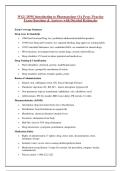
Exam Coverage Summary
Drug Laws & Standards
1906 Pure Food and Drug Act: prohibited adulterated/mislabeled products
1938 Food, Drug and Cosmetic Act: required labeling, drug approval, warning labels
1970 Controlled Substances Act: established DEA, set standards for abused drugs
FDA functions: investigates/removes unsafe drugs, ensures safety/efficacy
Drug schedules I-V based on abuse potential and medical use
Drug Naming & Classification
Three identifiers: chemical, generic, trade/brand names
Drug classes: grouped by mechanism of action
Drug standards: uniform strength, quality, purity
Routes of Administration
Enteral: oral, sublingual, rectal, NG, buccal (through GI tract)
Parenteral: injections (IV, IM, SC) - fastest absorption, bypasses GI
Non-parenteral: topical, transdermal, ophthalmic, otic, inhalation, nasal
Abbreviations: PO (by mouth), BID (twice daily), PR (rectal), C (with)
Pharmacokinetics (ADME)
Absorption: drug movement from site to bloodstream
Distribution: from bloodstream to organs/cells
Metabolism: chemical alteration (mainly liver)
Excretion: elimination from body
Half-life: time for 50% drug elimination
Drug interactions: synergism, potentiation, antagonism
Medication Safety
Rights of administration (7 rights): drug, client, time, documentation, route,
technique, dosage
Sentinel events: severe errors causing death/significant harm
Medication reconciliation: 5 steps (list current, list prescribed, compare, decide,
communicate)
Poison control: 1-800-222-1222
, Highest poisoning risk: ages 1-5
Cardiovascular Drugs
Cardiac glycosides (digoxin): increase cardiac contraction force
Antiarrhythmics (amiodarone): suppress arrhythmias
Beta-blockers (metoprolol): block beta receptors, lower BP
Calcium channel blockers (amlodipine): inhibit calcium entry, lower BP
Diuretics (HCTZ): increase urine output, lower BP
ACE inhibitors (lisinopril): block ACE, decrease angiotensin II
ARBs (losartan): block angiotensin receptors directly
Vasodilators (nitroglycerin): increase blood supply, treat angina
Antilipemics (atorvastatin, fenofibrate): lower cholesterol/triglycerides
Antithrombotics (warfarin): prevent blood clotting
Respiratory Drugs
Bronchodilators: SABA (albuterol), LABA (formoterol)
Anticholinergics (ipratropium): block nervous receptors
Xanthines (theophylline): relax bronchial smooth muscle
Inhaled corticosteroids (fluticasone): reduce inflammation
Expectorants (guaifenesin): thin mucus
Antitussives (dextromethorphan): suppress cough
Antihistamines: first-gen (diphenhydramine) sedating; second-gen (loratadine) non-
sedating
Decongestants (pseudoephedrine, oxymetazoline)
GI Drugs
Antacids (calcium carbonate, Maalox): neutralize stomach acid
H2 blockers (famotidine, cimetidine): reduce acid production
PPIs (omeprazole, esomeprazole): inhibit acid pumps
Antidiarrheals: bismuth subsalicylate, opiate agonists (loperamide)
Laxatives/stool softeners (psyllium, docusate)
Antiemetics: dimenhydrinate, meclizine, promethazine
Endocrine Drugs
Adrenal corticosteroids (prednisone): reduce inflammation
Thyroid replacement (levothyroxine): treat hypothyroidism
, Antithyroid (methimazole, PTU): treat hyperthyroidism
Insulins: rapid (aspart), intermediate (NPH), long-acting (glargine)
Biguanides (metformin): decrease liver glucose production
Sulfonylureas (glipizide): increase insulin production
GU/Reproductive Drugs
Antiandrogens (finasteride): treat BPH
Alpha-blockers (tamsulosin): relax prostate/bladder
Urinary analgesic (phenazopyridine): treat UTI pain
Antibiotics
Bactericidal vs bacteriostatic
Beta-lactams: penicillins, cephalosporins
Macrolides (azithromycin): least toxic, treat respiratory/STIs
Fluoroquinolones (ciprofloxacin): UTIs, respiratory, bone/joint
Aminoglycosides (gentamicin): IV only, potent
Tetracyclines (doxycycline): acne, chlamydia, rickettsia
Carbapenems (imipenem): serious hospital infections
Others: clindamycin, metronidazole, vancomycin
Antineoplastic Drugs
Antimetabolites (methotrexate): affect dividing cells
Alkylating agents (cisplatin): prevent cell growth
Mitotic inhibitors (vincristine): inhibit cell division
Antitumor antibiotics (doxorubicin): target cancer cell DNA
Biologics: active (interferons), passive (monoclonal antibodies)
Targeted therapies (Gleevec): oral, block cell signals
Radioactive isotopes (sodium iodine): targeted radiation
CNS/Psych Drugs
ADHD treatments: stimulants (modafinil), non-stimulants (Strattera)
Antidepressants: SSRIs (fluoxetine), SNRIs, TCAs
Benzodiazepines (diazepam): sedative, anti-anxiety
Lithium: bipolar disorder
Anticonvulsants (valproate): also treat bipolar
Antipsychotics: typical (haloperidol), atypical (quetiapine)
, Alcoholism treatments: disulfiram, naltrexone
Nutrition & Supplements
DRIs: RDAs (minimum), AI (estimated), UL (maximum)
Fat-soluble vitamins: A, D, E, K (store in body, overdose risk)
Water-soluble vitamins: B, C (excreted in urine)
Essential minerals: sodium, chloride, potassium, calcium, iron, zinc
Electrolytes: maintain fluid balance
Dietary supplements: vitamins, minerals, probiotics, herbs
250 Questions
1. A nurse is preparing to administer digoxin to a patient with heart failure. Which
assessment finding would indicate a potential toxic effect of this medication?
A) Increased appetite and weight gain
B) Visual disturbances including halos around lights
C) Decreased heart rate with bounding pulses
D) Elevated blood pressure with bradycardia
Digoxin toxicity commonly presents with visual disturbances such as seeing halos or yellow-
green color changes, along with GI symptoms and cardiac arrhythmias.
2. A patient prescribed lisinopril for hypertension develops a persistent dry cough and
reports swelling around the lips. What is the most appropriate action by the healthcare
provider?
A) Continue the medication and add an antitussive
B) Switch the patient to an angiotensin receptor blocker
C) Increase the dosage to improve effectiveness
D) Prescribe an antihistamine to treat both symptoms
Angioedema and cough are known adverse effects of ACE inhibitors; ARBs are often
substituted as they have a lower incidence of these side effects.
3. A 45-year-old patient with type 2 diabetes is started on metformin. Which adverse
effect should the nurse include in the patient teaching plan?
A) Weight gain and fluid retention
B) Gastrointestinal upset and metallic taste
C) Hypoglycemia and tremors
Drug Laws & Standards
1906 Pure Food and Drug Act: prohibited adulterated/mislabeled products
1938 Food, Drug and Cosmetic Act: required labeling, drug approval, warning labels
1970 Controlled Substances Act: established DEA, set standards for abused drugs
FDA functions: investigates/removes unsafe drugs, ensures safety/efficacy
Drug schedules I-V based on abuse potential and medical use
Drug Naming & Classification
Three identifiers: chemical, generic, trade/brand names
Drug classes: grouped by mechanism of action
Drug standards: uniform strength, quality, purity
Routes of Administration
Enteral: oral, sublingual, rectal, NG, buccal (through GI tract)
Parenteral: injections (IV, IM, SC) - fastest absorption, bypasses GI
Non-parenteral: topical, transdermal, ophthalmic, otic, inhalation, nasal
Abbreviations: PO (by mouth), BID (twice daily), PR (rectal), C (with)
Pharmacokinetics (ADME)
Absorption: drug movement from site to bloodstream
Distribution: from bloodstream to organs/cells
Metabolism: chemical alteration (mainly liver)
Excretion: elimination from body
Half-life: time for 50% drug elimination
Drug interactions: synergism, potentiation, antagonism
Medication Safety
Rights of administration (7 rights): drug, client, time, documentation, route,
technique, dosage
Sentinel events: severe errors causing death/significant harm
Medication reconciliation: 5 steps (list current, list prescribed, compare, decide,
communicate)
Poison control: 1-800-222-1222
, Highest poisoning risk: ages 1-5
Cardiovascular Drugs
Cardiac glycosides (digoxin): increase cardiac contraction force
Antiarrhythmics (amiodarone): suppress arrhythmias
Beta-blockers (metoprolol): block beta receptors, lower BP
Calcium channel blockers (amlodipine): inhibit calcium entry, lower BP
Diuretics (HCTZ): increase urine output, lower BP
ACE inhibitors (lisinopril): block ACE, decrease angiotensin II
ARBs (losartan): block angiotensin receptors directly
Vasodilators (nitroglycerin): increase blood supply, treat angina
Antilipemics (atorvastatin, fenofibrate): lower cholesterol/triglycerides
Antithrombotics (warfarin): prevent blood clotting
Respiratory Drugs
Bronchodilators: SABA (albuterol), LABA (formoterol)
Anticholinergics (ipratropium): block nervous receptors
Xanthines (theophylline): relax bronchial smooth muscle
Inhaled corticosteroids (fluticasone): reduce inflammation
Expectorants (guaifenesin): thin mucus
Antitussives (dextromethorphan): suppress cough
Antihistamines: first-gen (diphenhydramine) sedating; second-gen (loratadine) non-
sedating
Decongestants (pseudoephedrine, oxymetazoline)
GI Drugs
Antacids (calcium carbonate, Maalox): neutralize stomach acid
H2 blockers (famotidine, cimetidine): reduce acid production
PPIs (omeprazole, esomeprazole): inhibit acid pumps
Antidiarrheals: bismuth subsalicylate, opiate agonists (loperamide)
Laxatives/stool softeners (psyllium, docusate)
Antiemetics: dimenhydrinate, meclizine, promethazine
Endocrine Drugs
Adrenal corticosteroids (prednisone): reduce inflammation
Thyroid replacement (levothyroxine): treat hypothyroidism
, Antithyroid (methimazole, PTU): treat hyperthyroidism
Insulins: rapid (aspart), intermediate (NPH), long-acting (glargine)
Biguanides (metformin): decrease liver glucose production
Sulfonylureas (glipizide): increase insulin production
GU/Reproductive Drugs
Antiandrogens (finasteride): treat BPH
Alpha-blockers (tamsulosin): relax prostate/bladder
Urinary analgesic (phenazopyridine): treat UTI pain
Antibiotics
Bactericidal vs bacteriostatic
Beta-lactams: penicillins, cephalosporins
Macrolides (azithromycin): least toxic, treat respiratory/STIs
Fluoroquinolones (ciprofloxacin): UTIs, respiratory, bone/joint
Aminoglycosides (gentamicin): IV only, potent
Tetracyclines (doxycycline): acne, chlamydia, rickettsia
Carbapenems (imipenem): serious hospital infections
Others: clindamycin, metronidazole, vancomycin
Antineoplastic Drugs
Antimetabolites (methotrexate): affect dividing cells
Alkylating agents (cisplatin): prevent cell growth
Mitotic inhibitors (vincristine): inhibit cell division
Antitumor antibiotics (doxorubicin): target cancer cell DNA
Biologics: active (interferons), passive (monoclonal antibodies)
Targeted therapies (Gleevec): oral, block cell signals
Radioactive isotopes (sodium iodine): targeted radiation
CNS/Psych Drugs
ADHD treatments: stimulants (modafinil), non-stimulants (Strattera)
Antidepressants: SSRIs (fluoxetine), SNRIs, TCAs
Benzodiazepines (diazepam): sedative, anti-anxiety
Lithium: bipolar disorder
Anticonvulsants (valproate): also treat bipolar
Antipsychotics: typical (haloperidol), atypical (quetiapine)
, Alcoholism treatments: disulfiram, naltrexone
Nutrition & Supplements
DRIs: RDAs (minimum), AI (estimated), UL (maximum)
Fat-soluble vitamins: A, D, E, K (store in body, overdose risk)
Water-soluble vitamins: B, C (excreted in urine)
Essential minerals: sodium, chloride, potassium, calcium, iron, zinc
Electrolytes: maintain fluid balance
Dietary supplements: vitamins, minerals, probiotics, herbs
250 Questions
1. A nurse is preparing to administer digoxin to a patient with heart failure. Which
assessment finding would indicate a potential toxic effect of this medication?
A) Increased appetite and weight gain
B) Visual disturbances including halos around lights
C) Decreased heart rate with bounding pulses
D) Elevated blood pressure with bradycardia
Digoxin toxicity commonly presents with visual disturbances such as seeing halos or yellow-
green color changes, along with GI symptoms and cardiac arrhythmias.
2. A patient prescribed lisinopril for hypertension develops a persistent dry cough and
reports swelling around the lips. What is the most appropriate action by the healthcare
provider?
A) Continue the medication and add an antitussive
B) Switch the patient to an angiotensin receptor blocker
C) Increase the dosage to improve effectiveness
D) Prescribe an antihistamine to treat both symptoms
Angioedema and cough are known adverse effects of ACE inhibitors; ARBs are often
substituted as they have a lower incidence of these side effects.
3. A 45-year-old patient with type 2 diabetes is started on metformin. Which adverse
effect should the nurse include in the patient teaching plan?
A) Weight gain and fluid retention
B) Gastrointestinal upset and metallic taste
C) Hypoglycemia and tremors


