

All Pliny notes
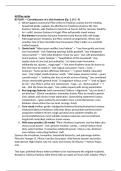
B) PLINY — Convalescence of a sick freedman (Ep. 5.19.1–9)
1. What happens (summary) Pliny writes to Paulinus: praises him for treating
household kindly, explains his affection for freedman Zosimus (ill), lists
Zosimus’ talents, asks Paulinus to host him at Forum Julii for recovery (healthy
air + milk), stresses Zosimus is frugal; Pliny will provide travel money.
2. Key themes Humanitas (humane treatment) and Roman elite self-image.
Patronage/power: kindness, but Pliny controls arrangements. Illness and
emotion: fear of loss intensifies love.Persuasion: Pliny’s letter as a carefully
crafted request.
3. Quote bank “Video quam molliter tuos habeas” = “I see how gently you treat
your household.” Use: flattering opening; builds goodwill. “qua indulgentia
meos tractem” = “with what kindness I treat my own.” Use: self-presentation;
moral posture. “pater familiae” = “head/father of the household.” Use:
implies duty of care (not just authority). “cui tanto maior humanitas
exhibenda est, quanto… magis eget” = “the more kindness must be shown to
him, the more he needs it.” Use: logical, persuasive “more… more…”
structure. “homo probus officiosus litteratus” = “a good, helpful, educated
man.” Use: triplet; builds Zosimus’ worth. “nihil aeque amorem incitet… quam
carendi metus” = “nothing stirs love so much as fear of losing.” Use: emotional
climax; memorable general truth. “in Aegyptum missus a me” = “sent to Egypt
by me.” Use: Pliny’s active care (and power). “rogo… ut… domus pateat” = “I
ask… that the house be open.” Use: polite request with strong expectation.
4. Key language features (with comments) Flattery + alignment: “you are kind; I
am kind too”. Ethical vocabulary: humanitas frames Pliny as morally superior.
Lists: talents and virtues create admiration. Generalising statement (natura
comparatum…) gives authority and wisdom tone. Controlled power: even
kindness shows status (he can send, arrange, fund).
5. Core vocab molliter gently; indulgentia kindness/leniencyhumanitas humane
treatment libertus freedman; infirmitas illness pronuntiare perform/recite;
sanguinem reddere/reicere cough up blood aera salubrem healthy air;
accommodatissimum most suitable sumptus expenses; parcus/continens
frugal/self-controlled; viaticum travel money
6. Mini essay practice (10 marks) “Pliny’s kindness is genuine, but the letter also
shows social power.” Use: genuine emotion: caritas… carendi metus moral
duty: pater familiae + humanitas exhibenda power: missus a me, destinavi
eum mittere, instructing Paulinus’ staff.
Zosimus the Freedman, humanitas, household hierarchy, and patronage Author:
Pliny the Younger (C. Plinius Caecilius Secundus), elite Roman senator and writer.
Date/period: High Empire, late 1st–early 2nd century CE (Flavian → Nerva/Trajan
era).
Text type: polished literary letters (written to be read beyond the original recipient).
Recipient: Valerius Paulinus (elite friend with an estate at Forum Iulii). Subject: Pliny’s
, freedman Zosimus is ill; Pliny is emotionally invested and later asks Paulinus to host
him.
TRANSLATION “I see how gently you treat your household; so I will confess to you all
the more frankly with what indulgence I treat mine. I always keep in mind that saying
of ours, ‘father of the household’. And if by nature I were rather harsher and more
strict, the illness of my freedman Zosimus would still soften/break me — a man to
whom all the more kindness ought to be shown, the more he now needs it. He is an
honest man, helpful and educated; and indeed his skill — and so to speak his ‘label’
— is that of an actor/comedian, in which he is especially good. For he performs with
sharpness, wisdom, suitability, and even with dignity; he also uses the lyre skilfully,
beyond what is necessary for an actor. The same man reads speeches, histories, and
poems so smoothly that he seems to have learned only that. I have explained these
things to you carefully, so that you might know better how many services one man
used to provide for me — and how pleasant they were. Added to this is my long-
standing affection for the man, which the very dangers themselves have increased.
For nature is arranged in such a way that nothing stirs up and kindles love as much as
the fear of losing someone — and for this man I suffer that fear more than once.”
SUMMARY
Pliny is writing to Valerius Paulinus and starts by setting up a friendly comparison:
he’s noticed how gently Paulinus treats his household, and he admits he treats his
own with the same kind of indulgence. He frames this as part of the proper Roman
ideal of the pater familias (“father of the household”) — basically saying, “a good
head of household should be fair and humane, not harsh.”Then Pliny shifts to the
real reason for writing: he’s worried about his freedman Zosimus, who is ill. Even if
Pliny were naturally more strict or tough, he says Zosimus’ sickness would “soften”
him. He argues that Zosimus deserves even more kindness now, precisely because he
needs it most. Pliny then builds up Zosimus’ character and usefulness in a very
deliberate “CV-style” list. He calls him:morally good (probus), dutiful/helpful
(officiosus),educated/cultured (litteratus). After that he praises Zosimus’ talents in
performance: Zosimus’ “main role/identity” is as an actor/comedian, and Pliny says
he’s especially good at it. He performs with a cluster of qualities — sharply, wisely,
appropriately, and even with dignity — and he can also play the cithara/lyre
extremely well (Pliny stresses it’s beyond what you’d normally expect for someone in
that line of work). On top of that, Zosimus reads aloud speeches, history, and poetry
so smoothly that it seems like that’s the only thing he ever trained to do.
The overall effect is: Zosimus isn’t just a servant; he’s a highly skilled, cultured
companion who improves Pliny’s life. Pliny explains he’s telling Paulinus all this so
Paulinus understands how many services Zosimus provides and how pleasant those
services are — which also subtly shows Pliny’s refined lifestyle (recitations, literature,
music). Finally, Pliny turns personal and emotional: his affection for Zosimus has
grown over time, and it has become stronger because of the danger of illness. He
B) PLINY — Convalescence of a sick freedman (Ep. 5.19.1–9)
1. What happens (summary) Pliny writes to Paulinus: praises him for treating
household kindly, explains his affection for freedman Zosimus (ill), lists
Zosimus’ talents, asks Paulinus to host him at Forum Julii for recovery (healthy
air + milk), stresses Zosimus is frugal; Pliny will provide travel money.
2. Key themes Humanitas (humane treatment) and Roman elite self-image.
Patronage/power: kindness, but Pliny controls arrangements. Illness and
emotion: fear of loss intensifies love.Persuasion: Pliny’s letter as a carefully
crafted request.
3. Quote bank “Video quam molliter tuos habeas” = “I see how gently you treat
your household.” Use: flattering opening; builds goodwill. “qua indulgentia
meos tractem” = “with what kindness I treat my own.” Use: self-presentation;
moral posture. “pater familiae” = “head/father of the household.” Use:
implies duty of care (not just authority). “cui tanto maior humanitas
exhibenda est, quanto… magis eget” = “the more kindness must be shown to
him, the more he needs it.” Use: logical, persuasive “more… more…”
structure. “homo probus officiosus litteratus” = “a good, helpful, educated
man.” Use: triplet; builds Zosimus’ worth. “nihil aeque amorem incitet… quam
carendi metus” = “nothing stirs love so much as fear of losing.” Use: emotional
climax; memorable general truth. “in Aegyptum missus a me” = “sent to Egypt
by me.” Use: Pliny’s active care (and power). “rogo… ut… domus pateat” = “I
ask… that the house be open.” Use: polite request with strong expectation.
4. Key language features (with comments) Flattery + alignment: “you are kind; I
am kind too”. Ethical vocabulary: humanitas frames Pliny as morally superior.
Lists: talents and virtues create admiration. Generalising statement (natura
comparatum…) gives authority and wisdom tone. Controlled power: even
kindness shows status (he can send, arrange, fund).
5. Core vocab molliter gently; indulgentia kindness/leniencyhumanitas humane
treatment libertus freedman; infirmitas illness pronuntiare perform/recite;
sanguinem reddere/reicere cough up blood aera salubrem healthy air;
accommodatissimum most suitable sumptus expenses; parcus/continens
frugal/self-controlled; viaticum travel money
6. Mini essay practice (10 marks) “Pliny’s kindness is genuine, but the letter also
shows social power.” Use: genuine emotion: caritas… carendi metus moral
duty: pater familiae + humanitas exhibenda power: missus a me, destinavi
eum mittere, instructing Paulinus’ staff.
Zosimus the Freedman, humanitas, household hierarchy, and patronage Author:
Pliny the Younger (C. Plinius Caecilius Secundus), elite Roman senator and writer.
Date/period: High Empire, late 1st–early 2nd century CE (Flavian → Nerva/Trajan
era).
Text type: polished literary letters (written to be read beyond the original recipient).
Recipient: Valerius Paulinus (elite friend with an estate at Forum Iulii). Subject: Pliny’s
, freedman Zosimus is ill; Pliny is emotionally invested and later asks Paulinus to host
him.
TRANSLATION “I see how gently you treat your household; so I will confess to you all
the more frankly with what indulgence I treat mine. I always keep in mind that saying
of ours, ‘father of the household’. And if by nature I were rather harsher and more
strict, the illness of my freedman Zosimus would still soften/break me — a man to
whom all the more kindness ought to be shown, the more he now needs it. He is an
honest man, helpful and educated; and indeed his skill — and so to speak his ‘label’
— is that of an actor/comedian, in which he is especially good. For he performs with
sharpness, wisdom, suitability, and even with dignity; he also uses the lyre skilfully,
beyond what is necessary for an actor. The same man reads speeches, histories, and
poems so smoothly that he seems to have learned only that. I have explained these
things to you carefully, so that you might know better how many services one man
used to provide for me — and how pleasant they were. Added to this is my long-
standing affection for the man, which the very dangers themselves have increased.
For nature is arranged in such a way that nothing stirs up and kindles love as much as
the fear of losing someone — and for this man I suffer that fear more than once.”
SUMMARY
Pliny is writing to Valerius Paulinus and starts by setting up a friendly comparison:
he’s noticed how gently Paulinus treats his household, and he admits he treats his
own with the same kind of indulgence. He frames this as part of the proper Roman
ideal of the pater familias (“father of the household”) — basically saying, “a good
head of household should be fair and humane, not harsh.”Then Pliny shifts to the
real reason for writing: he’s worried about his freedman Zosimus, who is ill. Even if
Pliny were naturally more strict or tough, he says Zosimus’ sickness would “soften”
him. He argues that Zosimus deserves even more kindness now, precisely because he
needs it most. Pliny then builds up Zosimus’ character and usefulness in a very
deliberate “CV-style” list. He calls him:morally good (probus), dutiful/helpful
(officiosus),educated/cultured (litteratus). After that he praises Zosimus’ talents in
performance: Zosimus’ “main role/identity” is as an actor/comedian, and Pliny says
he’s especially good at it. He performs with a cluster of qualities — sharply, wisely,
appropriately, and even with dignity — and he can also play the cithara/lyre
extremely well (Pliny stresses it’s beyond what you’d normally expect for someone in
that line of work). On top of that, Zosimus reads aloud speeches, history, and poetry
so smoothly that it seems like that’s the only thing he ever trained to do.
The overall effect is: Zosimus isn’t just a servant; he’s a highly skilled, cultured
companion who improves Pliny’s life. Pliny explains he’s telling Paulinus all this so
Paulinus understands how many services Zosimus provides and how pleasant those
services are — which also subtly shows Pliny’s refined lifestyle (recitations, literature,
music). Finally, Pliny turns personal and emotional: his affection for Zosimus has
grown over time, and it has become stronger because of the danger of illness. He


