

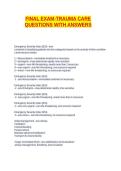
FINAL EXAM-TRAUMA CARE
QUESTIONS WITH ANSWERS
Emergency Severity Index (ESI) - ans- sa sa sa sa sa
a method of classifying patients into five categories based on the severity of their condition
sa sa sa sa sa sa sa sa sa sa sa sa sa sa
s and resource needs.
sa sa sa
1—Resuscitation—immediate treatment is necessary sa sa sa
2—Emergent—may deteriorate rapidly, time sensitive sa sa sa sa
3—urgent---non-life-threatening, needs more than 2 resources sa sa sa sa sa
4—non-urgent—non-life-threatening, one resource required sa sa sa
5—minor—non-life-threatening, no resources required sa sa sa
Emergency Severity Index (ESI) sa sa sa
-1 - ans-Resuscitation—immediate treatment is necessary
sa sa sa sa sa
Emergency Severity Index (ESI) sa sa sa
-2 - ans-Emergent—may deteriorate rapidly, time sensitive
sa sa sa sa sa sa
Emergency Severity Index (ESI) sa sa sa
-3 - ans-urgent---non-life-threatening, needs more than 2 resources
sa sa sa sa sa sa sa
Emergency Severity Index (ESI) sa sa sa
-4 - ans-non-urgent—non-life-threatening, one resource required
sa sa sa sa sa
Emergency Severity Index (ESI) sa sa sa
-5 - ans-minor—non-life-threatening, no resources required
sa sa sa sa sa
Initial management - ans-Airway
sa sa sa
Ventilation
Control bleeding sa
Prevent shock sa
Maintain spinal immobilization sa sa
Transport to closest facility sa sa sa
Triage: Immediate (Red) - ans-stabilization and evaluation/
sa sa sa sa sa sa
airway management, breathing, and circulation
sa sa sa sa sa
, Triage: Next - ans- sa sa sa
history of drug or toxins, time and duration of exposure, first aid treatment received prior to
sa sa sa sa sa sa sa sa sa sa sa sa sa sa sa sa
hospitalization
Triage - ans- sa sa
the medical screening of patients to determine their relative priority of need and the proper
sa sa sa sa sa sa sa sa sa sa sa sa sa sa sa
place of treatment sa sa
Obtain allergies, underlying disease, processes or related injury
sa sa sa sa sa sa sa
Safety for injuries sa sa
-Contusion - ans-major bruising due to blunt trauma sa sa sa sa sa sa sa
Safety for injuries sa sa
-Flail chest - ans-
sa sa sa
segment of the rib cage breaks off due to trauma and becomes detached from the chest wa
sa sa sa sa sa sa sa sa sa sa sa sa sa sa sa sa
ll
Safety for injuries sa sa
-Hemothorax - ans- sa sa
collapsed lung where pleural cavity fills with blood,prepare for chest tube insertion on affect
sa sa sa sa sa sa sa sa sa sa sa sa sa
ed side, administer blood or blood products as ordered, anticipate and prepare for emerge
sa sa sa sa sa sa sa sa sa sa sa sa sa
ncy open thoracotomy
sa sa
Safety for injuries sa sa
-Spinal Cord Injury - ans- sa sa sa sa
avoid hyperextension or rotation of patient's neck, observe ventilatory effort and use of acc
sa sa sa sa sa sa sa sa sa sa sa sa sa
essory muscles, maintain complex spinal immobilization, monitor for signs of disruptive (ne
sa sa sa sa sa sa sa sa sa sa sa
urogenic) shock sa
Safety for injuries sa sa
-Pneumothorax - ans- sa sa
collapsed lung where pleural cavity is filled with air, prepare for chest tube on affected side
sa sa sa sa sa sa sa sa sa sa sa sa sa sa sa
Safety for injuries sa sa
-Compartment syndrome - ans- sa sa sa
fascia enclosed muscle compartment experiences increased pressure, neurovascular ass
sa sa sa sa sa sa sa sa
essment, 5 p's (pain, pulse, pallor, paresthesia, paralysis), prep for fasciotomy
sa sa sa sa sa sa sa sa sa sa
Safety for injuries sa sa
-Fat embolism - ans-
sa sa sa
fat globules in lung tissue and peripheral circulation following trauma, causes hypoxemia, n
sa sa sa sa sa sa sa sa sa sa sa sa
eurologic abnormalities, and petechial rash sa sa sa sa
Safety for injuries sa sa
QUESTIONS WITH ANSWERS
Emergency Severity Index (ESI) - ans- sa sa sa sa sa
a method of classifying patients into five categories based on the severity of their condition
sa sa sa sa sa sa sa sa sa sa sa sa sa sa
s and resource needs.
sa sa sa
1—Resuscitation—immediate treatment is necessary sa sa sa
2—Emergent—may deteriorate rapidly, time sensitive sa sa sa sa
3—urgent---non-life-threatening, needs more than 2 resources sa sa sa sa sa
4—non-urgent—non-life-threatening, one resource required sa sa sa
5—minor—non-life-threatening, no resources required sa sa sa
Emergency Severity Index (ESI) sa sa sa
-1 - ans-Resuscitation—immediate treatment is necessary
sa sa sa sa sa
Emergency Severity Index (ESI) sa sa sa
-2 - ans-Emergent—may deteriorate rapidly, time sensitive
sa sa sa sa sa sa
Emergency Severity Index (ESI) sa sa sa
-3 - ans-urgent---non-life-threatening, needs more than 2 resources
sa sa sa sa sa sa sa
Emergency Severity Index (ESI) sa sa sa
-4 - ans-non-urgent—non-life-threatening, one resource required
sa sa sa sa sa
Emergency Severity Index (ESI) sa sa sa
-5 - ans-minor—non-life-threatening, no resources required
sa sa sa sa sa
Initial management - ans-Airway
sa sa sa
Ventilation
Control bleeding sa
Prevent shock sa
Maintain spinal immobilization sa sa
Transport to closest facility sa sa sa
Triage: Immediate (Red) - ans-stabilization and evaluation/
sa sa sa sa sa sa
airway management, breathing, and circulation
sa sa sa sa sa
, Triage: Next - ans- sa sa sa
history of drug or toxins, time and duration of exposure, first aid treatment received prior to
sa sa sa sa sa sa sa sa sa sa sa sa sa sa sa sa
hospitalization
Triage - ans- sa sa
the medical screening of patients to determine their relative priority of need and the proper
sa sa sa sa sa sa sa sa sa sa sa sa sa sa sa
place of treatment sa sa
Obtain allergies, underlying disease, processes or related injury
sa sa sa sa sa sa sa
Safety for injuries sa sa
-Contusion - ans-major bruising due to blunt trauma sa sa sa sa sa sa sa
Safety for injuries sa sa
-Flail chest - ans-
sa sa sa
segment of the rib cage breaks off due to trauma and becomes detached from the chest wa
sa sa sa sa sa sa sa sa sa sa sa sa sa sa sa sa
ll
Safety for injuries sa sa
-Hemothorax - ans- sa sa
collapsed lung where pleural cavity fills with blood,prepare for chest tube insertion on affect
sa sa sa sa sa sa sa sa sa sa sa sa sa
ed side, administer blood or blood products as ordered, anticipate and prepare for emerge
sa sa sa sa sa sa sa sa sa sa sa sa sa
ncy open thoracotomy
sa sa
Safety for injuries sa sa
-Spinal Cord Injury - ans- sa sa sa sa
avoid hyperextension or rotation of patient's neck, observe ventilatory effort and use of acc
sa sa sa sa sa sa sa sa sa sa sa sa sa
essory muscles, maintain complex spinal immobilization, monitor for signs of disruptive (ne
sa sa sa sa sa sa sa sa sa sa sa
urogenic) shock sa
Safety for injuries sa sa
-Pneumothorax - ans- sa sa
collapsed lung where pleural cavity is filled with air, prepare for chest tube on affected side
sa sa sa sa sa sa sa sa sa sa sa sa sa sa sa
Safety for injuries sa sa
-Compartment syndrome - ans- sa sa sa
fascia enclosed muscle compartment experiences increased pressure, neurovascular ass
sa sa sa sa sa sa sa sa
essment, 5 p's (pain, pulse, pallor, paresthesia, paralysis), prep for fasciotomy
sa sa sa sa sa sa sa sa sa sa
Safety for injuries sa sa
-Fat embolism - ans-
sa sa sa
fat globules in lung tissue and peripheral circulation following trauma, causes hypoxemia, n
sa sa sa sa sa sa sa sa sa sa sa sa
eurologic abnormalities, and petechial rash sa sa sa sa
Safety for injuries sa sa


