Keeping up the Standards
Task 1:
Primary Standard Solutions - Na CO 2 3
What is a primary standard solution? A primary standard solution is one in which we have a
high confidence level in the concentration, it should be 99.95% to 99.98% accurate. Primary
solutions can be used to determine the concentration of other solutions and in this case will be
used to determine the concentration accuracy of a secondary standard solution. This primary
standard solution is made by accurately mixing de-ionised water with an amount of
anhydrous sodium carbonate ( Na 2 CO 3) in a powdered form. The primary solution was made
in a ratio of 0.1mol of sodium carbonate to 250ml of di-ionised water to create a solution with
a known volume and concentration. To prepare the primary solution the apparatus used
included a 100cm3 beaker; a 250cm3 beaker; a 250 cm3 volumetric flask; a filter funnel; a
glass rod; a top pan balance; de-ionised water; and anhydrous sodium carbonate in a
powdered form. It should also be noted that safety measures such as googles, masks and lab
coats were worn at all times so prevent skin contact with the chemicals used.
To prepare this primary standard solution use the following method:
Using the ±0.1g top pan balance, weigh approximately between 1.2g and 1.4g of
sodium carbonate
Using the ±0.1g top pan balance, weigh the small beaker and its
contents (record this mass)
Transfer ALL the contents from the small beaker into the larger
beaker. Using the ±0.1g top pan balance weigh the small beaker
without the contents and record this mass. The difference
between the two masses equates to the mass of sodium
carbonate in the large beaker
Add 150ml of de-ionised water cautiously into the beaker
ensuring all the powder has been rinsed from the sides
Stir the mixture with a glass rod until all the powder has
dissolved completely
Transfer the solution into the volumetric flask using a funnel.
Washing the beaker, rod and funnel using the de-ionised water
and adding to the volumetric flask until the solution reaches the
mark on the flask
Place the stopper over the top of the volumetric flask and shake
thoroughly to mix the contents
Label the flask with the date and contents of the flask Figure 1.1
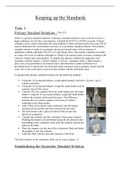
The final solution in the volumetric flask can be seen in figure 1.1.
Standardising the Secondary Standard Solution
, Once prepared the primary solution titrated with our provided secondary solution of HCl in a
two-step titration to determine the molarity (concentration) of the HCl. This process is also
known as ‘standardising’ the hydrochloric acid. What is a secondary standard solution? A
secondary standard solution is one in which the confidence level of its concentration value is
less than that of the primary solution. This solution is usually compared to the primary
standard to gain an accuracy percentage. The hydrochloric acid will later be used to find the
concentration of an unknown solution. Before starting the two-step titration all the equipment
needs to be calibrated to ensure for the most accurate results.
Calibration
Calibration refers to the method of checking, by comparison with a standard, the accuracy of
any form of measuring instruments. The equipment needing to be calibrated include the top
pan balance, volumetric glassware, pipette and the hanna held pH meter.
To calibrate a top pan balance, the balance needs sufficient time to reach equilibrium before a
set of weights certified by the manufacturer can be used to determine if the balance is
weighing accurately. The balances at college are calibrated to 0.001g but are considered
accurate within 0.1g of the true weight. We calibrated our balances using a 1g, 2g, 10g, 20,
and 100g weights. 3 balances were calibrated using the weights and the data was placed into
a table seen in figure 1.2.
Weight (g) Balance 1 Balance 2 Balance 3
100 99.919g 100.04g 100.0g
20 19.983 20.003g 20.0g
10 9.995g 10.01g 10.0g
2 1.99g 2.002g 2.0g
1 1g 0.999g 1g
Figure 1.2 – Top pan balance calibration results
To calibrate the volumetric glassware, we can use the density of water. First weigh the
glassware empty and record the weight. Then fill the glassware with distilled water to the
graduation mark and record its weight. Also record the temperature of the water being used.
Once all the information is collected it can be placed into the equation
Mass
volume= where mass is the weight when the glassware was full subtracted from the
Density
weight of the empty glassware and density is the density of the distilled water at the
temperature recorded (waters density at room temperature is 0.9982g ml¯).
Calibrating the pipette is a similar process to the volumetric glassware. Weigh an empty
beaker and record its weight. Fill a pipette up to its maximum level with room temperature
water and empty the water from the pipette into the beaker and re-weigh. Record this weight,
Mass
with the water. Repeat for other volume pipettes. Then use the equation v olume= to
Density
see if the volume held by the pipette is accurate. The results were put into a table and can be
seen in figure 1.3.
Beaker empty Beaker with Mass of water Volume in
water pipette
25ml pipette 49.160g 72.048g 22.888g 22.929ml
50ml pipette 49.160g 97.246g 48.086g 48.173ml
Task 1:
Primary Standard Solutions - Na CO 2 3
What is a primary standard solution? A primary standard solution is one in which we have a
high confidence level in the concentration, it should be 99.95% to 99.98% accurate. Primary
solutions can be used to determine the concentration of other solutions and in this case will be
used to determine the concentration accuracy of a secondary standard solution. This primary
standard solution is made by accurately mixing de-ionised water with an amount of
anhydrous sodium carbonate ( Na 2 CO 3) in a powdered form. The primary solution was made
in a ratio of 0.1mol of sodium carbonate to 250ml of di-ionised water to create a solution with
a known volume and concentration. To prepare the primary solution the apparatus used
included a 100cm3 beaker; a 250cm3 beaker; a 250 cm3 volumetric flask; a filter funnel; a
glass rod; a top pan balance; de-ionised water; and anhydrous sodium carbonate in a
powdered form. It should also be noted that safety measures such as googles, masks and lab
coats were worn at all times so prevent skin contact with the chemicals used.
To prepare this primary standard solution use the following method:
Using the ±0.1g top pan balance, weigh approximately between 1.2g and 1.4g of
sodium carbonate
Using the ±0.1g top pan balance, weigh the small beaker and its
contents (record this mass)
Transfer ALL the contents from the small beaker into the larger
beaker. Using the ±0.1g top pan balance weigh the small beaker
without the contents and record this mass. The difference
between the two masses equates to the mass of sodium
carbonate in the large beaker
Add 150ml of de-ionised water cautiously into the beaker
ensuring all the powder has been rinsed from the sides
Stir the mixture with a glass rod until all the powder has
dissolved completely
Transfer the solution into the volumetric flask using a funnel.
Washing the beaker, rod and funnel using the de-ionised water
and adding to the volumetric flask until the solution reaches the
mark on the flask
Place the stopper over the top of the volumetric flask and shake
thoroughly to mix the contents
Label the flask with the date and contents of the flask Figure 1.1
The final solution in the volumetric flask can be seen in figure 1.1.
Standardising the Secondary Standard Solution
, Once prepared the primary solution titrated with our provided secondary solution of HCl in a
two-step titration to determine the molarity (concentration) of the HCl. This process is also
known as ‘standardising’ the hydrochloric acid. What is a secondary standard solution? A
secondary standard solution is one in which the confidence level of its concentration value is
less than that of the primary solution. This solution is usually compared to the primary
standard to gain an accuracy percentage. The hydrochloric acid will later be used to find the
concentration of an unknown solution. Before starting the two-step titration all the equipment
needs to be calibrated to ensure for the most accurate results.
Calibration
Calibration refers to the method of checking, by comparison with a standard, the accuracy of
any form of measuring instruments. The equipment needing to be calibrated include the top
pan balance, volumetric glassware, pipette and the hanna held pH meter.
To calibrate a top pan balance, the balance needs sufficient time to reach equilibrium before a
set of weights certified by the manufacturer can be used to determine if the balance is
weighing accurately. The balances at college are calibrated to 0.001g but are considered
accurate within 0.1g of the true weight. We calibrated our balances using a 1g, 2g, 10g, 20,
and 100g weights. 3 balances were calibrated using the weights and the data was placed into
a table seen in figure 1.2.
Weight (g) Balance 1 Balance 2 Balance 3
100 99.919g 100.04g 100.0g
20 19.983 20.003g 20.0g
10 9.995g 10.01g 10.0g
2 1.99g 2.002g 2.0g
1 1g 0.999g 1g
Figure 1.2 – Top pan balance calibration results
To calibrate the volumetric glassware, we can use the density of water. First weigh the
glassware empty and record the weight. Then fill the glassware with distilled water to the
graduation mark and record its weight. Also record the temperature of the water being used.
Once all the information is collected it can be placed into the equation
Mass
volume= where mass is the weight when the glassware was full subtracted from the
Density
weight of the empty glassware and density is the density of the distilled water at the
temperature recorded (waters density at room temperature is 0.9982g ml¯).
Calibrating the pipette is a similar process to the volumetric glassware. Weigh an empty
beaker and record its weight. Fill a pipette up to its maximum level with room temperature
water and empty the water from the pipette into the beaker and re-weigh. Record this weight,
Mass
with the water. Repeat for other volume pipettes. Then use the equation v olume= to
Density
see if the volume held by the pipette is accurate. The results were put into a table and can be
seen in figure 1.3.
Beaker empty Beaker with Mass of water Volume in
water pipette
25ml pipette 49.160g 72.048g 22.888g 22.929ml
50ml pipette 49.160g 97.246g 48.086g 48.173ml