

Labour and the Left in the 1980s
Thatcher’s Main Features: Themes:
1. Privatization Socialism
2. Lowering taxes
3. Cut spending
4. Limiting left wing radicalism
Q: How did Thatcher’s years limit left wing radicalism?
Overview:
- The opposition parties: labour, liberal and the SDP
- The left become more left leaning as a response to thatcher
Key people on the left:
- Tony Benn, left hand side of the labour party, ran as deputy to undermine michael
foot. Committed ideologically to socialism. Seen as a leader head of the left leaning
labour.
- Denis Healey: deputy leader 1980-83, former chancellor in 1974-79, more in the
centre, ideological tonsils with Benn, he wants to make sure the ‘looney-left’ didn't
take over the party.
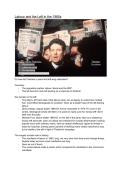
- Michael Foot, labour leader 1980-83, on the left of the party, seen as a disastrous
looney left advocate, seen as radical and criticised for nuclear disarmament, lacking
popular touch with ordinary voters, seen as radical intellectual, ripped to shreds in
press for long hair, donkey jacket (symbol of working man)/ media machinery’s way
to be hostile to the left in light of Thatcher's campaign
The longest suicide note in history:
- The manifesto of labour in 1983, long, not very clear how they would change things,
despite today we know most manifestos are long
- Seen as out of touch
- The conservatives made a poster which compared the manifesto to the communist
manifesto
, - Hard to get together a coherent manifesto of what the whole of the labour party stood
for, and the power of the unions bringing tensions on how policies are enacted
- Wanted to leave the eu because it did not align with socialist standards. Eu
governance would control labour’s ability to enact socialist policies like energy,
transport, and stop its ability to be in governance of its own economy
- Thatcher at first in favour of europe, then she goes against europe, with the famous
“No, no no!”
The gang of four, and the emergence of the social democratic party 1981
- What makes for an electable party? Some say that ideological commitment to a
cause, others say convincingness. Always the question of ideology and pragmatism
- The social democratic party is established with david owen, roy jenkins, shirley
williams, and william rodgers
- This is known as the limehouse declaration
- The principle was that the labour party was not equipped to tackle thatcher in
elections
- The left was seen as dominated by the left and the trade unions
- 1983 polled at 25%, but seen overwhelmingly as splitting the labour vote
- 1988 merged with social and liberal democrats.
- The opening paragraph of the declaration indicates that it was triggered by decisions
taken at the Labour Party conference in January 1981.
“The calamitous outcome of the Labour Party Wembley conference demands a new start in
British politics. A handful of trade union leaders can now dictate the choice of a future Prime
Minister.”
— The Limehouse Declaration (opening)
The 2 davids and the SDP alliance party 1987:
- The aftermath of the attempt
Labour’s response to thatcher:
- Seems a bit idealistic
- Socialist principles
- Addresses the allegations made by the conservatives against labour policies
- Talks about power to the people in a different way than thatcher, about practical
rather than theoretical, that their way had worked in the past as opposed to the new
idea of the right
- The state is the means not the end
GLC- great london council 1965-1986
- Idea that we need to think again about governance in the capital
- Red ken- ken livingstone was the glc leader in 1981-86
- It was about funneling money into underrepresented groups, local initiatives, grass
roots politics, council, help the people
- Becomes the vain of thatchers life, takes it personal
- Livingstone’s mission is described by him as aid to people who have suffered at the
hands of thatcher
- The level of interest from the government is huge
Thatcher’s Main Features: Themes:
1. Privatization Socialism
2. Lowering taxes
3. Cut spending
4. Limiting left wing radicalism
Q: How did Thatcher’s years limit left wing radicalism?
Overview:
- The opposition parties: labour, liberal and the SDP
- The left become more left leaning as a response to thatcher
Key people on the left:
- Tony Benn, left hand side of the labour party, ran as deputy to undermine michael
foot. Committed ideologically to socialism. Seen as a leader head of the left leaning
labour.
- Denis Healey: deputy leader 1980-83, former chancellor in 1974-79, more in the
centre, ideological tonsils with Benn, he wants to make sure the ‘looney-left’ didn't
take over the party.
- Michael Foot, labour leader 1980-83, on the left of the party, seen as a disastrous
looney left advocate, seen as radical and criticised for nuclear disarmament, lacking
popular touch with ordinary voters, seen as radical intellectual, ripped to shreds in
press for long hair, donkey jacket (symbol of working man)/ media machinery’s way
to be hostile to the left in light of Thatcher's campaign
The longest suicide note in history:
- The manifesto of labour in 1983, long, not very clear how they would change things,
despite today we know most manifestos are long
- Seen as out of touch
- The conservatives made a poster which compared the manifesto to the communist
manifesto
, - Hard to get together a coherent manifesto of what the whole of the labour party stood
for, and the power of the unions bringing tensions on how policies are enacted
- Wanted to leave the eu because it did not align with socialist standards. Eu
governance would control labour’s ability to enact socialist policies like energy,
transport, and stop its ability to be in governance of its own economy
- Thatcher at first in favour of europe, then she goes against europe, with the famous
“No, no no!”
The gang of four, and the emergence of the social democratic party 1981
- What makes for an electable party? Some say that ideological commitment to a
cause, others say convincingness. Always the question of ideology and pragmatism
- The social democratic party is established with david owen, roy jenkins, shirley
williams, and william rodgers
- This is known as the limehouse declaration
- The principle was that the labour party was not equipped to tackle thatcher in
elections
- The left was seen as dominated by the left and the trade unions
- 1983 polled at 25%, but seen overwhelmingly as splitting the labour vote
- 1988 merged with social and liberal democrats.
- The opening paragraph of the declaration indicates that it was triggered by decisions
taken at the Labour Party conference in January 1981.
“The calamitous outcome of the Labour Party Wembley conference demands a new start in
British politics. A handful of trade union leaders can now dictate the choice of a future Prime
Minister.”
— The Limehouse Declaration (opening)
The 2 davids and the SDP alliance party 1987:
- The aftermath of the attempt
Labour’s response to thatcher:
- Seems a bit idealistic
- Socialist principles
- Addresses the allegations made by the conservatives against labour policies
- Talks about power to the people in a different way than thatcher, about practical
rather than theoretical, that their way had worked in the past as opposed to the new
idea of the right
- The state is the means not the end
GLC- great london council 1965-1986
- Idea that we need to think again about governance in the capital
- Red ken- ken livingstone was the glc leader in 1981-86
- It was about funneling money into underrepresented groups, local initiatives, grass
roots politics, council, help the people
- Becomes the vain of thatchers life, takes it personal
- Livingstone’s mission is described by him as aid to people who have suffered at the
hands of thatcher
- The level of interest from the government is huge


