

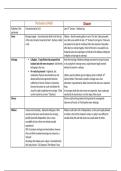
The Duchess of Malfi Chaucer
th
Published / first First performed in 1614 Late 14 Century – Medieval era
performed
Genre Revenge tragedy – characterised by death in the final act Fabliaux – directly meaning jokes in verse. The ‘joke’ takes precedent
of the main character (inverted in DoM – Duchess is killed over other areas within the tale. 13 th Century French genre. Tricks were
in A4). also pivotal to the plot of a Fabliaux (link to the element of deception
often key to a revenge tragedy). Much of the story is occupied by sex.
Husbands were also made figures of ridicule in the fabliaux; holding the
institution of marriage in contempt.
Marriage Callaghan. “a legal fiction that proposed that Hand-fast marriage. Medieval marriage was based on mutual consent,
husband and wife were one person” and thereby so by saying their marriage vows a couple became legally married
belonging to the man. without the need for a witness.
Per verba de pressenti – legitimate, but
clandestine. Physical consummation was not Celibacy was the ultimate goal of religious purity in Catholic 14 th
allowed until private agreement had been Century Britain. If that wasn’t possible, marriage was a close
ratified by the church. Duchess is subversive. alternative. It guaranteed or aided a heavenly fate and was a respected
Exercises her power as a ruler and denies the thing.
church its right to legitimise her marriage. “What As marriages inside the church were very expensive, most couples got
can the church force more?” (Duchess) married by the church door, or on the steps of the church.
Divorce Divorce could only be granted on the grounds of consanguinity
(discovery of incest), or if both parties were underage.
Widows Unusual social standing – displaced/ambiguous. Still a Widows could claim a bit of independence, as they were legally allowed
woman but had more social freedoms due to being to inherit a third of their husband’s estate: in reality it was difficult to
partially financially independent. Seen as more actually obtain this and that money was usually taken by others.
susceptible to lust as they were already sexually
experienced.
30% of Jacobean marriages involved widows. However,
Vives and Fuller revealed remarriage was viewed as a
‘betrayal’
Stereotype that widows were a figure “overwhelmed by
their lusty desires”. EG Chapman’s The Widow’s Tears
, (example in Stuart/Elizabethan literature).
“Women in early modern England were through to desire
sex more than men which is why purity and self-control
were stressed.
The anxieties about widows were due to the curious
liminal state that they occupied in regards to sexual
agency and autonomy. “The Duchess seeks to redefine
the trope of the lusty widow.
Overbury “characters” – ordinary widow & virtuous
widow. Stereotypes the Duchess has to overcome to her
brothers and to Antonio respectively
Jacobean era – uneasy @ Duchess privileging her own
desires, 20th century postfeminist, individualist society
find her self-expression endearing.
Protestant view was more open to widows remarrying.
Webster affirms this through D’s challenge of her
brothers; her affectionate dynamic with A.
By having A & D’s son take the throne, Webster makes
his viewpoint on the widow remarrying clear.
Religion Religion = key to the play. 3 key notions: “The church exerted its power and influence over all aspects of
1. Great Chain of Being. This was a notion that each fourteenth century life”.
being had a pre-determined ranking, and you “The age of faith” – alt name for the Medieval era, religious piety and
were not meant to break the chain w/ marriage devotion grew exponentially. Canon law, or the internal legal system of
from the castes. The chain separated the Church was increasingly significant in the era.
Nobles/Royals from commoners. “The fourteenth century was a time of considerable upheaval against
2. Divine punishment/religious consequences. the long-established tradition of church power”. The church was the
Concept of heaven/hell – actions leading to basis of male ‘auctoritee’ (authority).
eternal fate & sin.
3. Marriage & religious righteousness. Duchess is Largely through monasteries, religion-controlled education and
accused of having bastard children hospitals & had significant political power. It was a major landowner
The play is set in Catholic Malfi. This was a contrast to and so wielded enormous material power over the country. Everyone
Protestant Britain – however, served as a vehicle for was expected to attend services, and a pilgrimage was encouraged.
th
Published / first First performed in 1614 Late 14 Century – Medieval era
performed
Genre Revenge tragedy – characterised by death in the final act Fabliaux – directly meaning jokes in verse. The ‘joke’ takes precedent
of the main character (inverted in DoM – Duchess is killed over other areas within the tale. 13 th Century French genre. Tricks were
in A4). also pivotal to the plot of a Fabliaux (link to the element of deception
often key to a revenge tragedy). Much of the story is occupied by sex.
Husbands were also made figures of ridicule in the fabliaux; holding the
institution of marriage in contempt.
Marriage Callaghan. “a legal fiction that proposed that Hand-fast marriage. Medieval marriage was based on mutual consent,
husband and wife were one person” and thereby so by saying their marriage vows a couple became legally married
belonging to the man. without the need for a witness.
Per verba de pressenti – legitimate, but
clandestine. Physical consummation was not Celibacy was the ultimate goal of religious purity in Catholic 14 th
allowed until private agreement had been Century Britain. If that wasn’t possible, marriage was a close
ratified by the church. Duchess is subversive. alternative. It guaranteed or aided a heavenly fate and was a respected
Exercises her power as a ruler and denies the thing.
church its right to legitimise her marriage. “What As marriages inside the church were very expensive, most couples got
can the church force more?” (Duchess) married by the church door, or on the steps of the church.
Divorce Divorce could only be granted on the grounds of consanguinity
(discovery of incest), or if both parties were underage.
Widows Unusual social standing – displaced/ambiguous. Still a Widows could claim a bit of independence, as they were legally allowed
woman but had more social freedoms due to being to inherit a third of their husband’s estate: in reality it was difficult to
partially financially independent. Seen as more actually obtain this and that money was usually taken by others.
susceptible to lust as they were already sexually
experienced.
30% of Jacobean marriages involved widows. However,
Vives and Fuller revealed remarriage was viewed as a
‘betrayal’
Stereotype that widows were a figure “overwhelmed by
their lusty desires”. EG Chapman’s The Widow’s Tears
, (example in Stuart/Elizabethan literature).
“Women in early modern England were through to desire
sex more than men which is why purity and self-control
were stressed.
The anxieties about widows were due to the curious
liminal state that they occupied in regards to sexual
agency and autonomy. “The Duchess seeks to redefine
the trope of the lusty widow.
Overbury “characters” – ordinary widow & virtuous
widow. Stereotypes the Duchess has to overcome to her
brothers and to Antonio respectively
Jacobean era – uneasy @ Duchess privileging her own
desires, 20th century postfeminist, individualist society
find her self-expression endearing.
Protestant view was more open to widows remarrying.
Webster affirms this through D’s challenge of her
brothers; her affectionate dynamic with A.
By having A & D’s son take the throne, Webster makes
his viewpoint on the widow remarrying clear.
Religion Religion = key to the play. 3 key notions: “The church exerted its power and influence over all aspects of
1. Great Chain of Being. This was a notion that each fourteenth century life”.
being had a pre-determined ranking, and you “The age of faith” – alt name for the Medieval era, religious piety and
were not meant to break the chain w/ marriage devotion grew exponentially. Canon law, or the internal legal system of
from the castes. The chain separated the Church was increasingly significant in the era.
Nobles/Royals from commoners. “The fourteenth century was a time of considerable upheaval against
2. Divine punishment/religious consequences. the long-established tradition of church power”. The church was the
Concept of heaven/hell – actions leading to basis of male ‘auctoritee’ (authority).
eternal fate & sin.
3. Marriage & religious righteousness. Duchess is Largely through monasteries, religion-controlled education and
accused of having bastard children hospitals & had significant political power. It was a major landowner
The play is set in Catholic Malfi. This was a contrast to and so wielded enormous material power over the country. Everyone
Protestant Britain – however, served as a vehicle for was expected to attend services, and a pilgrimage was encouraged.


