

Section C: Physical landscapes in the UK
3.1.3.2 Coastal landscapes in the UK
Wave types and characteristics. (constructive and destructive)
Coastal processes:
•• weathering processes – mechanical, chemical
•• mass movement – sliding, slumping and rock falls
•• erosion – hydraulic power, abrasion and attrition
•• transportation – longshore drift
•• deposition – why sediment is deposited in coastal areas.
How geological structure and rock type influence coastal forms. (effect on cliff shape and coastline shape, eg at Swanage)
Characteristics and formation of landforms resulting from erosion – headlands and bays, cliffs and wave cut platforms, caves, arches and stacks. (Swanage bay,
the Foreland, Old Harry’s Rocks)
Characteristics and formation of landforms resulting from deposition – beaches, sand dunes, spits and bars. (Hurst Castle Spit, Studland sand dunes)
An example of a section of coastline in the UK to identify its major landforms of erosion and deposition – Swanage to Hurst Spit coastline
The costs and benefits of the following management strategies:
•• hard engineering – sea walls, rock armour, gabions and groynes
•• soft engineering – beach nourishment and reprofiling, dune regeneration
•• managed retreat – coastal realignment.
An example of a coastal management scheme in the UK to show the reasons for management •• the management strategy •• the resulting effects and
conflicts. (Minehead or Bournemouth conflicts between different groups over management in this location)
Coastal landscapes
What factors affect coastal waves?
Sea waves are caused by wind blowing over the surface causing water particles to rotate in circles at the top of the sea.
The power/size of waves a place gets will therefore relate to –
1) The strength of the wind
2) The wind direction (if it blows towards the coast)
3) The distance of open sea. It can blow across coastal fetch. The longer the distance, the larger waves can become.
The UK gets mostly winds from the South West. the western coasts get bigger waves formed over the vast 3000km+ coastal fetch of the Atlantic Ocean.
South Eastern England is much more sheltered.
Types of waves
When waves approach the shallower coastline, the base of the wave slows down and the top topples forward, creating a breaking wave.
This then pushes water and materials up a beach – called the “swash” and the water that then drags material back to the sea - called its “backwash”.
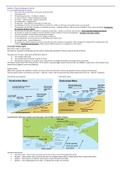
Constructive waves (gentle) Destructive waves
Coastal features along one coastline around Swanage to Isle of Wight in Southern England
Coastal erosion process
Hydraulic action – when waves push water and air into cracks in rocks breaking them apart
Abrasion – where broken rocks carried by the waves are smashed against cliffs or rubbed against rocks, wearing them down
Solution – where the sea can dissolve certain types of rocks (limestone and chalk)
Attrition – rocks rubbing against each other making them smaller and smoother
, Subaerial processes
Erosion - rainfall, winds, rivers – breakup and removal of rock by moving forces
Weathering – the disintegration of rocks without a force moving over it.
Mechanical (physical) weathering
Example - Freeze thaw:
o where water gets into cracks in rocks, freezes and expands, putting pressure on the rock and cracking it more. OR
o salt crystals grow in cracks as sea water evaporates, leaving salts behind, putting pressure on the cracks.
Rock expands when heated in the day:
o then contracts when it’s cooled, causing layers in the rock to crack off.
Chemical weathering – where chemical reactions between water and rocks causes them to break down
Example - Acid rain:
o formed of nitrogen oxide and sulfur dioxide
o can dissolve certain types of alkaline rocks like limestone and chalk
Reactions in iron minerals:
o oxygen and water can react with iron minerals within rocks causing them to rust and crumble apart
Biological weathering – where roots of plants force into rocks, breaking them apart
Mass movements
- refers to where whole sections of a cliff fall down, e.g. landslide.
- There are different types:
o Rock type
o Influence of water
o Slope steepness
Cliff slumping at Barton on Sea
There is rapid erosion and slumping of
the cliffs as they are made up of softer,
looser materials.
On average around 1m is eroded away
each other.
Rainfall seeps through gravel rocks at
the top which are permeable. Then
reaches the impermeable clay rocks
which gets saturated, soggy and start to
slip down slope, creating a slumped
section of cliff which the sea waves then
erode away.
The formation of
landforms of erosion – headlands and bays
The headlands + bays here formed due to different rock types running perpendicular to the coastline, we call this a “discordant coastline”.
If it was all the same type of rock running parallel to the coast, then it would be much straighter – “concordant coastline.”
Here the headlands are made of harder rock types of chalk and limestone. These were originally formed under the sea from compressed shells of sea creatures
100 million years ago.
Since then, tectonic forces squeezed the land and pushed some areas higher above the sea.
Now either side of these harder rocks we find softer sections of rocks made of sands and clay minerals.
3.1.3.2 Coastal landscapes in the UK
Wave types and characteristics. (constructive and destructive)
Coastal processes:
•• weathering processes – mechanical, chemical
•• mass movement – sliding, slumping and rock falls
•• erosion – hydraulic power, abrasion and attrition
•• transportation – longshore drift
•• deposition – why sediment is deposited in coastal areas.
How geological structure and rock type influence coastal forms. (effect on cliff shape and coastline shape, eg at Swanage)
Characteristics and formation of landforms resulting from erosion – headlands and bays, cliffs and wave cut platforms, caves, arches and stacks. (Swanage bay,
the Foreland, Old Harry’s Rocks)
Characteristics and formation of landforms resulting from deposition – beaches, sand dunes, spits and bars. (Hurst Castle Spit, Studland sand dunes)
An example of a section of coastline in the UK to identify its major landforms of erosion and deposition – Swanage to Hurst Spit coastline
The costs and benefits of the following management strategies:
•• hard engineering – sea walls, rock armour, gabions and groynes
•• soft engineering – beach nourishment and reprofiling, dune regeneration
•• managed retreat – coastal realignment.
An example of a coastal management scheme in the UK to show the reasons for management •• the management strategy •• the resulting effects and
conflicts. (Minehead or Bournemouth conflicts between different groups over management in this location)
Coastal landscapes
What factors affect coastal waves?
Sea waves are caused by wind blowing over the surface causing water particles to rotate in circles at the top of the sea.
The power/size of waves a place gets will therefore relate to –
1) The strength of the wind
2) The wind direction (if it blows towards the coast)
3) The distance of open sea. It can blow across coastal fetch. The longer the distance, the larger waves can become.
The UK gets mostly winds from the South West. the western coasts get bigger waves formed over the vast 3000km+ coastal fetch of the Atlantic Ocean.
South Eastern England is much more sheltered.
Types of waves
When waves approach the shallower coastline, the base of the wave slows down and the top topples forward, creating a breaking wave.
This then pushes water and materials up a beach – called the “swash” and the water that then drags material back to the sea - called its “backwash”.
Constructive waves (gentle) Destructive waves
Coastal features along one coastline around Swanage to Isle of Wight in Southern England
Coastal erosion process
Hydraulic action – when waves push water and air into cracks in rocks breaking them apart
Abrasion – where broken rocks carried by the waves are smashed against cliffs or rubbed against rocks, wearing them down
Solution – where the sea can dissolve certain types of rocks (limestone and chalk)
Attrition – rocks rubbing against each other making them smaller and smoother
, Subaerial processes
Erosion - rainfall, winds, rivers – breakup and removal of rock by moving forces
Weathering – the disintegration of rocks without a force moving over it.
Mechanical (physical) weathering
Example - Freeze thaw:
o where water gets into cracks in rocks, freezes and expands, putting pressure on the rock and cracking it more. OR
o salt crystals grow in cracks as sea water evaporates, leaving salts behind, putting pressure on the cracks.
Rock expands when heated in the day:
o then contracts when it’s cooled, causing layers in the rock to crack off.
Chemical weathering – where chemical reactions between water and rocks causes them to break down
Example - Acid rain:
o formed of nitrogen oxide and sulfur dioxide
o can dissolve certain types of alkaline rocks like limestone and chalk
Reactions in iron minerals:
o oxygen and water can react with iron minerals within rocks causing them to rust and crumble apart
Biological weathering – where roots of plants force into rocks, breaking them apart
Mass movements
- refers to where whole sections of a cliff fall down, e.g. landslide.
- There are different types:
o Rock type
o Influence of water
o Slope steepness
Cliff slumping at Barton on Sea
There is rapid erosion and slumping of
the cliffs as they are made up of softer,
looser materials.
On average around 1m is eroded away
each other.
Rainfall seeps through gravel rocks at
the top which are permeable. Then
reaches the impermeable clay rocks
which gets saturated, soggy and start to
slip down slope, creating a slumped
section of cliff which the sea waves then
erode away.
The formation of
landforms of erosion – headlands and bays
The headlands + bays here formed due to different rock types running perpendicular to the coastline, we call this a “discordant coastline”.
If it was all the same type of rock running parallel to the coast, then it would be much straighter – “concordant coastline.”
Here the headlands are made of harder rock types of chalk and limestone. These were originally formed under the sea from compressed shells of sea creatures
100 million years ago.
Since then, tectonic forces squeezed the land and pushed some areas higher above the sea.
Now either side of these harder rocks we find softer sections of rocks made of sands and clay minerals.


