

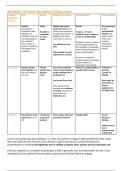
DIFFERENT OPTIONS FOR DISPUTE RESOLUTION
Dispute Cost Speed Flexibility & Control Confidentiality Enforceability
Resolution
Process
Mediation Modest, Quick Flexible and parties Private Any agreement
particularly in retain full control: can is not
comparison with Possible to choose what procedure, Involves a 3rd party automatically
litigation and undertake no legal requirements, or mediator who is subject to binding. But
arbitration, but will on short obligations to follow a duty of confidentiality parties could
vary depending on notice court rules or case law. enter into a
the mediator's If litigation ensues, evidence contract,
fees, number of Can withdraw at any of what happened during allowing for
parties, complexity, time the mediation is admissible damages for
and length of the where both parties agree to breach
mediation. Only possible to reach waive confidentiality
settlement by consent
A party to a mediation
cannot compel the mediator
to give evidence in
subsequent proceedings.
Arbitration Usually cheaper Usually Can choose arbitrator Allows for confidentiality as Arbitrator’s
than litigation, but quicker than unless contract between usually held in private decision
this is not always going to parties stipulates for a (‘award’) is
the case. court particular one binding
Less formal than court Must apply for
permission to
If the agreement to enforce
arbitrate was contained judgement to
in writing, procedure is the High Court.
governed by the
Arbitration Act.
Litigation Normally the most Usually the Must comply with court Usually public Court’s
expensive form of protracted procedures and CPR decision is
DR method binding
Enforcement is
more
expensive and
complicated
A court can lawfully stay proceedings for, or order, the parties to engage in ADR provided the order made
does not impair the very essence of the claimant’s right to proceed to a judicial hearing and is
proportionate to achieving the legitimate aim of settling a dispute fairly, quickly and at reasonable cost.
Failing to respond to an invitation to participate in ADR is generally seen as unreasonable, but this is not
automatic (may be justified if the party gives a good reason for their failure to engage).
,A trial judge will not be made aware of any failure to engage with ADR until after the issues of liability and
damages have been dealt with (only at the cost stage).
PRELIMINARY CONSIDERATIONS
Limitation
What is The strict time limit imposed on a claimant that determines the last date on which they can issue
limitation proceedings against a defendant in relation to a cause of action.
?
General A claimant may still commence their claim after the limitation period has expired but the defendant
rule will have a complete defence if the proceedings are issued after this date. If the court agrees the
claim is statute barred, the claimant will not succeed.
Limitation Vary depending on the type of claim:
periods
Contract: 6 years (from date of breach), unless a longer or shorter time frame had been
agreed between the parties.
Tort: 6 years (from the date the loss is sustained, not the date of the breach of duty)
Personal injury: 3 years (from date of cause of action/date of knowledge of the person
injured. Children = from their 18th birthday)
Negligence where the damage is latent (hidden): either
6 years from the date of the cause of action; or
3 years from the date of knowledge of the damage, whichever is later; but
No later than 15 years after the negligence
IMPORTANT: the expression “date of knowledge” means the first date when the
claimant knew, or might reasonably be expected to have known, certain specific
facts. These include the seriousness of his injury, its cause, and the identity of the
defendant. Even if it takes longer to trace the defendant, so long as the claimant has
sufficient knowledge to commence the claim, that is the date when the limitation
period starts accruing.
Extending The court has discretion to extend the deadline but will only do so in exceptional circumstances.
limitation
Parties
Claimant: the person who makes the claim.
Defendant: the person against whom the claim is made. Check that they are:
1. Traceable – confirm their whereabouts
2. Identifiable – either an individual or if more appropriate to sue a corporation or a partnership
3. Solvent – do a bankruptcy search as there is no point in suing someone who will be unable to pay
Cause of action
The solicitor must establish the correct legal basis for the claim: breach of contract, misrepresentation
(contract), negligence (tort), nuisance (tort).
,Assess the likelihood of success by reviewing all available evidence.
Give initial advice as to costs, liability and quantum.
Pre-Action Procedure and Protocols
The Pre-Action Protocols: explain the conduct and set out the steps the court would normally expect
parties to take before commencing proceedings for particular types of civil claims.
Purpose: to initiate and increase pre-action contact between the parties in order to encourage exchange of
info so that they might consider ADR and settle cases fairly, ideally without litigation.
The Practice Direction for Pre-Action Conduct (PDPAC): only applies if there is no specific Pre-Action
Protocol for the specific case in question.
There are specific pre-action protocols for various different types of claims, e.g:
Personal injury
Professional negligence
Clinical disputes
Construction/engineering
Illness/disease
Housing disrepair
Exchange of sufficient information:
C writes to D with concise details of the claim (summary of facts and sum due + calculation)
D must respond within a reasonable time: 14 days in straightforward cases or 3 months for
complex cases – this is the absolute limit. Include information regarding whether they accept the
claim, and if not, the reasons why, together with details of any counterclaim.
Both parties must disclose key documents relevant to the issues in the dispute
Only reasonable and proportionate steps should be taken by the parties to identify, narrow and resolve
the legal, factual, and/or expert issues
Where a dispute has not been resolved after the parties have followed the Practice Direction: they should
review their respective positions to see if proceedings can be avoided and at least seek to narrow the issues
in dispute before the claimant issues proceedings.
Protocol for debt claims: Applies to any business (incl. sole traders and public bodies) and the creditor that
brings a claim against a debtor (usually an individual, or a sole trader). Does NOT apply to business-to-
business debts (unless the debtor is a sole trader). The potential claimant must give: full information on
the debt owed, an up-to-date statement of account with details of interest and charges, and how the debt
can be paid (the standard Reply Form, Information Sheet and Financial Statement forms should be
included). Debtors are given 30 days to respond (court proceedings cannot be issued before).
, Failure to comply with pre-action procedure:
The court may order:
1. that the party at fault pays some or all of their opponent’s costs (possibly on an indemnity basis)
2. depriving a claimant who is at fault of some or all of the interest they may subsequently be awarded
on any damages recovered; or
3. requiring a defendant who is at fault to pay interest on any damages awarded to the claimant at a
rate of up to 10% per annum above the base rate
Although compliance with the PDPAC is advisable, it is possible to commence court proceedings without
compliance (don’t need to provide evidence).
Dispute Cost Speed Flexibility & Control Confidentiality Enforceability
Resolution
Process
Mediation Modest, Quick Flexible and parties Private Any agreement
particularly in retain full control: can is not
comparison with Possible to choose what procedure, Involves a 3rd party automatically
litigation and undertake no legal requirements, or mediator who is subject to binding. But
arbitration, but will on short obligations to follow a duty of confidentiality parties could
vary depending on notice court rules or case law. enter into a
the mediator's If litigation ensues, evidence contract,
fees, number of Can withdraw at any of what happened during allowing for
parties, complexity, time the mediation is admissible damages for
and length of the where both parties agree to breach
mediation. Only possible to reach waive confidentiality
settlement by consent
A party to a mediation
cannot compel the mediator
to give evidence in
subsequent proceedings.
Arbitration Usually cheaper Usually Can choose arbitrator Allows for confidentiality as Arbitrator’s
than litigation, but quicker than unless contract between usually held in private decision
this is not always going to parties stipulates for a (‘award’) is
the case. court particular one binding
Less formal than court Must apply for
permission to
If the agreement to enforce
arbitrate was contained judgement to
in writing, procedure is the High Court.
governed by the
Arbitration Act.
Litigation Normally the most Usually the Must comply with court Usually public Court’s
expensive form of protracted procedures and CPR decision is
DR method binding
Enforcement is
more
expensive and
complicated
A court can lawfully stay proceedings for, or order, the parties to engage in ADR provided the order made
does not impair the very essence of the claimant’s right to proceed to a judicial hearing and is
proportionate to achieving the legitimate aim of settling a dispute fairly, quickly and at reasonable cost.
Failing to respond to an invitation to participate in ADR is generally seen as unreasonable, but this is not
automatic (may be justified if the party gives a good reason for their failure to engage).
,A trial judge will not be made aware of any failure to engage with ADR until after the issues of liability and
damages have been dealt with (only at the cost stage).
PRELIMINARY CONSIDERATIONS
Limitation
What is The strict time limit imposed on a claimant that determines the last date on which they can issue
limitation proceedings against a defendant in relation to a cause of action.
?
General A claimant may still commence their claim after the limitation period has expired but the defendant
rule will have a complete defence if the proceedings are issued after this date. If the court agrees the
claim is statute barred, the claimant will not succeed.
Limitation Vary depending on the type of claim:
periods
Contract: 6 years (from date of breach), unless a longer or shorter time frame had been
agreed between the parties.
Tort: 6 years (from the date the loss is sustained, not the date of the breach of duty)
Personal injury: 3 years (from date of cause of action/date of knowledge of the person
injured. Children = from their 18th birthday)
Negligence where the damage is latent (hidden): either
6 years from the date of the cause of action; or
3 years from the date of knowledge of the damage, whichever is later; but
No later than 15 years after the negligence
IMPORTANT: the expression “date of knowledge” means the first date when the
claimant knew, or might reasonably be expected to have known, certain specific
facts. These include the seriousness of his injury, its cause, and the identity of the
defendant. Even if it takes longer to trace the defendant, so long as the claimant has
sufficient knowledge to commence the claim, that is the date when the limitation
period starts accruing.
Extending The court has discretion to extend the deadline but will only do so in exceptional circumstances.
limitation
Parties
Claimant: the person who makes the claim.
Defendant: the person against whom the claim is made. Check that they are:
1. Traceable – confirm their whereabouts
2. Identifiable – either an individual or if more appropriate to sue a corporation or a partnership
3. Solvent – do a bankruptcy search as there is no point in suing someone who will be unable to pay
Cause of action
The solicitor must establish the correct legal basis for the claim: breach of contract, misrepresentation
(contract), negligence (tort), nuisance (tort).
,Assess the likelihood of success by reviewing all available evidence.
Give initial advice as to costs, liability and quantum.
Pre-Action Procedure and Protocols
The Pre-Action Protocols: explain the conduct and set out the steps the court would normally expect
parties to take before commencing proceedings for particular types of civil claims.
Purpose: to initiate and increase pre-action contact between the parties in order to encourage exchange of
info so that they might consider ADR and settle cases fairly, ideally without litigation.
The Practice Direction for Pre-Action Conduct (PDPAC): only applies if there is no specific Pre-Action
Protocol for the specific case in question.
There are specific pre-action protocols for various different types of claims, e.g:
Personal injury
Professional negligence
Clinical disputes
Construction/engineering
Illness/disease
Housing disrepair
Exchange of sufficient information:
C writes to D with concise details of the claim (summary of facts and sum due + calculation)
D must respond within a reasonable time: 14 days in straightforward cases or 3 months for
complex cases – this is the absolute limit. Include information regarding whether they accept the
claim, and if not, the reasons why, together with details of any counterclaim.
Both parties must disclose key documents relevant to the issues in the dispute
Only reasonable and proportionate steps should be taken by the parties to identify, narrow and resolve
the legal, factual, and/or expert issues
Where a dispute has not been resolved after the parties have followed the Practice Direction: they should
review their respective positions to see if proceedings can be avoided and at least seek to narrow the issues
in dispute before the claimant issues proceedings.
Protocol for debt claims: Applies to any business (incl. sole traders and public bodies) and the creditor that
brings a claim against a debtor (usually an individual, or a sole trader). Does NOT apply to business-to-
business debts (unless the debtor is a sole trader). The potential claimant must give: full information on
the debt owed, an up-to-date statement of account with details of interest and charges, and how the debt
can be paid (the standard Reply Form, Information Sheet and Financial Statement forms should be
included). Debtors are given 30 days to respond (court proceedings cannot be issued before).
, Failure to comply with pre-action procedure:
The court may order:
1. that the party at fault pays some or all of their opponent’s costs (possibly on an indemnity basis)
2. depriving a claimant who is at fault of some or all of the interest they may subsequently be awarded
on any damages recovered; or
3. requiring a defendant who is at fault to pay interest on any damages awarded to the claimant at a
rate of up to 10% per annum above the base rate
Although compliance with the PDPAC is advisable, it is possible to commence court proceedings without
compliance (don’t need to provide evidence).


