

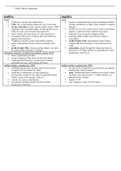
1940s: Native Americans
positive negative
wwii wwii
25,000 na’s served in the armed forces choctaws claimed that they lacked citizenship and didn’t
1944- 32% of able bodied indian men were in the army feel they should have to fight, others refused on religious
navajo code talkers- used a special coded version of their grounds
language in the war against japan, and the japenese never 75,000 na’s moved to urban areas to work in the defence
broke the code, and it became their profession industry, it destroyed their traditions and culture
native women served as nurses or in the armed forces reduction of money spent to support indians
government allows na’s to declare their own tribal war returning indian soldiers were forced to return to
against the axis powers reservations
75,000 na’s moved to work in the defence industry gi bill of rights 1946- discrimination meant indians
many of the artillery factory workers remained in the couldn’t take full advantage of it as white americans
cities could
gi bill of rights 1946- returning indian soldiers were able nationalism- people thought the indians had proved
to continue their education in colleges themselves to be fully capable so expenditure for tribal
national congress of american indians (ncai) 1944 programmes could be cut
80 na’s representing 50 tribes
set up in response to the moves to end reservations
challenged discrimination in employment, unequal
education provision, and breaking of treaties
indian claims commission 1946 indian claims commission 1946
established partly due to pressure from the ncai and in the men on the commission were chosen by government,
recognition of the indians war effort meaning they could be biased
stated that a commission of 3 men (chosen by sioux- claimed black hills of dakota were sacred to them
government) would hear any claim brought before them and had a value beyond price, 17 million dollars was
within 5 years of the passage of this act offered but they refused
remedy was money compensation ended in 1978
government awarded around 818 million dollars only managed to settle 285/850 claims
lasted quite a long time
positive negative
wwii wwii
25,000 na’s served in the armed forces choctaws claimed that they lacked citizenship and didn’t
1944- 32% of able bodied indian men were in the army feel they should have to fight, others refused on religious
navajo code talkers- used a special coded version of their grounds
language in the war against japan, and the japenese never 75,000 na’s moved to urban areas to work in the defence
broke the code, and it became their profession industry, it destroyed their traditions and culture
native women served as nurses or in the armed forces reduction of money spent to support indians
government allows na’s to declare their own tribal war returning indian soldiers were forced to return to
against the axis powers reservations
75,000 na’s moved to work in the defence industry gi bill of rights 1946- discrimination meant indians
many of the artillery factory workers remained in the couldn’t take full advantage of it as white americans
cities could
gi bill of rights 1946- returning indian soldiers were able nationalism- people thought the indians had proved
to continue their education in colleges themselves to be fully capable so expenditure for tribal
national congress of american indians (ncai) 1944 programmes could be cut
80 na’s representing 50 tribes
set up in response to the moves to end reservations
challenged discrimination in employment, unequal
education provision, and breaking of treaties
indian claims commission 1946 indian claims commission 1946
established partly due to pressure from the ncai and in the men on the commission were chosen by government,
recognition of the indians war effort meaning they could be biased
stated that a commission of 3 men (chosen by sioux- claimed black hills of dakota were sacred to them
government) would hear any claim brought before them and had a value beyond price, 17 million dollars was
within 5 years of the passage of this act offered but they refused
remedy was money compensation ended in 1978
government awarded around 818 million dollars only managed to settle 285/850 claims
lasted quite a long time


