Transport in animals
9.1 Transport in animals
Describe the circulatory system as a system of blood vessels with a pump and valves to
ensure one-way flow of blood
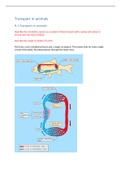
Describe the single circulation of a fish
Fish have a two-chambered heart and a single circulation. This means that for every single
circuit of the body, the blood passes through the heart once.
,Describe the double circulation of a mammal
Mammals have a four-chambered heart and a double circulation. This means that for every
single circuit of the body, the blood passes through the heart twice.
Left and right
The right side of the heart receives deoxygenated blood from the body and pumps it
to the lungs (the pulmonary circulation)
The left side of the heart receives oxygenated blood from the lungs and pumps it to
the body (the systemic circulation)
Explain the advantages of a double circulation
Blood travelling through the small capillaries in the lungs loses a lot of pressure that was
given to it by the pumping of the heart, meaning it cannot travel as fast.
, By returning the blood to the heart after going through the lungs its pressure can be raised
again before sending it to the body, meaning cells can be supplied with the oxygen and
glucose they need for respiration faster and more frequently.
9.2 Heart
Name and identify the structures of the mammalian heart, limited to the muscular wall, the
septum, the left and right ventricles and atria, one-way valves and coronary arteries
NOTE the heart is labelled as if it was in the chest so what is your left on a diagram is
actually the right-hand side and vice versa:
The right side of the heart receives deoxygenated blood from the body and pumps it to the
lungs.
The left side of the heart receives oxygenated blood from the lungs and pumps it to the
body.
Blood is pumped towards the heart in veins and away from the heart in arteries
Remember AA: Arteries carry blood Away from the heart
The two sides of the heart are separated by a muscle wall called the septum.
The heart is made of muscle tissue which are supplied with blood by the coronary arteries.
9.1 Transport in animals
Describe the circulatory system as a system of blood vessels with a pump and valves to
ensure one-way flow of blood
Describe the single circulation of a fish
Fish have a two-chambered heart and a single circulation. This means that for every single
circuit of the body, the blood passes through the heart once.
,Describe the double circulation of a mammal
Mammals have a four-chambered heart and a double circulation. This means that for every
single circuit of the body, the blood passes through the heart twice.
Left and right
The right side of the heart receives deoxygenated blood from the body and pumps it
to the lungs (the pulmonary circulation)
The left side of the heart receives oxygenated blood from the lungs and pumps it to
the body (the systemic circulation)
Explain the advantages of a double circulation
Blood travelling through the small capillaries in the lungs loses a lot of pressure that was
given to it by the pumping of the heart, meaning it cannot travel as fast.
, By returning the blood to the heart after going through the lungs its pressure can be raised
again before sending it to the body, meaning cells can be supplied with the oxygen and
glucose they need for respiration faster and more frequently.
9.2 Heart
Name and identify the structures of the mammalian heart, limited to the muscular wall, the
septum, the left and right ventricles and atria, one-way valves and coronary arteries
NOTE the heart is labelled as if it was in the chest so what is your left on a diagram is
actually the right-hand side and vice versa:
The right side of the heart receives deoxygenated blood from the body and pumps it to the
lungs.
The left side of the heart receives oxygenated blood from the lungs and pumps it to the
body.
Blood is pumped towards the heart in veins and away from the heart in arteries
Remember AA: Arteries carry blood Away from the heart
The two sides of the heart are separated by a muscle wall called the septum.
The heart is made of muscle tissue which are supplied with blood by the coronary arteries.