Attachment
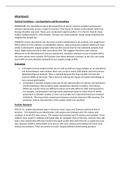
Cultural Variations – van Ijzendoorn and Kroonenberg
PROCEDURE: The researchers look at the proportions of secure, insecure-avoidant and insecure-
resistant attachments across a range of countries. They found 32 studies of attachment where the
Strange Situation was used. These were conducted in eight countires, 15 in the US. Overall, these
studies yielded results for 1990 children. The data was meta-analysed, results being combined and
weighted for sample size.
FINDINGS: Secure attachment was the most common classification in all countries, but ranged from
50% in China to 75% in Britain. In individualist cultures, rates of insecure-resistant attachment were
similar to Ainsworth’s original sample (14%) but this was not true for the collectivist samples from
China, Japan and Israel where rates were above 25%. This suggests that there were cultural
differences in the distribution of insecure attachment. Variations between results of studies within
the same country were actually 150% greater than those between countries. In the USA, one study
found 46% securely attached compared to one sample as high as 90%.
Evaluation
A strength of meta-analysis is that you can end up with very large samples. In van Ijzendoorn
and Kroonenberg’s meta-analysis there was a total of nearly 2000 babies and their primary
attachment figures involved. This is a strength because the large samples increase the
internal validity of the study. This is done by reducing the impact of biased methodology or
very unusual participants.
A limitation is that the samples used may not be representative of cultures. Van Ijzendoorn
and Kroonenberg’s meta-analysis made comparisons between countries, not cultures.
Within any country there are different cultures each with different child-rearing practices.
For example, van Ijzendoorn and Sagi found attachment types in urban Tokyo in similar
proportions to Western studies. A more rural sample over-represented insecure-resistant
individuals. This means that comparisons between countries may have little meaning. The
particular cultural characteristics of the sample need to be specified.
Further Research
SAGI ET AL. studied attachment types in America, Israel, Japan and Germany and found that in
America – 71% showed secure attachments, 12% anxious and resistant and 17% anxious and
avoidant. In Israel 62% were secure, 33% anxious and resistant and 5% anxious and avoidant. These
children were raised in a kibbutz and looked after by metaplets most of the time, however they still
had a close relationship with their mother who spent quality time with them for a couple hours per
day. Japanese children showed 68% were secure, 32% were anxious and resistant and none were
anxious and avoidant. These are similar to Israel’s despite different child-rearing practices.
Cultural Variations – van Ijzendoorn and Kroonenberg
PROCEDURE: The researchers look at the proportions of secure, insecure-avoidant and insecure-
resistant attachments across a range of countries. They found 32 studies of attachment where the
Strange Situation was used. These were conducted in eight countires, 15 in the US. Overall, these
studies yielded results for 1990 children. The data was meta-analysed, results being combined and
weighted for sample size.
FINDINGS: Secure attachment was the most common classification in all countries, but ranged from
50% in China to 75% in Britain. In individualist cultures, rates of insecure-resistant attachment were
similar to Ainsworth’s original sample (14%) but this was not true for the collectivist samples from
China, Japan and Israel where rates were above 25%. This suggests that there were cultural
differences in the distribution of insecure attachment. Variations between results of studies within
the same country were actually 150% greater than those between countries. In the USA, one study
found 46% securely attached compared to one sample as high as 90%.
Evaluation
A strength of meta-analysis is that you can end up with very large samples. In van Ijzendoorn
and Kroonenberg’s meta-analysis there was a total of nearly 2000 babies and their primary
attachment figures involved. This is a strength because the large samples increase the
internal validity of the study. This is done by reducing the impact of biased methodology or
very unusual participants.
A limitation is that the samples used may not be representative of cultures. Van Ijzendoorn
and Kroonenberg’s meta-analysis made comparisons between countries, not cultures.
Within any country there are different cultures each with different child-rearing practices.
For example, van Ijzendoorn and Sagi found attachment types in urban Tokyo in similar
proportions to Western studies. A more rural sample over-represented insecure-resistant
individuals. This means that comparisons between countries may have little meaning. The
particular cultural characteristics of the sample need to be specified.
Further Research
SAGI ET AL. studied attachment types in America, Israel, Japan and Germany and found that in
America – 71% showed secure attachments, 12% anxious and resistant and 17% anxious and
avoidant. In Israel 62% were secure, 33% anxious and resistant and 5% anxious and avoidant. These
children were raised in a kibbutz and looked after by metaplets most of the time, however they still
had a close relationship with their mother who spent quality time with them for a couple hours per
day. Japanese children showed 68% were secure, 32% were anxious and resistant and none were
anxious and avoidant. These are similar to Israel’s despite different child-rearing practices.