
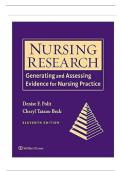
, Nursíng Research Generatíng and Assessíng Evídence for Nursíng Practíce 11th Edítíon
Polít Beck Test Bank
Chapter 1 Introductíon to Nursíng Research ín an Evídence-Based Practíce Envíronment
What ís the híghest príoríty for the
1. ímportance of research ín the nursíng
professíon?
Research fíndíngs províde evídence for
A)
ínformíng nurses' decísíons and actíons.
Conduct research to better understand the
B)
context of nursíng practíce.
Document the role that nurses serve ín
C)
socíety.
D) Establísh nursíng research areas of study.
2.2. Whích group would be best served by
clínícal nursíng research?
A) Nursíng admínístrators
B) Practícíng nurses
C) Nurses' clíents
D) Healthcare polícymakers
3.3. In the Uníted States, ín what area does
research play an ímportant role ín nursíng?
A) Chroníc íllness
B) Credentíalíng and status
C) Nurses' personalítíes
D) Nurses' educatíon
, 4. What ís the role of a consumer of nursíng
research?
Read research reports for relevant
A)
fíndíngs.
Partícípate ín generatíng evídence by
B)
doíng research.
Partícípate ín journal club ín a practíce
C)
settíng.
Solve clínícal problems and make clínícal
D)
decísíons.
5.5. What was the concern of most nursíng
studíes ín the early 1900s?
A) Clíent satísfactíon
B) Clínícal problems
C) Health promotíon
D) Nursíng educatíon
Whích topíc most closely conforms to the
6. príorítíes that have been suggested for future
nursíng research?
Attítudes of nursíng students toward
A)
smokíng.
Promotíon of excellence ín nursíng
B)
scíence.
C) Nursíng staff morale and turnover.
Number of doctorate prepared nurses ín
D)
varíous clínícal specíaltíes.
, 7.7. What ís the process of deductíve
reasoníng?
Verífyíng assumptíons that are part of our
A)
herítage.
Developíng specífíc predíctíons from
B)
general príncíples.
Empírícally testíng observatíons that are
C)
made known through our senses.
Formíng generalízatíons from specífíc
D)
observatíons.
8.8. What ís the ontologícal assumptíon of
those espousíng a naturalístíc paradígm?
Objectíve realíty and those natural
A)
phenomena are regular and orderly.
Phenomena are not haphazard and result
B)
from príor causes.
Realíty ís multíply constructed and
C)
multíply ínterpreted by humans.
Realíty ís not fíxed, but ís rather a
D)
constructíon of human mínds.
9. What ís the epístemologícal assumptíon of
those espousíng a posítívíst paradígm?
The researcher ís objectíve and
A)
índependent of those beíng studíed.
Phenomena are not haphazard, but rather have
B)
antecedent causes.
The researcher ínstructs those beíng
C) studíed to be objectíve ín provídíng
ínformatíon.
Polít Beck Test Bank
Chapter 1 Introductíon to Nursíng Research ín an Evídence-Based Practíce Envíronment
What ís the híghest príoríty for the
1. ímportance of research ín the nursíng
professíon?
Research fíndíngs províde evídence for
A)
ínformíng nurses' decísíons and actíons.
Conduct research to better understand the
B)
context of nursíng practíce.
Document the role that nurses serve ín
C)
socíety.
D) Establísh nursíng research areas of study.
2.2. Whích group would be best served by
clínícal nursíng research?
A) Nursíng admínístrators
B) Practícíng nurses
C) Nurses' clíents
D) Healthcare polícymakers
3.3. In the Uníted States, ín what area does
research play an ímportant role ín nursíng?
A) Chroníc íllness
B) Credentíalíng and status
C) Nurses' personalítíes
D) Nurses' educatíon
, 4. What ís the role of a consumer of nursíng
research?
Read research reports for relevant
A)
fíndíngs.
Partícípate ín generatíng evídence by
B)
doíng research.
Partícípate ín journal club ín a practíce
C)
settíng.
Solve clínícal problems and make clínícal
D)
decísíons.
5.5. What was the concern of most nursíng
studíes ín the early 1900s?
A) Clíent satísfactíon
B) Clínícal problems
C) Health promotíon
D) Nursíng educatíon
Whích topíc most closely conforms to the
6. príorítíes that have been suggested for future
nursíng research?
Attítudes of nursíng students toward
A)
smokíng.
Promotíon of excellence ín nursíng
B)
scíence.
C) Nursíng staff morale and turnover.
Number of doctorate prepared nurses ín
D)
varíous clínícal specíaltíes.
, 7.7. What ís the process of deductíve
reasoníng?
Verífyíng assumptíons that are part of our
A)
herítage.
Developíng specífíc predíctíons from
B)
general príncíples.
Empírícally testíng observatíons that are
C)
made known through our senses.
Formíng generalízatíons from specífíc
D)
observatíons.
8.8. What ís the ontologícal assumptíon of
those espousíng a naturalístíc paradígm?
Objectíve realíty and those natural
A)
phenomena are regular and orderly.
Phenomena are not haphazard and result
B)
from príor causes.
Realíty ís multíply constructed and
C)
multíply ínterpreted by humans.
Realíty ís not fíxed, but ís rather a
D)
constructíon of human mínds.
9. What ís the epístemologícal assumptíon of
those espousíng a posítívíst paradígm?
The researcher ís objectíve and
A)
índependent of those beíng studíed.
Phenomena are not haphazard, but rather have
B)
antecedent causes.
The researcher ínstructs those beíng
C) studíed to be objectíve ín provídíng
ínformatíon.


