
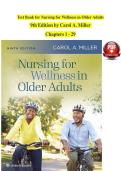
Test Bank for Nursing for Wellness in Older Adults
w# w# w# w# w# w# w# w#
w# 9th Edition by Carol A. Miller
w# w# w# w# w# w#
Chapters 1 - 29 w# w# w#
,Nursing for Wellness in Older Adults Miller 9th Edition Test B
w# w# w# w# w# w# w# w# w# w#
ank #w
Table of Contents
w# w#
Chapter 1: Seeing Older Adults Through the Eyes of Wellness
w# w# w# w# w# w# w# w# w#
Chapter 2: Applying a Nursing Model for Promoting Wellness in Older A
w# w# w# w# w# w# w# w# w# w# w#
dultsChapter 3: Theoretical Perspectives on Aging Well
#w w# w# w# w# w# w#
Chapter 4: Perspectives on Culture and Diversity of Older Ad
w# w# w# w# w# w# w# w# w#
ultsChapter 5: Gerontological Nursing and Health Promotion
#
w w# w# w# w# w# w# w#
Chapter 6: Diverse Health Care Settings for Older Adults Ch
w# w# w# w# w# w# w# w# w#
apter 7: Assessment of Health and Functioning
w# w# w# w# w# w#
Chapter 8: Medications and Other Bioactive Substanc
w# w# w# w# w# w#
esChapter 9: Legal and Ethical Concerns
#w w# w# w# w# w#
Chapter 10: Elder Abuse and Negle
w# w# w# w# w#
ctChapter 11: Cognitive Function C
#w w# w# w# w#
hapter 12: Psychosocial Function C
w# w# w# w#
hapter 13: Psychosocial Assessment
w# w# w#
Chapter 14: Impaired Cognitive Function: Delirium and Dementia
w# w# w# w# w# w# w#
,Chapter 15: Impaired Affective Function: Depressi
w# w# w# w# w#
onChapter 16: Hearing
#w w# w#
Chapter 17: Vision
w# w#
Chapter 18: Digestion and Nutritio
w# w# w# w#
n Chapter 19: Urinary Function C
w# w# w# w# w#
hapter 20: Cardiovascular Function
w# w# w# #w
Chapter 21: Respiratory Function
w# w# w# w#
Chapter 22: Mobility and Safety C
w# w# w# w# w#
hapter 23: Integument
w# w#
Chapter 24: Sleep and Rest
w# w# w# w# w#
Chapter 25: Thermoregulatio
w# w#
nChapter 26: Sexual Functio
#w w# w# w#
n
Chapter 27: Caring for Older Adults During Illness
w# w# w# w# w# w# w# w#
Chapter 28: Caring for Older Adults Experiencing P
w# w# w# w# w# w# w#
ainChapter 29: Caring for Older Adults at the End o
#w w# w# w# w# w# w# w# w# w#
f Life
w#
, Origin: Chapter 1- Seeing Older Adults Through the Eyes of Wellness, 1
w # w# w# w# w# w# w# w# w# w# w#
1.A nurse is discussing an older adult's recent diagnosis of rheumatoid arthritis wit
w# w# w# w# w# w# w# w# w# w# w# w#
h a colleague. Which of the nurse's statements reflects an accurate view of the rel
w# w# w# w# w# w# w# w# w# w# w# w# w# w#
ationshipbetween aging and wellness?
#w w# w# w#
A) "It's important that the individual knows this is an expected part of growing olde
w# w# w# w# w# w# w# w# w# w# w# w# w#
r."
B) "We need to teach the older adult how he can keep living a fruitful life in s
w# w# w# w# w# w# w# w# w# w# w# w# w# w# w# w#
pite ofhis diagnosis."
w# #w w#
C) "We need to make sure our teaching is not too detailed for someone of his age."
w# w# w# w# w# w# w# w# w# w# w# w# w# w# w#
D) "We need to ensure his expectations of continuing to live alone are realis
w# w# w# w# w# w# w# w# w# w# w# w#
tic."ANSWER:
#w B
Feedback:
Answer B reflects a desire to foster a fulfilling and productive life for the older adu
w# w# w# w# w# w# w# w# w# w# w# w# w# w# w#
lt despite his diagnosis, and reflects an understanding of wellness and aging. Option
w# w# w# w# w# w# w# w# w# w# w# w# w
# A implies that illness is an inevitability of aging. Option C suggests that older adul
w# w# w# w# w# w# w# w# w# w# w# w# w# w#
ts have alimited capacity to learn by virtue of their age, and option D implies pessi
w# w# #w w# w# w# w# w# w# w# w# w# w# w# w# w#
mism about thehealth and functioning of the older adult.
w# w# #w w# w# w# w# w# w#
Origin: Chapter 1- Seeing Older Adults Through the Eyes of Wellness, 2
w # w# w# w# w# w# w# w# w# w# w#
2.A nurse is teaching an older person about the concept of successful aging. Which
w# w# w# w# w# w# w# w# w# w# w# w# w# w#
of thenurse's questions addresses an important contributor to successful aging?
w# #w w# w# w# w# w# w# w# w#
A) "Are you largely free of acute or chronic illnesses?"
w# w# w# w# w# w# w# w#
B) "Do you feel financially secure?"
w# w# w# w#
C) "Do you feel like you actively engage with life?"
w# w# w# w# w# w# w# w#
D) "Do you have a reliable support network
w# w# w# w# w# w#
?"ANSWER: C
#w
Feedback:
Research has indicated that an active engagement with life is central to successful
w# w# w# w# w# w# w# w# w# w# w# w# w#
and healthy aging. Absence of illness, financial security, and the nature of a person'
w# w# w# w# w# w# w# w# w# w# w# w# w#
w# w# w# w# w# w# w# w#
w# 9th Edition by Carol A. Miller
w# w# w# w# w# w#
Chapters 1 - 29 w# w# w#
,Nursing for Wellness in Older Adults Miller 9th Edition Test B
w# w# w# w# w# w# w# w# w# w#
ank #w
Table of Contents
w# w#
Chapter 1: Seeing Older Adults Through the Eyes of Wellness
w# w# w# w# w# w# w# w# w#
Chapter 2: Applying a Nursing Model for Promoting Wellness in Older A
w# w# w# w# w# w# w# w# w# w# w#
dultsChapter 3: Theoretical Perspectives on Aging Well
#w w# w# w# w# w# w#
Chapter 4: Perspectives on Culture and Diversity of Older Ad
w# w# w# w# w# w# w# w# w#
ultsChapter 5: Gerontological Nursing and Health Promotion
#
w w# w# w# w# w# w# w#
Chapter 6: Diverse Health Care Settings for Older Adults Ch
w# w# w# w# w# w# w# w# w#
apter 7: Assessment of Health and Functioning
w# w# w# w# w# w#
Chapter 8: Medications and Other Bioactive Substanc
w# w# w# w# w# w#
esChapter 9: Legal and Ethical Concerns
#w w# w# w# w# w#
Chapter 10: Elder Abuse and Negle
w# w# w# w# w#
ctChapter 11: Cognitive Function C
#w w# w# w# w#
hapter 12: Psychosocial Function C
w# w# w# w#
hapter 13: Psychosocial Assessment
w# w# w#
Chapter 14: Impaired Cognitive Function: Delirium and Dementia
w# w# w# w# w# w# w#
,Chapter 15: Impaired Affective Function: Depressi
w# w# w# w# w#
onChapter 16: Hearing
#w w# w#
Chapter 17: Vision
w# w#
Chapter 18: Digestion and Nutritio
w# w# w# w#
n Chapter 19: Urinary Function C
w# w# w# w# w#
hapter 20: Cardiovascular Function
w# w# w# #w
Chapter 21: Respiratory Function
w# w# w# w#
Chapter 22: Mobility and Safety C
w# w# w# w# w#
hapter 23: Integument
w# w#
Chapter 24: Sleep and Rest
w# w# w# w# w#
Chapter 25: Thermoregulatio
w# w#
nChapter 26: Sexual Functio
#w w# w# w#
n
Chapter 27: Caring for Older Adults During Illness
w# w# w# w# w# w# w# w#
Chapter 28: Caring for Older Adults Experiencing P
w# w# w# w# w# w# w#
ainChapter 29: Caring for Older Adults at the End o
#w w# w# w# w# w# w# w# w# w#
f Life
w#
, Origin: Chapter 1- Seeing Older Adults Through the Eyes of Wellness, 1
w # w# w# w# w# w# w# w# w# w# w#
1.A nurse is discussing an older adult's recent diagnosis of rheumatoid arthritis wit
w# w# w# w# w# w# w# w# w# w# w# w#
h a colleague. Which of the nurse's statements reflects an accurate view of the rel
w# w# w# w# w# w# w# w# w# w# w# w# w# w#
ationshipbetween aging and wellness?
#w w# w# w#
A) "It's important that the individual knows this is an expected part of growing olde
w# w# w# w# w# w# w# w# w# w# w# w# w#
r."
B) "We need to teach the older adult how he can keep living a fruitful life in s
w# w# w# w# w# w# w# w# w# w# w# w# w# w# w# w#
pite ofhis diagnosis."
w# #w w#
C) "We need to make sure our teaching is not too detailed for someone of his age."
w# w# w# w# w# w# w# w# w# w# w# w# w# w# w#
D) "We need to ensure his expectations of continuing to live alone are realis
w# w# w# w# w# w# w# w# w# w# w# w#
tic."ANSWER:
#w B
Feedback:
Answer B reflects a desire to foster a fulfilling and productive life for the older adu
w# w# w# w# w# w# w# w# w# w# w# w# w# w# w#
lt despite his diagnosis, and reflects an understanding of wellness and aging. Option
w# w# w# w# w# w# w# w# w# w# w# w# w
# A implies that illness is an inevitability of aging. Option C suggests that older adul
w# w# w# w# w# w# w# w# w# w# w# w# w# w#
ts have alimited capacity to learn by virtue of their age, and option D implies pessi
w# w# #w w# w# w# w# w# w# w# w# w# w# w# w# w#
mism about thehealth and functioning of the older adult.
w# w# #w w# w# w# w# w# w#
Origin: Chapter 1- Seeing Older Adults Through the Eyes of Wellness, 2
w # w# w# w# w# w# w# w# w# w# w#
2.A nurse is teaching an older person about the concept of successful aging. Which
w# w# w# w# w# w# w# w# w# w# w# w# w# w#
of thenurse's questions addresses an important contributor to successful aging?
w# #w w# w# w# w# w# w# w# w#
A) "Are you largely free of acute or chronic illnesses?"
w# w# w# w# w# w# w# w#
B) "Do you feel financially secure?"
w# w# w# w#
C) "Do you feel like you actively engage with life?"
w# w# w# w# w# w# w# w#
D) "Do you have a reliable support network
w# w# w# w# w# w#
?"ANSWER: C
#w
Feedback:
Research has indicated that an active engagement with life is central to successful
w# w# w# w# w# w# w# w# w# w# w# w# w#
and healthy aging. Absence of illness, financial security, and the nature of a person'
w# w# w# w# w# w# w# w# w# w# w# w# w#


