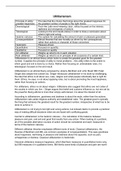
Utilitarianism
Principle of utility/ The idea that the choice that brings about the greatest happiness for
greatest happiness the greatest number of people is the right choice.
Deontological From the Latin word meaning ‘duty’, ethics focused on the intrinsic
rightness and wrongness of actions.
Teleological Looking to the end results (telos) in order to draw a conclusion about
what is right and wrong.
Hedonic calculus The system for calculating the amount of pain or pleasure generated.
Consequentialism Ethical theories that see morality as driven by the consequences,
rather than actions or character of those concerned.
Hedonistic Pleasure-driven.
Quantitative Focused on quantity.
Qualitative Focused on quality
Act utilitarian Weighs up what to do in each situation.
Rule utilitarian Weighs up what to so in principle of all occasions of a certain kind.
Utilitarianism is an ethical theory which looks to create the greatest good for the greatest
number. It applies the principle of utility to moral problems – this utility refers to the extent to
which good and evil is done by a choice. Rather than focusing on unbreakable rules, it is
teleological; focused on the end result.
Utilitarianism is an ethical theory proposed by Jeremy Bentham and John Stuart Mill; Peter
Singer also adopts this outlook too. Singer introduces utilitarianism in his book by challenging
the idea that ethics is all about sex, rules, religion and what people individually feel is right for
them. Ethics, he says, is not about applying rules, but is about promoting the most happiness,
rather than focusing on actions.
For utilitarians, ethics is not about religion. Utilitarians also suggest that ethics are not codes of
the society in which you live – Singer argues that belief and customs influence us, but are set by
the powerful. Being ethical is more than simply self-interest, it is about the interest of all.
According to utilitarianism, goodness and badness is about the ends, rather than the actions.
Utilitarianism sets aside religious authority and established rules. The greatest good is typically
the thing that achieves the greatest result for the greatest number, irrespective of what has to be
done to achieve it.
Utilitarianism is not trying to list right and wrong actions, but instead claims to provide a practical
way of making difficult decisions when we are faced with conflicting goods.
Central to utilitarianism is the hedonic calculus – the calculation of the balance between
pleasure and pain, and evil and good that results from any action. When looking at a problem,
all of the possible alternative courses of action should be considered and each measured in
terms of the hedonic calculus.
Different utilitarian theories emphasise different sorts of ends. Classical utilitarianism, the
theories of Bentham and Mill, are common examples of consequentialism. This sees goodness
about happiness, well-being or pleasure and badness about the opposite, such as pain,
unhappiness or distress. Classical utilitarianism is hedonistic.
Classical utilitarians measure happiness, which Bentham measures in quantitative terms only,
but Mill measures it in qualitative terms. Mill thinks some kinds of pleasure and pain are worth
, more than other kinds. For some utilitarians, decisions should be made by individuals at each
occasion. For others, decisions should be made about general issues and these utilitarian rules
should then be followed.
Utilitarianism is challenged by those who argue that it permits us to break rules and does not
provide a basis for fairness and justice. It relies heavily on being able to know the future
consequences of actions, and that it assumes shared common interests or pleasures, when
people might be more diverse in their preferences and pleasures.
Jeremy Bentham’s utilitarianism
The first utilitarian was Jeremy Bentham (1748 – 1832). He wanted a different approach to
moral decision-making than following fixed rules or staying loyal to the Bible. His ethical theory
started with an observation of what really mattered to people, and this meant confronting the
good and evil in life.
Bentham describes pain and pleasure as our masters, instead of some divine authority.
Wherever possible, we try to avoid pain and seek out pleasure. We pursue hobbies that interest
us and we avoid unpleasant people, and if possible, jobs we hate. He took a hedonistic
approach.
It is not God or human reason that motivates us, but the pursuit of happiness. Bentham is
sceptical of the claims people make about their holy lives – they claim that they act in
accordance of divine rule, but they don’t. He argues that when we do good deeds, we don’t do
them for good reasons, we might do them for the adoration of others; such as giving to charity.
The principle of utility
Given human motivations, a system of law is needed. Bentham developed a principle of utility to
approve or reject every private action and every action of government. The utility is the extent to
which an act produces ‘benefit, advantage, pleasure, good or happiness’ and prevents the
‘happening of mischief, pain, evil, or happiness’.
Utility is what moral behaviour should try to maximise. The balance between happiness and
sadness caused is what should affect our decisions, not nay idealised view of moral rules. The
principle of utility uses the human instinct to seek pleasure but applies a democratic principle. It
is not enough to talk about the individual when thinking about utility, we must consider
community and the sum of the interest of all the people in the community.
Bentham has no romantic notion of people being united. Pleasure and the avoidance of pain,
seeking to increase the balance of good over evil, are things that the person and government
should consider when deciding what to do. It is the happiness of the community that matters.
Goodness is relative to the results
Utilitarianism is teleological. Decisions are made relative to their ends, the results of good and
evil caused. This means that it is a relativistic ethical theory. Relative ethical theories do not
promote a fixed or absolute set of rules. Relativism might be based on personal views of right
and wrong or cultural traditions of right and wrong, but utilitarianism looks at the situation and
decides which actions produce the greatest balance of happiness over evil. It is a democratic
kind of relativism.
Principle of utility/ The idea that the choice that brings about the greatest happiness for
greatest happiness the greatest number of people is the right choice.
Deontological From the Latin word meaning ‘duty’, ethics focused on the intrinsic
rightness and wrongness of actions.
Teleological Looking to the end results (telos) in order to draw a conclusion about
what is right and wrong.
Hedonic calculus The system for calculating the amount of pain or pleasure generated.
Consequentialism Ethical theories that see morality as driven by the consequences,
rather than actions or character of those concerned.
Hedonistic Pleasure-driven.
Quantitative Focused on quantity.
Qualitative Focused on quality
Act utilitarian Weighs up what to do in each situation.
Rule utilitarian Weighs up what to so in principle of all occasions of a certain kind.
Utilitarianism is an ethical theory which looks to create the greatest good for the greatest
number. It applies the principle of utility to moral problems – this utility refers to the extent to
which good and evil is done by a choice. Rather than focusing on unbreakable rules, it is
teleological; focused on the end result.
Utilitarianism is an ethical theory proposed by Jeremy Bentham and John Stuart Mill; Peter
Singer also adopts this outlook too. Singer introduces utilitarianism in his book by challenging
the idea that ethics is all about sex, rules, religion and what people individually feel is right for
them. Ethics, he says, is not about applying rules, but is about promoting the most happiness,
rather than focusing on actions.
For utilitarians, ethics is not about religion. Utilitarians also suggest that ethics are not codes of
the society in which you live – Singer argues that belief and customs influence us, but are set by
the powerful. Being ethical is more than simply self-interest, it is about the interest of all.
According to utilitarianism, goodness and badness is about the ends, rather than the actions.
Utilitarianism sets aside religious authority and established rules. The greatest good is typically
the thing that achieves the greatest result for the greatest number, irrespective of what has to be
done to achieve it.
Utilitarianism is not trying to list right and wrong actions, but instead claims to provide a practical
way of making difficult decisions when we are faced with conflicting goods.
Central to utilitarianism is the hedonic calculus – the calculation of the balance between
pleasure and pain, and evil and good that results from any action. When looking at a problem,
all of the possible alternative courses of action should be considered and each measured in
terms of the hedonic calculus.
Different utilitarian theories emphasise different sorts of ends. Classical utilitarianism, the
theories of Bentham and Mill, are common examples of consequentialism. This sees goodness
about happiness, well-being or pleasure and badness about the opposite, such as pain,
unhappiness or distress. Classical utilitarianism is hedonistic.
Classical utilitarians measure happiness, which Bentham measures in quantitative terms only,
but Mill measures it in qualitative terms. Mill thinks some kinds of pleasure and pain are worth
, more than other kinds. For some utilitarians, decisions should be made by individuals at each
occasion. For others, decisions should be made about general issues and these utilitarian rules
should then be followed.
Utilitarianism is challenged by those who argue that it permits us to break rules and does not
provide a basis for fairness and justice. It relies heavily on being able to know the future
consequences of actions, and that it assumes shared common interests or pleasures, when
people might be more diverse in their preferences and pleasures.
Jeremy Bentham’s utilitarianism
The first utilitarian was Jeremy Bentham (1748 – 1832). He wanted a different approach to
moral decision-making than following fixed rules or staying loyal to the Bible. His ethical theory
started with an observation of what really mattered to people, and this meant confronting the
good and evil in life.
Bentham describes pain and pleasure as our masters, instead of some divine authority.
Wherever possible, we try to avoid pain and seek out pleasure. We pursue hobbies that interest
us and we avoid unpleasant people, and if possible, jobs we hate. He took a hedonistic
approach.
It is not God or human reason that motivates us, but the pursuit of happiness. Bentham is
sceptical of the claims people make about their holy lives – they claim that they act in
accordance of divine rule, but they don’t. He argues that when we do good deeds, we don’t do
them for good reasons, we might do them for the adoration of others; such as giving to charity.
The principle of utility
Given human motivations, a system of law is needed. Bentham developed a principle of utility to
approve or reject every private action and every action of government. The utility is the extent to
which an act produces ‘benefit, advantage, pleasure, good or happiness’ and prevents the
‘happening of mischief, pain, evil, or happiness’.
Utility is what moral behaviour should try to maximise. The balance between happiness and
sadness caused is what should affect our decisions, not nay idealised view of moral rules. The
principle of utility uses the human instinct to seek pleasure but applies a democratic principle. It
is not enough to talk about the individual when thinking about utility, we must consider
community and the sum of the interest of all the people in the community.
Bentham has no romantic notion of people being united. Pleasure and the avoidance of pain,
seeking to increase the balance of good over evil, are things that the person and government
should consider when deciding what to do. It is the happiness of the community that matters.
Goodness is relative to the results
Utilitarianism is teleological. Decisions are made relative to their ends, the results of good and
evil caused. This means that it is a relativistic ethical theory. Relative ethical theories do not
promote a fixed or absolute set of rules. Relativism might be based on personal views of right
and wrong or cultural traditions of right and wrong, but utilitarianism looks at the situation and
decides which actions produce the greatest balance of happiness over evil. It is a democratic
kind of relativism.