

DNA recombination I&II
Learning objective:
1. What is recombination?
2. Types and mechanism of recombination
3. Recombination in action
Information for understanding genetics
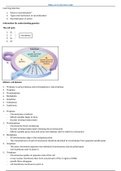
The cell cycle
1. G1
2. S Interphase
3. G2
4. M
Mitosis- cell division
• Prophase is early prophase and prometaphase is late prophase
• Prophase
• Prometaphase
• Metaphate
• Anaphase
• Teleophase
• Cytokinesis
1. Prophase
- Chromosomes condense
- Mitotic spindles begin to form
- Nuclear envelop breaks down
2. Prometaphase
- Chromosome finish condensing
- Nuclear envelop breaks down releasing the chromosomes
- Mitotic spindles grow more and some microtubules start to attach to centromere
3. Metaphase
- All chromosomes align in the metaphase plate
- The 2 kinetochores of each chromosome should be attached to microtubules from opposite spindle poles
4. Anaphase
- The sister chromatids separate into individual chromosomes and are pulled apart
- Cell membrane start to pinch in
5. Telophase
- Chromosomes gather at opposite ends of the cell
- 2 new nuclear membrane then form around each of the 2 regions of DNA
- spindle fibres disappear
- cell membrane continues to pinch in
,6. cytokinesis
- in parallel with anaphase and telophase
- but also continues after mitosis
- With the 2 nuclei already in opposite poles of the cell. The cell cytoplasm separates and the cell pinches in the middle
leading to cleavage furrow
- form 2 new daughter cells
Basic genetics
• 1 maternal or paternal chromatid (also called chromosome)
• Duplication of 1 maternal or paternal chromatid gives a chromosome called homologous chromosome
• 23 pair of maternal homologous chromosome
• 23 pair of paternal homologous chromosome
Meiosis
• Germ cell (sperm or egg cell) is diploid (2n) and undergoes meiosis I forming 2haploid cells (n)
- Each of the 2 haploid cells divide to give 2 other haploid cells, total of 4 gametes
• Meiosis I is analogous to mitosis except 1 difference:
- In mitosis, the sister chromatids get pulled apart to become 2 daughter chromosome
- This does not happen in anaphase I
- In anaphase I the sister chromatid stay together and the homologous pairs get pulled apart
• In meiosis I, prophase I :
- the homologous chromosomes pair up to form a tetrad in a process called synapsis
- The site of crossing over is called a chiasma
- A synaptonomeal complex forms
- Exchange of genetic material occurs
• Between meiosis I and meiosis II can get interphase
• Meiosis II is analogous to mitosis it’s just that there are 2 cells
• In meiosis II start with haploid number of chromosomes and end up with haploid number of chromosomes
,
Learning objective:
1. What is recombination?
2. Types and mechanism of recombination
3. Recombination in action
Information for understanding genetics
The cell cycle
1. G1
2. S Interphase
3. G2
4. M
Mitosis- cell division
• Prophase is early prophase and prometaphase is late prophase
• Prophase
• Prometaphase
• Metaphate
• Anaphase
• Teleophase
• Cytokinesis
1. Prophase
- Chromosomes condense
- Mitotic spindles begin to form
- Nuclear envelop breaks down
2. Prometaphase
- Chromosome finish condensing
- Nuclear envelop breaks down releasing the chromosomes
- Mitotic spindles grow more and some microtubules start to attach to centromere
3. Metaphase
- All chromosomes align in the metaphase plate
- The 2 kinetochores of each chromosome should be attached to microtubules from opposite spindle poles
4. Anaphase
- The sister chromatids separate into individual chromosomes and are pulled apart
- Cell membrane start to pinch in
5. Telophase
- Chromosomes gather at opposite ends of the cell
- 2 new nuclear membrane then form around each of the 2 regions of DNA
- spindle fibres disappear
- cell membrane continues to pinch in
,6. cytokinesis
- in parallel with anaphase and telophase
- but also continues after mitosis
- With the 2 nuclei already in opposite poles of the cell. The cell cytoplasm separates and the cell pinches in the middle
leading to cleavage furrow
- form 2 new daughter cells
Basic genetics
• 1 maternal or paternal chromatid (also called chromosome)
• Duplication of 1 maternal or paternal chromatid gives a chromosome called homologous chromosome
• 23 pair of maternal homologous chromosome
• 23 pair of paternal homologous chromosome
Meiosis
• Germ cell (sperm or egg cell) is diploid (2n) and undergoes meiosis I forming 2haploid cells (n)
- Each of the 2 haploid cells divide to give 2 other haploid cells, total of 4 gametes
• Meiosis I is analogous to mitosis except 1 difference:
- In mitosis, the sister chromatids get pulled apart to become 2 daughter chromosome
- This does not happen in anaphase I
- In anaphase I the sister chromatid stay together and the homologous pairs get pulled apart
• In meiosis I, prophase I :
- the homologous chromosomes pair up to form a tetrad in a process called synapsis
- The site of crossing over is called a chiasma
- A synaptonomeal complex forms
- Exchange of genetic material occurs
• Between meiosis I and meiosis II can get interphase
• Meiosis II is analogous to mitosis it’s just that there are 2 cells
• In meiosis II start with haploid number of chromosomes and end up with haploid number of chromosomes
,


