
2025 Adult Medical Surgical Nursing Content Mastery Series (CMS) Exams STUDY
cn cn cn cn cn cn cn cn cn cn cn
GUIDE ACTUAL EXAM QUESTIONS AND WELL ELABORATED ANSWERS (MOST TES
cn cn cn cn cn cn cn cn cn
TED QUESTIONS WITH VERIFIED ANSWERS) LATEST
cn cn cn cn cn
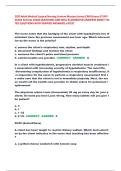
The nurse notes that the handgrip of the client with hypokalemia has di
cn cn cn cn cn cn cn cn cn cn cn cn
minished since the previous assessment one hour ago. Which intervent
cn cn cn cn cn cn cn cn cn
ion by the nurse is the priority?
cn cn cn cn cn cn
a. assess the client's respiratory rate, rhythm, and depth
cn cn cn cn cn cn cn
b. document findings and monitor the client cn cn cn cn cn
c. measure the client's pulse and blood pressure cn cn cn cn cn cn
d. call the health care provider - CORRECT ANSWER A
cn cn cn cn cn cn c n
In a client with hypokkalemia, progressive skeletal muscle weakness i
cn cn cn cn cn cn cn cn cn
s associated with increasing severity of hypokalemia. The most life-
cn cn cn cn cn cn cn cn cn
threatening complication of hypokalemia is respiratory insufficiency. It
cn cn cn cn cn cn cn cn
is imperative for the nurse to perform a respiratory assessment first t
cn cn cn cn cn cn cn cn cn cn cn cn
o make sure that the client is not in immediate jeopardy. Next, the nur
cn cn cn cn cn cn cn cn cn cn cn cn cn
se would call the health care provider to obtain orders for potassium r
cn cn cn cn cn cn cn cn cn cn cn cn
eplacement.
The physician orders Lasix (furosemide) 60 mg po every day for your p
cn cn cn cn cn cn cn cn cn cn cn cn
atient. On hand you have Lasix 40 mg. How many tablets will you give t
cn cn cn cn cn cn cn cn cn cn cn cn cn cn
he patient?cn
a. 3
b. 1
c. 1 1/2 cn
d. 2 1/5 - CORRECT ANSWER C
cn cn cn c n
60/40 (desired/have) cn
A client has been taught to restrict dietary sodium. Which food selecti
cn cn cn cn cn cn cn cn cn cn cn
on by the client indicates to the nurse that teaching has been effective
cn cn cn cn cn cn cn cn cn cn cn cn
?
a. a grilled cheese sandwich with tomato soup
cn cn cn cn cn cn
,b. Chinese take-out, including steamed rice cn cn cn cn
c. a chicken leg, one slice of bread with butter, and steamed carrots
cn cn cn cn cn cn cn cn cn cn cn
d. slices of ham and cheese on whole grain crackers -
cn cn cn cn cn cn cn cn cn
CORRECT ANSWER C
cn cn
Clients on restricted sodium diets generally should avoid processed, s
cn cn cn cn cn cn cn cn cn
moked, and pickled foods and those with sauces and other condiments
cn cn cn cn cn cn cn cn cn cn
. Foods lowest in sodium include fish, poultry, and fresh produce. The
cn cn cn cn cn cn cn cn cn cn cn cn
chinese food likely would have soy sauce, the tomato soup is processe
cn cn cn cn cn cn cn cn cn cn cn
d, and the crackers are a snack food -
cn cn cn cn cn cn cn cn
a category of foods often high in sodium.
cn cn cn cn cn cn cn cn
When a client is assessed, which behavior best indicates that he or sh
cn cn cn cn cn cn cn cn cn cn cn cn
e is experiencing changes associated with acute pain?
cn cn cn cn cn cn cn
a. inability to concentrate cn cn
b. expressed hopelessness cn
c. psychosocial withdrawal cn
d. anger and hostility - CORRECT ANSWER A
cn cn cn cn c n
The characteristics most common to chronic pain are psychosocial wit
cn cn cn cn cn cn cn cn cn
hdrawal, anger and hostility, depression, and hopelessness. The inabili
cn cn cn cn cn cn cn cn
ty to concentrate is associated much more with acute pain, before any
cn cn cn cn cn cn cn cn cn cn cn
physiologic or behavioral adaptation has occurred.
cn cn cn cn cn cn
A nurse is caring for several clients at risk for overhydration. The nurs
cn cn cn cn cn cn cn cn cn cn cn cn
e assesses the older client with which finding first?
cn cn cn cn cn cn cn cn
A) Has had diabetes mellitus for 12 years
cn cn cn cn cn cn
B) Had abdominal surgery and has a nasogastric tube
cn cn cn cn cn cn cn
C) Just received 3 units of packed red blood cells
cn cn cn cn cn cn cn cn
D) Uses sodium-containing antacids frequently - CORRECT ANSWER
cn cn cn cn cn c n
C
Blood replacement therapy involves intravenous fluid administration,
cn cn cn cn cn cn cn
which inherently increases the risk for overhydration. The fact that the
cn cn cn cn cn cn cn cn cn cn cn
fluid consists of packed red blood cells greatly increases the risk, bec
cn cn cn cn cn cn cn cn cn cn cn
ause this fluid increases the colloidal oncotic pressure of the
cn cn cn cn cn cn cn cn cn
,blood, causing fluid to move from interstitial and intracellular spaces i
cn cn cn cn cn cn cn cn cn cn
nto the plasma volume. An older adult may not have sufficient cardiac
cn cn cn cn cn cn cn cn cn cn cn cn
or renal reserve to manage this extra fluid.
cn cn cn cn cn cn cn
The client with a stroke was admitted to a medical-
cn cn cn cn cn cn cn cn cn
surgical unit. Which tasks does the nurse delegate to the unlice
cn cn cn cn cn cn cn cn cn cn
nsed assistive personnel?cn cn
A) Assess level of consciousness. cn cn cn
B) Evaluate the pulse oximetry reading. cn cn cn cn
C) Assist the client with meals. cn cn cn cn
D) Complete the nursing care plan. - CORRECT ANSWER C
cn cn cn cn cn cn c n
The nurse needs to know the five rights of delegation: right task, right
cn cn cn cn cn cn cn cn cn cn cn cn cn
circumstances, right person, right communication, and right supervisio cn cn cn cn cn cn cn
n. Unlicensed assistive personnel can help with feeding, but only the nu
cn cn cn cn cn cn cn cn cn cn cn
rse can care plan, assess the level of consciousness, and evaluate the
cn cn cn cn cn cn cn cn cn cn cn c
oxygenation of the client.
n cn cn cn
Interrelated concepts to the professional nursing role a nurse manager
cn cn cn cn cn cn cn cn cn cn
would consider when addressing concerns about the quality of patient
cn cn cn cn cn cn cn cn cn c
education include:
n cn
A) adherence.
B) developmental level. cn
C) motivation.
D) technology. - CORRECT ANSWER D cn cn c n
The interrelated concepts to the professional role of a nurse include h
cn cn cn cn cn cn cn cn cn cn cn
ealth promotion, leadership, technology/informatics, quality, collaborat
cn cn cn cn cn
ion, and communication. Adherence, culture, developmental level, famil
cn cn cn cn cn cn cn
y dynamics, and motivation are considered interrelated concepts to pa
cn cn cn cn cn cn cn cn cn
tient attributes and preference.
cn cn cn
During orientation to an emergency department, the nurse educator w
cn cn cn cn cn cn cn cn cn
ould be concerned if the new nurse listed which of the following as a ri
cn cn cn cn cn cn cn cn cn cn cn cn cn cn
sk factor for impaired thermoregulation?
cn cn cn cn
A) Temperature extremes cn
, B) Occupational exposure cn
C) Impaired cognition cn
D) Physical agility - CORRECT ANSWER D cn cn cn c n
Physical agility is not a risk factor for impaired thermoregulation. The n
cn cn cn cn cn cn cn cn cn cn cn
urse educator would use this information to plan additional teaching to
cn cn cn cn cn cn cn cn cn cn cn
include medical conditions and gait disturbance as risk factors for hyp
cn cn cn cn cn cn cn cn cn cn
othermia, because their bodies have a reduced ability to generate heat
cn cn cn cn cn cn cn cn cn cn
. Impaired cognition is a risk factor. Recreational or occupational expo
cn cn cn cn cn cn cn cn cn cn
sure is a risk factor. Temperature extremes are risk factors for impaire
cn cn cn cn cn cn cn cn cn cn cn
d thermoregulation.
cn
An older adult client is in physical restraints. Which intervention by the
cn cn cn cn cn cn cn cn cn cn cn cn
nurse is the priority? cn cn cn
A) Assess the client hourly while keeping the restraints in place.
cn cn cn cn cn cn cn cn cn
B) Assess the client once each shift, releasing the restraints for
cn cn cn cn cn cn cn cn cn cn
feeding.
C) Assess the client twice each shift while keeping the restraints in
cn cn cn cn cn cn cn cn cn cn cn
place.
D) Assess the client every 30 to 60 minutes, releasing restraints every
cn cn cn cn cn cn cn cn cn cn cn
2 hours. - CORRECT ANSWER D
cn cn cn c n
The application of restraints can have serious consequences. Thus, th
cn cn cn cn cn cn cn cn cn
e nurse should check the client every 30 to 60 minutes, releasing the
cn cn cn cn cn cn cn cn cn cn cn cn cn
restraints every 2 hours for positioning and toileting. The other answe
cn cn cn cn cn cn cn cn cn cn
rs would not be appropriate because the client would not be assessed
cn cn cn cn cn cn cn cn cn cn cn
frequently enough, and circulation to the limbs could be compromise
cn cn cn cn cn cn cn cn cn cn
d. Assessing every hour and releasing the restraints every 2 hours is in
cn cn cn cn cn cn cn cn cn cn cn cn
compliance with federal policy for monitoring clients in restraints.
cn cn cn cn cn cn cn cn cn
The nurse is assessing a client with a long-
cn cn cn cn cn cn cn cn
term history of arthritic pain. Assessment reveals a heart rate of 115 b
cn cn cn cn cn cn cn cn cn cn cn cn
eats/min and blood pressure of 170/80 mm Hg. Which intervention will t
cn cn cn cn cn cn cn cn cn cn cn
he nurse carry out first?
cn cn cn cn
A) Administer blood pressure medication. cn cn cn
cn cn cn cn cn cn cn cn cn cn cn
GUIDE ACTUAL EXAM QUESTIONS AND WELL ELABORATED ANSWERS (MOST TES
cn cn cn cn cn cn cn cn cn
TED QUESTIONS WITH VERIFIED ANSWERS) LATEST
cn cn cn cn cn
The nurse notes that the handgrip of the client with hypokalemia has di
cn cn cn cn cn cn cn cn cn cn cn cn
minished since the previous assessment one hour ago. Which intervent
cn cn cn cn cn cn cn cn cn
ion by the nurse is the priority?
cn cn cn cn cn cn
a. assess the client's respiratory rate, rhythm, and depth
cn cn cn cn cn cn cn
b. document findings and monitor the client cn cn cn cn cn
c. measure the client's pulse and blood pressure cn cn cn cn cn cn
d. call the health care provider - CORRECT ANSWER A
cn cn cn cn cn cn c n
In a client with hypokkalemia, progressive skeletal muscle weakness i
cn cn cn cn cn cn cn cn cn
s associated with increasing severity of hypokalemia. The most life-
cn cn cn cn cn cn cn cn cn
threatening complication of hypokalemia is respiratory insufficiency. It
cn cn cn cn cn cn cn cn
is imperative for the nurse to perform a respiratory assessment first t
cn cn cn cn cn cn cn cn cn cn cn cn
o make sure that the client is not in immediate jeopardy. Next, the nur
cn cn cn cn cn cn cn cn cn cn cn cn cn
se would call the health care provider to obtain orders for potassium r
cn cn cn cn cn cn cn cn cn cn cn cn
eplacement.
The physician orders Lasix (furosemide) 60 mg po every day for your p
cn cn cn cn cn cn cn cn cn cn cn cn
atient. On hand you have Lasix 40 mg. How many tablets will you give t
cn cn cn cn cn cn cn cn cn cn cn cn cn cn
he patient?cn
a. 3
b. 1
c. 1 1/2 cn
d. 2 1/5 - CORRECT ANSWER C
cn cn cn c n
60/40 (desired/have) cn
A client has been taught to restrict dietary sodium. Which food selecti
cn cn cn cn cn cn cn cn cn cn cn
on by the client indicates to the nurse that teaching has been effective
cn cn cn cn cn cn cn cn cn cn cn cn
?
a. a grilled cheese sandwich with tomato soup
cn cn cn cn cn cn
,b. Chinese take-out, including steamed rice cn cn cn cn
c. a chicken leg, one slice of bread with butter, and steamed carrots
cn cn cn cn cn cn cn cn cn cn cn
d. slices of ham and cheese on whole grain crackers -
cn cn cn cn cn cn cn cn cn
CORRECT ANSWER C
cn cn
Clients on restricted sodium diets generally should avoid processed, s
cn cn cn cn cn cn cn cn cn
moked, and pickled foods and those with sauces and other condiments
cn cn cn cn cn cn cn cn cn cn
. Foods lowest in sodium include fish, poultry, and fresh produce. The
cn cn cn cn cn cn cn cn cn cn cn cn
chinese food likely would have soy sauce, the tomato soup is processe
cn cn cn cn cn cn cn cn cn cn cn
d, and the crackers are a snack food -
cn cn cn cn cn cn cn cn
a category of foods often high in sodium.
cn cn cn cn cn cn cn cn
When a client is assessed, which behavior best indicates that he or sh
cn cn cn cn cn cn cn cn cn cn cn cn
e is experiencing changes associated with acute pain?
cn cn cn cn cn cn cn
a. inability to concentrate cn cn
b. expressed hopelessness cn
c. psychosocial withdrawal cn
d. anger and hostility - CORRECT ANSWER A
cn cn cn cn c n
The characteristics most common to chronic pain are psychosocial wit
cn cn cn cn cn cn cn cn cn
hdrawal, anger and hostility, depression, and hopelessness. The inabili
cn cn cn cn cn cn cn cn
ty to concentrate is associated much more with acute pain, before any
cn cn cn cn cn cn cn cn cn cn cn
physiologic or behavioral adaptation has occurred.
cn cn cn cn cn cn
A nurse is caring for several clients at risk for overhydration. The nurs
cn cn cn cn cn cn cn cn cn cn cn cn
e assesses the older client with which finding first?
cn cn cn cn cn cn cn cn
A) Has had diabetes mellitus for 12 years
cn cn cn cn cn cn
B) Had abdominal surgery and has a nasogastric tube
cn cn cn cn cn cn cn
C) Just received 3 units of packed red blood cells
cn cn cn cn cn cn cn cn
D) Uses sodium-containing antacids frequently - CORRECT ANSWER
cn cn cn cn cn c n
C
Blood replacement therapy involves intravenous fluid administration,
cn cn cn cn cn cn cn
which inherently increases the risk for overhydration. The fact that the
cn cn cn cn cn cn cn cn cn cn cn
fluid consists of packed red blood cells greatly increases the risk, bec
cn cn cn cn cn cn cn cn cn cn cn
ause this fluid increases the colloidal oncotic pressure of the
cn cn cn cn cn cn cn cn cn
,blood, causing fluid to move from interstitial and intracellular spaces i
cn cn cn cn cn cn cn cn cn cn
nto the plasma volume. An older adult may not have sufficient cardiac
cn cn cn cn cn cn cn cn cn cn cn cn
or renal reserve to manage this extra fluid.
cn cn cn cn cn cn cn
The client with a stroke was admitted to a medical-
cn cn cn cn cn cn cn cn cn
surgical unit. Which tasks does the nurse delegate to the unlice
cn cn cn cn cn cn cn cn cn cn
nsed assistive personnel?cn cn
A) Assess level of consciousness. cn cn cn
B) Evaluate the pulse oximetry reading. cn cn cn cn
C) Assist the client with meals. cn cn cn cn
D) Complete the nursing care plan. - CORRECT ANSWER C
cn cn cn cn cn cn c n
The nurse needs to know the five rights of delegation: right task, right
cn cn cn cn cn cn cn cn cn cn cn cn cn
circumstances, right person, right communication, and right supervisio cn cn cn cn cn cn cn
n. Unlicensed assistive personnel can help with feeding, but only the nu
cn cn cn cn cn cn cn cn cn cn cn
rse can care plan, assess the level of consciousness, and evaluate the
cn cn cn cn cn cn cn cn cn cn cn c
oxygenation of the client.
n cn cn cn
Interrelated concepts to the professional nursing role a nurse manager
cn cn cn cn cn cn cn cn cn cn
would consider when addressing concerns about the quality of patient
cn cn cn cn cn cn cn cn cn c
education include:
n cn
A) adherence.
B) developmental level. cn
C) motivation.
D) technology. - CORRECT ANSWER D cn cn c n
The interrelated concepts to the professional role of a nurse include h
cn cn cn cn cn cn cn cn cn cn cn
ealth promotion, leadership, technology/informatics, quality, collaborat
cn cn cn cn cn
ion, and communication. Adherence, culture, developmental level, famil
cn cn cn cn cn cn cn
y dynamics, and motivation are considered interrelated concepts to pa
cn cn cn cn cn cn cn cn cn
tient attributes and preference.
cn cn cn
During orientation to an emergency department, the nurse educator w
cn cn cn cn cn cn cn cn cn
ould be concerned if the new nurse listed which of the following as a ri
cn cn cn cn cn cn cn cn cn cn cn cn cn cn
sk factor for impaired thermoregulation?
cn cn cn cn
A) Temperature extremes cn
, B) Occupational exposure cn
C) Impaired cognition cn
D) Physical agility - CORRECT ANSWER D cn cn cn c n
Physical agility is not a risk factor for impaired thermoregulation. The n
cn cn cn cn cn cn cn cn cn cn cn
urse educator would use this information to plan additional teaching to
cn cn cn cn cn cn cn cn cn cn cn
include medical conditions and gait disturbance as risk factors for hyp
cn cn cn cn cn cn cn cn cn cn
othermia, because their bodies have a reduced ability to generate heat
cn cn cn cn cn cn cn cn cn cn
. Impaired cognition is a risk factor. Recreational or occupational expo
cn cn cn cn cn cn cn cn cn cn
sure is a risk factor. Temperature extremes are risk factors for impaire
cn cn cn cn cn cn cn cn cn cn cn
d thermoregulation.
cn
An older adult client is in physical restraints. Which intervention by the
cn cn cn cn cn cn cn cn cn cn cn cn
nurse is the priority? cn cn cn
A) Assess the client hourly while keeping the restraints in place.
cn cn cn cn cn cn cn cn cn
B) Assess the client once each shift, releasing the restraints for
cn cn cn cn cn cn cn cn cn cn
feeding.
C) Assess the client twice each shift while keeping the restraints in
cn cn cn cn cn cn cn cn cn cn cn
place.
D) Assess the client every 30 to 60 minutes, releasing restraints every
cn cn cn cn cn cn cn cn cn cn cn
2 hours. - CORRECT ANSWER D
cn cn cn c n
The application of restraints can have serious consequences. Thus, th
cn cn cn cn cn cn cn cn cn
e nurse should check the client every 30 to 60 minutes, releasing the
cn cn cn cn cn cn cn cn cn cn cn cn cn
restraints every 2 hours for positioning and toileting. The other answe
cn cn cn cn cn cn cn cn cn cn
rs would not be appropriate because the client would not be assessed
cn cn cn cn cn cn cn cn cn cn cn
frequently enough, and circulation to the limbs could be compromise
cn cn cn cn cn cn cn cn cn cn
d. Assessing every hour and releasing the restraints every 2 hours is in
cn cn cn cn cn cn cn cn cn cn cn cn
compliance with federal policy for monitoring clients in restraints.
cn cn cn cn cn cn cn cn cn
The nurse is assessing a client with a long-
cn cn cn cn cn cn cn cn
term history of arthritic pain. Assessment reveals a heart rate of 115 b
cn cn cn cn cn cn cn cn cn cn cn cn
eats/min and blood pressure of 170/80 mm Hg. Which intervention will t
cn cn cn cn cn cn cn cn cn cn cn
he nurse carry out first?
cn cn cn cn
A) Administer blood pressure medication. cn cn cn


