
Proteins
Proteins are large polymers composed of amino acid monomers
All proteins contain the elements Carbon, Hydrogen, Oxygen and Nitrogen
Some proteins also contain sulfur
There are 20 different amino acids and these can be arranged in many different ways which makes up an infinite
number of proteins
Proteins have many different functions and this is closely related to their shape.
This shape is determined by the sequence of amino acids which makes up the protein
Plants absorb nitrates from the soil and use them to construct their amino acids
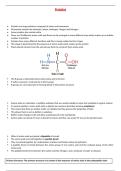
The R group is what determines what amino acid is formed
If sulfur is present, it will only be in the R group
R groups are very important in forming bonds in the protein structure
Amino acids are colourless, crystalline solutions that are usually soluble in water but insoluble in organic solvent.
In neutral solutions, amino acids exist as dipolar ions and are described as being amphoteric.
This means that they are neither acidic nor alkaline but they possess the properties of both
This allows them to act as buffers in solutions
Buffers resist changes in pH and allow a particular pH to be maintained.
Amino acids can donate H+ ions as the pH increases and they can accept H+ ions as the pH decreases.
When 2 amino acids are joined a dipeptide is formed
The amino acids are held together by peptide bonds
They are joined together by condensation reactions and broken down by hydrolysis.
A peptide bond is formed between the amino group of one amino acid and the carboxyl group of the other
amino acid
The peptide bond forms between the carbon and the nitrogen, and a molecule of water is released
Primary Structure: The primary structure of a protein is the sequence of amino acids in the polypeptide chain
Proteins are large polymers composed of amino acid monomers
All proteins contain the elements Carbon, Hydrogen, Oxygen and Nitrogen
Some proteins also contain sulfur
There are 20 different amino acids and these can be arranged in many different ways which makes up an infinite
number of proteins
Proteins have many different functions and this is closely related to their shape.
This shape is determined by the sequence of amino acids which makes up the protein
Plants absorb nitrates from the soil and use them to construct their amino acids
The R group is what determines what amino acid is formed
If sulfur is present, it will only be in the R group
R groups are very important in forming bonds in the protein structure
Amino acids are colourless, crystalline solutions that are usually soluble in water but insoluble in organic solvent.
In neutral solutions, amino acids exist as dipolar ions and are described as being amphoteric.
This means that they are neither acidic nor alkaline but they possess the properties of both
This allows them to act as buffers in solutions
Buffers resist changes in pH and allow a particular pH to be maintained.
Amino acids can donate H+ ions as the pH increases and they can accept H+ ions as the pH decreases.
When 2 amino acids are joined a dipeptide is formed
The amino acids are held together by peptide bonds
They are joined together by condensation reactions and broken down by hydrolysis.
A peptide bond is formed between the amino group of one amino acid and the carboxyl group of the other
amino acid
The peptide bond forms between the carbon and the nitrogen, and a molecule of water is released
Primary Structure: The primary structure of a protein is the sequence of amino acids in the polypeptide chain


