
Best selling Pearson Edexcel International GCSE (9-1) Economics Student Book Ebook notes
Summary
IGCSE Edexcel Economics. 2. Economic assumptions
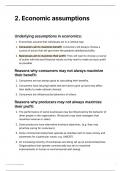
PopularThis is a concise summary of key economic assumptions from IGCSE Edexcel Economics, explaining how consumers and businesses make decisions. It covers rational behavior, reasons why individuals and firms may not always maximize benefits or profits, and the impact of information availability. Perfect for IGCSE students, educators, and professionals looking for a clear, structured overview of fundamental economic principles.
 tubaashraf
Summary
IGCSE Edexcel economics - 5. Market equilibrium
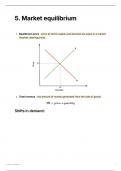
PopularThis document is a summary of market equilibrium for IGCSE Edexcel Economics. It covers key concepts such as equilibrium price, total revenue, shifts in demand and supply, excess supply and demand, and how markets restore equilibrium. Perfect for students and teachers looking for a clear, structured, and concise explanation of this essential economic topic.
tubaashraf
Summary
IGCSE Edexcel economics - 4. The Supply curve
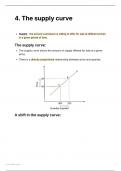
PopularThis document is a summary of the supply curve for IGCSE Edexcel Economics. It explains the relationship between price and quantity supplied, factors that cause shifts in the supply curve, and their economic impact. Perfect for students, educators, and professionals looking for a clear, structured overview.
tubaashraf
Summary
IGCSE Edexcel economics - 6. Price elasticity of demand
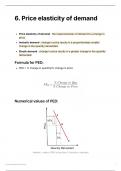
PopularThis document is a summary of price elasticity of demand for IGCSE Edexcel Economics. It explains the factors that influence PED and the formula needed to calculate it. Perfect for students, educators, and professionals looking for a clear, structured overview.
tubaashraf
Summary
IGCSE Economics - Microeconomics notes
PopularContent summary The market system: • The economic problem • Economic assumptions • Demand, supply and market equilibrium • Elasticity • The mixed economy • Externalities Business economics: • Production • Productivity and division of labour • Business costs, revenues and profit • Business competition • The labour market • Government intervention
 evanshywong
Newest Pearson Edexcel International GCSE (9-1) Economics Student Book Ebook summaries
Summary
IGCSE Edexcel Economics. 2. Economic assumptions
NewThis is a concise summary of key economic assumptions from IGCSE Edexcel Economics, explaining how consumers and businesses make decisions. It covers rational behavior, reasons why individuals and firms may not always maximize benefits or profits, and the impact of information availability. Perfect for IGCSE students, educators, and professionals looking for a clear, structured overview of fundamental economic principles.
tubaashraf
Summary
IGCSE Edexcel economics - 5. Market equilibrium
NewThis document is a summary of market equilibrium for IGCSE Edexcel Economics. It covers key concepts such as equilibrium price, total revenue, shifts in demand and supply, excess supply and demand, and how markets restore equilibrium. Perfect for students and teachers looking for a clear, structured, and concise explanation of this essential economic topic.
tubaashraf
Summary
IGCSE Edexcel economics - 4. The Supply curve
NewThis document is a summary of the supply curve for IGCSE Edexcel Economics. It explains the relationship between price and quantity supplied, factors that cause shifts in the supply curve, and their economic impact. Perfect for students, educators, and professionals looking for a clear, structured overview.
tubaashraf
Summary
IGCSE Edexcel economics - 6. Price elasticity of demand
NewThis document is a summary of price elasticity of demand for IGCSE Edexcel Economics. It explains the factors that influence PED and the formula needed to calculate it. Perfect for students, educators, and professionals looking for a clear, structured overview.
tubaashraf
Summary
IGCSE Economics - Microeconomics notes
NewContent summary The market system: • The economic problem • Economic assumptions • Demand, supply and market equilibrium • Elasticity • The mixed economy • Externalities Business economics: • Production • Productivity and division of labour • Business costs, revenues and profit • Business competition • The labour market • Government intervention
evanshywong