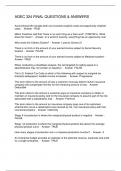
CPPS EXAM
CPPS EXAM QUESTIONS AND ANSWERS GRADED A+ LATEST UPDATE.
Culture eats ANS >> Process for lunch
Describe culture ANS >> Collective mindset norms
Drift ANS >> Normalization of deviance
What are the five elements of an ideal safety culture ANS >> Reporting,
inform, Just, flexible, learning
James reasons book ANS >> Managing the Risk of organizational
accidents, 1997
,CPPS EXAM
Culture is it driven locally or at the organizational level ANS >> Sexton
at all believe that culture is more variable among units within the same
hospital then among hospitals
What are principles and science of patient safety ANS >> 1.
Standardization and checklists, 2. human factors, 3. teamwork training
How do you raise awareness about patient safety ANS >> Through
engagement in education such as engaging the team and patient safety
initiatives on error reporting near misses and disclosure an apology
How do you respond to patient safety survey results ANS >> Identify
and disseminate best practices from high-performing units
Concerns for responding to patient safety survey data ANS >>
Response rate reliability of data
What are surrogates of patient safety culture assessment ANS >>
Number one, voluntary reporting of near misses, number two must be
accompanied by just culture regarding how reports are dealt with in
number three patient safety is a strategic priority
3 Principles and science of patient safety ANS >> One standardization,
checklist, to human factors, three teamwork training
, CPPS EXAM
Patient and family involvement and patient safety initiatives may
include ANS >> Patient advisory Council's, community forums
What are the principles of standardization ANS >> Era reduction within
departments, across the organization, throughout the industry, and
examples include color-coded wristbands
What are the principles of patient safety ANS >> 1 standardization, 2
checklists, 3 learning from errors, 4 human factors, 5 teamwork training,
5 error reporting and near misses, 7 disclosures
What are the principles of checkless ANS >> List of actions that should
be performed optimize patient outcomes. They are based on sound
theoretical basis and a history of success and patient safety. For
example, surgical safety checklist, handoff communication.
Patient safety principal learning from errors describes ANS >> Here’s
our opportunities to want to dig deep for a root cause, and look for
common causes and determine what we do when we find them
Scribd the principles of human factors ANS >> The interrelationship
between humans the tools and equipment in the workplace and the
environment in which they work. This is different than human error
CPPS EXAM QUESTIONS AND ANSWERS GRADED A+ LATEST UPDATE.
Culture eats ANS >> Process for lunch
Describe culture ANS >> Collective mindset norms
Drift ANS >> Normalization of deviance
What are the five elements of an ideal safety culture ANS >> Reporting,
inform, Just, flexible, learning
James reasons book ANS >> Managing the Risk of organizational
accidents, 1997
,CPPS EXAM
Culture is it driven locally or at the organizational level ANS >> Sexton
at all believe that culture is more variable among units within the same
hospital then among hospitals
What are principles and science of patient safety ANS >> 1.
Standardization and checklists, 2. human factors, 3. teamwork training
How do you raise awareness about patient safety ANS >> Through
engagement in education such as engaging the team and patient safety
initiatives on error reporting near misses and disclosure an apology
How do you respond to patient safety survey results ANS >> Identify
and disseminate best practices from high-performing units
Concerns for responding to patient safety survey data ANS >>
Response rate reliability of data
What are surrogates of patient safety culture assessment ANS >>
Number one, voluntary reporting of near misses, number two must be
accompanied by just culture regarding how reports are dealt with in
number three patient safety is a strategic priority
3 Principles and science of patient safety ANS >> One standardization,
checklist, to human factors, three teamwork training
, CPPS EXAM
Patient and family involvement and patient safety initiatives may
include ANS >> Patient advisory Council's, community forums
What are the principles of standardization ANS >> Era reduction within
departments, across the organization, throughout the industry, and
examples include color-coded wristbands
What are the principles of patient safety ANS >> 1 standardization, 2
checklists, 3 learning from errors, 4 human factors, 5 teamwork training,
5 error reporting and near misses, 7 disclosures
What are the principles of checkless ANS >> List of actions that should
be performed optimize patient outcomes. They are based on sound
theoretical basis and a history of success and patient safety. For
example, surgical safety checklist, handoff communication.
Patient safety principal learning from errors describes ANS >> Here’s
our opportunities to want to dig deep for a root cause, and look for
common causes and determine what we do when we find them
Scribd the principles of human factors ANS >> The interrelationship
between humans the tools and equipment in the workplace and the
environment in which they work. This is different than human error