
• Falsches Dokument? Kostenlos tauschen
  • Geschrieben von Student*innen, die bestanden haben
  • Sofort verfügbar nach Zahlung
  • Online lesen oder als PDF
Verkaufen
Wo studierst du
Deine Sprache
Document preview thumbnail
Vorschau 2 aus 7 Seiten
Notizen

Full Ancient Greek Notes

Document preview thumbnail
Vorschau 2 aus 7 Seiten

These notes are a comprehensive, easy-to-understand study guide on Ancient Greece, written at a 9th-grade level but clear enough for anyone to learn from. They explain all major topics that the students usually go through in a unit of world history, including: Geography and how it influenced Greek civilization Government systems, in particular Athenian democracy and Spartan oligarchy Daily life for men, women, and children in the different city-states Greek art, architecture, and even theater Mythology and religion, with the major gods of Mount Olympus Philosophy - easy explanations of Socrates, Plato, and Aristotle Major wars, such as the Persian and Peloponnesian Wars, Alexander the Great and the Hellenistic period The enduring legacy of Greece and how it continues to impact the world today These notes include: Bold section headings for easy navigation Clear definitions of important vocabulary and concepts History dates, context for how events are linked. Examples and comparisons to put ideas in perspective Summaries at the end of each section for quick review A tone that feels natural, friendly, and like a helpful teacher explaining things. Overall, it is a comprehensive, student-friendly study packet meant for anyone wanting to learn Ancient Greece with confidence.

Inhaltsvorschau

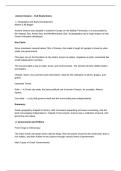
Ancient Greece – Full Study Notes

1. Geography and Early Development
Where It All Began

Ancient Greece was situated in southern Europe on the Balkan Peninsula; it is surrounded by
the Aegean Sea, Ionian Sea, and Mediterranean Sea. Its geography had a huge impact on how
Greek civilization developed.

Key Facts:

Since mountains covered about 75% of Greece, this made it tough for people to travel or unite
under one government.

This gave rise to the formation of city-states, known as poleis, singularly as polis, somewhat like
small independent countries.

The sea provided a way to trade, travel, and communicate. The Greeks became skilled sailors
and traders.

Climate: Warm, dry summers and mild winters; ideal for the cultivation of olives, grapes, and
grains.

Important Terms:

Polis — A Greek city-state, the basic political unit of ancient Greece, for example, Athens,
Sparta.

City-state — a city that governs itself and the surrounding area independently.

Summary:

Greek geography shaped its history, with mountains separating and seas connecting, and the
land encouraging independence. Instead of one empire, Greece was a collection of proud, self-
governing city-states.

2. Government and Politics

From Kings to Democracy

The early Greek city-states were ruled by kings, then the power moved to the aristocrats, that is,
rich nobles, and then further to the citizens through various forms of government.

Main Types of Greek Governments:

, Monarchy — Rule by a king or queen.

Oligarchy — Rule by a small group of wealthy or powerful citizens.

Tyranny - Rule by one powerful individual who took power by sometimes forcible, but not always
harsh means.

Democracy — Rule by the people.

Athens: The Birthplace of Democracy

The first democracy in history was established by Athens around 508 BCE.

Citizens-that is, free adult men native to Athens-could vote directly on the laws.

Important leaders such as Cleisthenes and later Pericles expanded democratic rights.

Definition:

Democracy-the form of government in which citizens have the rightful power to decide, either by
voting or by other means.

Sparta: Rule by the Few

Sparta was a militarily based oligarchy.

Ruled by two kings and a council of elders.

Boys were trained as soldiers from their childhood.

Women had more rights than in Athens but less political freedom.

Summary:

Greece tried various forms of governance. Athens gave the world an example of what
democracy would look like, while Sparta contrasted this with discipline and order.

⚓ 3. Day-to-Day Life in Ancient Greece

Life in the City-States

Men dealt with politics, business, and farming.

Dokument Information

Schuljahr
1
Hochgeladen auf
13. november 2025
Anzahl der Seiten
7
geschrieben in
2025/2026
Typ
Notizen
Professor(en)
Mr. chris
Enthält
Ancient greece
6,13 €

Falsches Dokument? Kostenlos tauschen Innerhalb von 14 Tagen nach dem Kauf und vor dem Herunterladen kannst du ein anderes Dokument wählen. Du kannst den Betrag einfach neu ausgeben.
Geschrieben von Student*innen, die bestanden haben
Sofort verfügbar nach Zahlung
Online lesen oder als PDF

Verkauft
1
Anhänger
0
Sachen
3
Zuletzt verkauft
1 Jahren vor


Warum sich Studierende für Stuvia entscheiden

on Mitstudent*innen erstellt, durch Bewertungen verifiziert

Geschrieben von Student*innen, die bestanden haben und bewertet von anderen, die diese Studiendokumente verwendet haben.

Nicht zufrieden? Wähle ein anderes Dokument

Kein Problem! Du kannst direkt ein anderes Dokument wählen, das besser zu dem passt, was du suchst.

Bezahle wie du möchtest, fange sofort an zu lernen

Kein Abonnement, keine Verpflichtungen. Bezahle wie gewohnt per Kreditkarte oder Sofort und lade dein PDF-Dokument sofort herunter.

Student with book image

“Gekauft, heruntergeladen und bestanden. So einfach kann es sein.”

Alisha Student

Arbeitest du an deiner Quellenangabe?

Erstelle korrekte Quellenangaben in APA, MLA und Harvard mit unserem kostenlosen Zitiergenerator.

Arbeitest du an deiner Quellenangabe?

Häufig gestellte Fragen

