
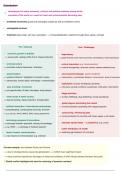
Globalization
development of closer economic, cultural, and political relations among all the
=
countries of the world as a result of travel and communication becoming easy
• worldwide movement (goods are exchanged, people as well as institutions move)
• unstoppable process
• historical (slave trade, silk road, colonialism —> forced globalization; explorers brought food, spices, animals)
Pro / Chances Con / Challenges
• economic growth & stability • dependency
—> secure jobs, raising profits due to cheap production —> global financial crisis make economies vulnerable(e.g. Great Depression)
• enriched culture • cultural imperialism (e.g. Americanization)
—> promotes cultural awareness / tolerance —> cultural homogeneity; dominant cultures replace traditional ones
• westernization • environmental damage (carbon footprint)
—> positive influence / adoptation of western values —> deforestation, unsustainable lifestyles / consumerism, abuse of resources
—> democracy, human rights, technology = modernization
• exploitation (of poor developing countries)
• easy traveling / movement —> inhumane working conditions; sweatshops; child labour; fast fashion
—> job opportunities, fill labor shortages, study abroad
• illegal activities
• lower prices & easier access —> human trafficking, drug trafficking, money laundering
—> factory farming, mass production, transportation
• global players dominating the market
• political interaction / international partnerships —> small businesses competing with megacompanies
—> peacekeeping, combat global warming, terrorism
—> e.g. UN, EU, NATO, BRICS, WHO, trading agreements • outsourcing / off-shoring jobs
—> move production to countries with lower wages = job losses
• technology progress & innovations
—> exchange between specialist, sharing of knowledge • diseases spread faster —> pandemics (e.g. covid)
—> e.g. WHO —> exchange of medical research
• unfair distribution of wealth
• faster & easier communication —> widening gap between rich and poor
—> new means of communication (e.g. internet)
Current example: war between Russia and Ukraine
—> due to interdependence caused by globalization—> conflicts have significant impact
—> many countries experienced shortages of wheat and sunflower oil when Russia blocked Ukraine's Sea ports
! Global conflict highlights the need for restoring of domestic markets !
,Sustainability
Societal goal which aims to ensure long-term human coexistence with
=
the Earth by balancing environmental, economic, and social needs
sustainability as buzzword
—> term often used in marketing & politics to products or ideas / policies as environmentally friendly
—> can be misleading when used without real commitment to sustainable practices
"Greenwashing"
—> companies or organizations falsely claim to be environmentally friendly
Three dimensions of sustainability:
• Environmental (protecting ecosystem & biodiversity, combating climate change with renewable energy )
• Economic (long term sustainable economic growth, fair trade)
• Social (equality, human rights, access to healthcare & education)
interlinked / everything
interconnected depends on
= rely on each other * environment equally important to
support / guarantee
#
sustainability
&
*
if one is neglected
&
= instability
working towards a sustainable world:
COP-conferences
—> annual UN climate summits addressing climate change
Paris agreement
—> binding international agreement with effort to limit global warming below 2°C.
—> first treaty on multinational level to combat climate change
SDGs (sustainable development goals)
—> 17 global goals set by the UN to promote sustainability by 2030 —> aim for a better future
Key goals:
- tackle climate change
- clean water & sanitation
- affordable & clean energy
- eradicate extreme hunger and poverty
, sustainable living —> aim for zero waste
• Food (reducing food waste, plant-based diets, buying regional & seasonal products)
•
•
Energy (using solar, wind and hydro energy instead of fossil fuels)
Transportation (flying less, using the bike or public transportation, electric vehicles)
Gester
ind
carbon pricing
—> putting a price on CO2 emissions to encourage transition to greener alternatives
renewable energy
—> wind, solar and hydro power reduce dependency on fossil fuels
planetary boundary
—> limit on how much humans can impact the environment before causing irreversible damage
Earth overshoot day
—> marks the day when humanity's demand on nature (ecological resources) exceeds what the earth can regenerate in one year
peacekeeping
basic aims of peacekeeping
—> prevent conflicts, ceasefires, support implementation of peace agreements, demilitarization & disarmament
United Nations
—> maintain peace, security and develop friendly relations among nations
peacekeeping missions
—> deploy troops & mediators / peacekeepers in conflict zones
D
challenges
—> lack of resources, funding & commitment; risk of violence against peacekeepers
Success
• Namibia (UN helped Namibia gain independence peacefully)
• Cambodia (held democratic elections after decades of war)
—> democratization, demilitarization, UN created long-term stability
Failures
• Rwanda (UN failed to stop genocide)
O
• Somalia (UN mission failed due to violent resistance)
—> highlight the importance of acceptance of UN forces
! The UN not only prevents violence and protects civilians but also lays the foundation for long-term peace!
development of closer economic, cultural, and political relations among all the
=
countries of the world as a result of travel and communication becoming easy
• worldwide movement (goods are exchanged, people as well as institutions move)
• unstoppable process
• historical (slave trade, silk road, colonialism —> forced globalization; explorers brought food, spices, animals)
Pro / Chances Con / Challenges
• economic growth & stability • dependency
—> secure jobs, raising profits due to cheap production —> global financial crisis make economies vulnerable(e.g. Great Depression)
• enriched culture • cultural imperialism (e.g. Americanization)
—> promotes cultural awareness / tolerance —> cultural homogeneity; dominant cultures replace traditional ones
• westernization • environmental damage (carbon footprint)
—> positive influence / adoptation of western values —> deforestation, unsustainable lifestyles / consumerism, abuse of resources
—> democracy, human rights, technology = modernization
• exploitation (of poor developing countries)
• easy traveling / movement —> inhumane working conditions; sweatshops; child labour; fast fashion
—> job opportunities, fill labor shortages, study abroad
• illegal activities
• lower prices & easier access —> human trafficking, drug trafficking, money laundering
—> factory farming, mass production, transportation
• global players dominating the market
• political interaction / international partnerships —> small businesses competing with megacompanies
—> peacekeeping, combat global warming, terrorism
—> e.g. UN, EU, NATO, BRICS, WHO, trading agreements • outsourcing / off-shoring jobs
—> move production to countries with lower wages = job losses
• technology progress & innovations
—> exchange between specialist, sharing of knowledge • diseases spread faster —> pandemics (e.g. covid)
—> e.g. WHO —> exchange of medical research
• unfair distribution of wealth
• faster & easier communication —> widening gap between rich and poor
—> new means of communication (e.g. internet)
Current example: war between Russia and Ukraine
—> due to interdependence caused by globalization—> conflicts have significant impact
—> many countries experienced shortages of wheat and sunflower oil when Russia blocked Ukraine's Sea ports
! Global conflict highlights the need for restoring of domestic markets !
,Sustainability
Societal goal which aims to ensure long-term human coexistence with
=
the Earth by balancing environmental, economic, and social needs
sustainability as buzzword
—> term often used in marketing & politics to products or ideas / policies as environmentally friendly
—> can be misleading when used without real commitment to sustainable practices
"Greenwashing"
—> companies or organizations falsely claim to be environmentally friendly
Three dimensions of sustainability:
• Environmental (protecting ecosystem & biodiversity, combating climate change with renewable energy )
• Economic (long term sustainable economic growth, fair trade)
• Social (equality, human rights, access to healthcare & education)
interlinked / everything
interconnected depends on
= rely on each other * environment equally important to
support / guarantee
#
sustainability
&
*
if one is neglected
&
= instability
working towards a sustainable world:
COP-conferences
—> annual UN climate summits addressing climate change
Paris agreement
—> binding international agreement with effort to limit global warming below 2°C.
—> first treaty on multinational level to combat climate change
SDGs (sustainable development goals)
—> 17 global goals set by the UN to promote sustainability by 2030 —> aim for a better future
Key goals:
- tackle climate change
- clean water & sanitation
- affordable & clean energy
- eradicate extreme hunger and poverty
, sustainable living —> aim for zero waste
• Food (reducing food waste, plant-based diets, buying regional & seasonal products)
•
•
Energy (using solar, wind and hydro energy instead of fossil fuels)
Transportation (flying less, using the bike or public transportation, electric vehicles)
Gester
ind
carbon pricing
—> putting a price on CO2 emissions to encourage transition to greener alternatives
renewable energy
—> wind, solar and hydro power reduce dependency on fossil fuels
planetary boundary
—> limit on how much humans can impact the environment before causing irreversible damage
Earth overshoot day
—> marks the day when humanity's demand on nature (ecological resources) exceeds what the earth can regenerate in one year
peacekeeping
basic aims of peacekeeping
—> prevent conflicts, ceasefires, support implementation of peace agreements, demilitarization & disarmament
United Nations
—> maintain peace, security and develop friendly relations among nations
peacekeeping missions
—> deploy troops & mediators / peacekeepers in conflict zones
D
challenges
—> lack of resources, funding & commitment; risk of violence against peacekeepers
Success
• Namibia (UN helped Namibia gain independence peacefully)
• Cambodia (held democratic elections after decades of war)
—> democratization, demilitarization, UN created long-term stability
Failures
• Rwanda (UN failed to stop genocide)
O
• Somalia (UN mission failed due to violent resistance)
—> highlight the importance of acceptance of UN forces
! The UN not only prevents violence and protects civilians but also lays the foundation for long-term peace!


