Exam prep – ISLEU
Week 1: Introduction to Institutional and Substantive Law of the EU
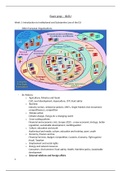
- Other European Organisations:
- EU Policies:
o Agriculture, fisheries and foods
CAP, rural development, Aquaculture, CFP, food safety
o Business
Industry sectors, enterprise policies, SME's, Single Market, free movement,
competitiveness, competition
o Climate action
Climate change, Energy for a changing world
o Cross-cutting policies
Financial and economic crisis, Europe 2020 – a new economic strategy, better
regulation, sustainable development, multilingualism
o Culture, education and youth
Audiovisual and media, culture, education and training, sport, youth
o Economy, finance and tax
Financial Services, Budget, Competition, Customs, Economy, Fight against
fraud, Taxation
o Employment and social rights
o Energy and natural resources
Consumers, Environment, Food safety, Health, Maritime policy, Sustainable
development
o External relations and foreign affairs
1
, Common Foreign Security Policy, Development, Enlargement, Cooperation,
Foreign policies, Humanitarian aid, Human rights, External trade
o Justice, home affairs and citizens' rights
o Freedom, Security and Justice
o Regions and local development
o Science and technology
Ethics, Information Society, Audiovisual and Media, Media, Research
o Civil Society, NGOs, EU Institutions, EU Treaties, Future of Europe, Treaty of
Lisbon
o Transport and travel
- EU Treaties
2
, T h e tr e a tie s – b a s is fo r d e m o c r a tic c o o p e r a tio n
b u ilt o n la w
1952 1958
T h e E u r o p e a n S t e e l a n d C o a l C o m m u n it y T h e t r e a t ie s o f R o m e :
T h e E u r o p e a n E c o n o m ic C o m m u n it y
T h e E u r o p e a n A t o m ic E n e r g y
C o m m u n it y
(EU R ATO M )
2009 1987
T r e a t y o f L is b o n T h e E u r o p e a n S in g le
A c t : t h e S in g le M a r k e t
1993
2003 1999 T r e a t y o f E u r o p e a n U n io n
T r e a t y o f N ic e T re a ty o f A m ste rd a m – M a a s t r ic h t
- Sources of EU Law:
o Primary law: EU Treaties
TEU
TFEU
CFREU
o International agreements when concluded by the Union, they are
incorporated into its legal order by a Council decision; binding on the
institutions and the MS
o General principles of Union Law Apply to EU institutions and MS
Derived from common legal principles in the MS and general principles
found in international law and EU law
Distinguished from rules of law principles are more general and
open-ended: need to be ‘sharpened’ in order to be applied to specific
cases
o Secondary legislation based on primary law; different types can be found in
Art. 288 TFEU
Regulations directly applicable (direct effect) in all MS; binding in all
elements; doesn’t need additional national law in order to have effect
in national legal order
Directives binding as to the results to be achieved; leaves it to the
MS to decide on the form and method; needs to be translated through
national legislation to be applicable (time limit)
Decisions either binding on a group or and individual; binding in its
entirety and directly applicable
Recommendations, opinions (Opinion of CJEU is binding!)
3
, - Recap: Institutional functioning
o The Council (of Ministers) Functioning: Art. 16 TEU; general articles: 237 –
243 TFEU
EU’s main decision-making organ
Most ‘intergovernmental’ institution
Has executive, as well as legislative function
Composition: consists of national ministers who represent their MS’s
government government of each MS decides who will appear in the
Council to represent the government
Configurations: Council is made up of different ministers, depending
on the subject matter being discussed
Art. 16(6) TEU refers to 2 specific configurations (General
Affairs Council and Foreign Affairs Council)
Currently 8 other configurations (e.g. Agriculture and Fisheries,
Economic and Financial Affairs, etc.)
Rotating presidency (six months)
Qualified Majority Voting (QMV) for most of the issues all five
major Treaty amendments have expanded the use of QMV
Unanimous voting still remains for sensitive issues (e.g.
taxation)
o European Parliament (EP) Functioning: Art. 14 TEU; general articles: 223-
234 TEU; EP elections: Art. 22(2) TFEU
Direct elections elected by popular vote at regular intervals
Like national parliaments, EP’s main task: participate in the legislative
& budgetary process, hold the executive to account
4
Week 1: Introduction to Institutional and Substantive Law of the EU
- Other European Organisations:
- EU Policies:
o Agriculture, fisheries and foods
CAP, rural development, Aquaculture, CFP, food safety
o Business
Industry sectors, enterprise policies, SME's, Single Market, free movement,
competitiveness, competition
o Climate action
Climate change, Energy for a changing world
o Cross-cutting policies
Financial and economic crisis, Europe 2020 – a new economic strategy, better
regulation, sustainable development, multilingualism
o Culture, education and youth
Audiovisual and media, culture, education and training, sport, youth
o Economy, finance and tax
Financial Services, Budget, Competition, Customs, Economy, Fight against
fraud, Taxation
o Employment and social rights
o Energy and natural resources
Consumers, Environment, Food safety, Health, Maritime policy, Sustainable
development
o External relations and foreign affairs
1
, Common Foreign Security Policy, Development, Enlargement, Cooperation,
Foreign policies, Humanitarian aid, Human rights, External trade
o Justice, home affairs and citizens' rights
o Freedom, Security and Justice
o Regions and local development
o Science and technology
Ethics, Information Society, Audiovisual and Media, Media, Research
o Civil Society, NGOs, EU Institutions, EU Treaties, Future of Europe, Treaty of
Lisbon
o Transport and travel
- EU Treaties
2
, T h e tr e a tie s – b a s is fo r d e m o c r a tic c o o p e r a tio n
b u ilt o n la w
1952 1958
T h e E u r o p e a n S t e e l a n d C o a l C o m m u n it y T h e t r e a t ie s o f R o m e :
T h e E u r o p e a n E c o n o m ic C o m m u n it y
T h e E u r o p e a n A t o m ic E n e r g y
C o m m u n it y
(EU R ATO M )
2009 1987
T r e a t y o f L is b o n T h e E u r o p e a n S in g le
A c t : t h e S in g le M a r k e t
1993
2003 1999 T r e a t y o f E u r o p e a n U n io n
T r e a t y o f N ic e T re a ty o f A m ste rd a m – M a a s t r ic h t
- Sources of EU Law:
o Primary law: EU Treaties
TEU
TFEU
CFREU
o International agreements when concluded by the Union, they are
incorporated into its legal order by a Council decision; binding on the
institutions and the MS
o General principles of Union Law Apply to EU institutions and MS
Derived from common legal principles in the MS and general principles
found in international law and EU law
Distinguished from rules of law principles are more general and
open-ended: need to be ‘sharpened’ in order to be applied to specific
cases
o Secondary legislation based on primary law; different types can be found in
Art. 288 TFEU
Regulations directly applicable (direct effect) in all MS; binding in all
elements; doesn’t need additional national law in order to have effect
in national legal order
Directives binding as to the results to be achieved; leaves it to the
MS to decide on the form and method; needs to be translated through
national legislation to be applicable (time limit)
Decisions either binding on a group or and individual; binding in its
entirety and directly applicable
Recommendations, opinions (Opinion of CJEU is binding!)
3
, - Recap: Institutional functioning
o The Council (of Ministers) Functioning: Art. 16 TEU; general articles: 237 –
243 TFEU
EU’s main decision-making organ
Most ‘intergovernmental’ institution
Has executive, as well as legislative function
Composition: consists of national ministers who represent their MS’s
government government of each MS decides who will appear in the
Council to represent the government
Configurations: Council is made up of different ministers, depending
on the subject matter being discussed
Art. 16(6) TEU refers to 2 specific configurations (General
Affairs Council and Foreign Affairs Council)
Currently 8 other configurations (e.g. Agriculture and Fisheries,
Economic and Financial Affairs, etc.)
Rotating presidency (six months)
Qualified Majority Voting (QMV) for most of the issues all five
major Treaty amendments have expanded the use of QMV
Unanimous voting still remains for sensitive issues (e.g.
taxation)
o European Parliament (EP) Functioning: Art. 14 TEU; general articles: 223-
234 TEU; EP elections: Art. 22(2) TFEU
Direct elections elected by popular vote at regular intervals
Like national parliaments, EP’s main task: participate in the legislative
& budgetary process, hold the executive to account
4