1
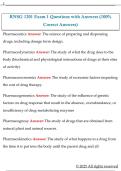
RNSG 1201 Exam 1 Questions with Answers (100%
Correct Answers)
Pharmaceutics Answer: The science of preparing and dispensing
drugs, including dosage form design.
Pharmacodynamics Answer: The study of what the drug does to the
body (biochemical and physiological interactions of drugs at their sites
of activity)
Pharmacoeconomics Answer: The study of economic factors impacting
the cost of drug therapy.
Pharmacogenomics Answer: The study of the influence of genetic
factors on drug response that result in the absence, overabundance, or
insufficiency of drug-metabolizing enzymes
Pharmacognosy Answer: The study of drugs that are obtained from
natural plant and animal sources.
Pharmacokinetics Answer: The study of what happens to a drug from
the time it is put into the body until the parent drug and all
© 2025 All rights reserved
,2
metabolites have left the body; What the body does to the drugs;
absorbed, distributed within the body, metabolized, and excreted.
Absorption Answer: The transport of dissolved substances into cells.
Bioavailability Answer: A measure of the extent of drug absorption for
a given drug and route (from 0% to 100%). reduced by first pass effect,
Oral medication has a bioavailability of less than 100% and IV is 100%
first pass effect Answer: The initial metabolism in the liver of a drug
absorbed from the gastrointestinal tract before the drug reaches
systemic circulation through the bloodstream. Chemically change into
metabolite in the liver
Distribution Answer: transport of a drug by the bloodstream to its site
of action. Albumin- most common blood protein and carries the
majority of protein bound molecules.
Metabolism (biotransformation) Answer: One or more biochemical
reactions involving a parent drug; occurs mainly in the liver and
produces a metabolite that is either inactive or active. Also known as
metabolism.
© 2025 All rights reserved
, 3
Cytochrome P450 enzymes Answer: The general name for a large class
of enzymes that play a significant role in drug metabolism and drug
interactions. (microsomal enzymes)
Excretion Answer: Process by which metabolic wastes are eliminated
from the body: Renal excretion ; biliary excretions
half-life Answer: time required for half (50%) of a given drug to be
removed from the body
steady state Answer: The physiologic state in which the amount of
drug removed via elimination is equal to the amount of drug absorbed
with each dose; need medication to be at the same level or a steady
level
peak level Answer: highest blood level of a drug / too high = toxic
trough level Answer: The lowest concentration of drug reached in the
body after it falls from its peak level, usually measured in a blood
sample for therapeutic drug monitoring.
Toxicity occurs Answer: If the peak level of blood is too high
Pharmacology Answer: The broadest term for the study or science of
drugs
© 2025 All rights reserved
RNSG 1201 Exam 1 Questions with Answers (100%
Correct Answers)
Pharmaceutics Answer: The science of preparing and dispensing
drugs, including dosage form design.
Pharmacodynamics Answer: The study of what the drug does to the
body (biochemical and physiological interactions of drugs at their sites
of activity)
Pharmacoeconomics Answer: The study of economic factors impacting
the cost of drug therapy.
Pharmacogenomics Answer: The study of the influence of genetic
factors on drug response that result in the absence, overabundance, or
insufficiency of drug-metabolizing enzymes
Pharmacognosy Answer: The study of drugs that are obtained from
natural plant and animal sources.
Pharmacokinetics Answer: The study of what happens to a drug from
the time it is put into the body until the parent drug and all
© 2025 All rights reserved
,2
metabolites have left the body; What the body does to the drugs;
absorbed, distributed within the body, metabolized, and excreted.
Absorption Answer: The transport of dissolved substances into cells.
Bioavailability Answer: A measure of the extent of drug absorption for
a given drug and route (from 0% to 100%). reduced by first pass effect,
Oral medication has a bioavailability of less than 100% and IV is 100%
first pass effect Answer: The initial metabolism in the liver of a drug
absorbed from the gastrointestinal tract before the drug reaches
systemic circulation through the bloodstream. Chemically change into
metabolite in the liver
Distribution Answer: transport of a drug by the bloodstream to its site
of action. Albumin- most common blood protein and carries the
majority of protein bound molecules.
Metabolism (biotransformation) Answer: One or more biochemical
reactions involving a parent drug; occurs mainly in the liver and
produces a metabolite that is either inactive or active. Also known as
metabolism.
© 2025 All rights reserved
, 3
Cytochrome P450 enzymes Answer: The general name for a large class
of enzymes that play a significant role in drug metabolism and drug
interactions. (microsomal enzymes)
Excretion Answer: Process by which metabolic wastes are eliminated
from the body: Renal excretion ; biliary excretions
half-life Answer: time required for half (50%) of a given drug to be
removed from the body
steady state Answer: The physiologic state in which the amount of
drug removed via elimination is equal to the amount of drug absorbed
with each dose; need medication to be at the same level or a steady
level
peak level Answer: highest blood level of a drug / too high = toxic
trough level Answer: The lowest concentration of drug reached in the
body after it falls from its peak level, usually measured in a blood
sample for therapeutic drug monitoring.
Toxicity occurs Answer: If the peak level of blood is too high
Pharmacology Answer: The broadest term for the study or science of
drugs
© 2025 All rights reserved