Things to remember when VAT is involved in fixed assets:
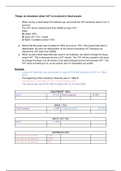
- When we buy a fixed asset for business use, we record the VAT-exclusive price in our T-
account.
- The VAT will be claimed back from SARS as input VAT.
Entry:
Dr Asset 100%
Dr Input VAT 15% = asset
Cr Bank / Creditors control 115%
● Notice that the asset was recorded at 100% and not at 115%. This means that when it
depreciates, we work out depreciation on the amount excluding VAT (because we
claimed the VAT back from SARS).
● When we sell a fixed asset that was used in our business, we need to charge the buyer
output VAT. This is because we are a VAT vendor. The VAT will be included in the price
we charge the buyer, but all entries in the asset disposal account will exclude VAT – the
VAT does not belong to us, so we cannot use it in calculating our profits.
Example:
- A piece of machinery was purchased for cash for R18 000 exclusive of VAT on 1 May
2018.
- The beginning of the company’s financial year is 1 March.
- Depreciation is calculated at 20% on the carrying value.
- The vehicle was sold for R3 450 including VAT on 30 June 2020.
EQUIPMENT 100%
Bank 18 000 Asset disposal 18 000
BANK 115%
Total receipts 3 450 Total payments 20 700
INPUT VAT 15%
Bank 2 700
DEPRECIATION
Acc dep on equipment 3 000
Acc dep on equipment 3 000
Acc dep on equipment 800
, ACCUMULATED DEPRECIATION ON EQUIPMENT
Asset disposal 6 800 Depreciation 3 000
Depreciation 3 000
Depreciation 800
ASSET DISPOSAL
Equipment 18 000 Acc dep on equipment 6 800
Bank 3 000
Loss on sale of asset 8 200
18 000 18 000
OUTPUT VAT (L)
VAT control 450 Bank 450
INPUT VAT (A)
Bank 2 700 VAT control 2 700
VAT CONTROL
Input VAT 2 700 Output VAT 450
Balance c/d 2 250
2 700 2 700
Balance b/d 2 250
Depreciation calculation
Year 1: From 1 May 2018 to 28 Feb 2019
10/12 x 20% x 18 000 = 3 000
Year 2: From 1 March 2019 to 29 Feb 2020
20% of (18 000 – 3 000) = 3 000
C = 18 000
A = 6 000
C = 11 200
D = from 1 March 2020 to 30 June 2020 = 4 months
4/12 x (18 000 – 6 000) x 20% = 800
S = 3 450 x 100/115 = 3 000
N = 8 200
- When we buy a fixed asset for business use, we record the VAT-exclusive price in our T-
account.
- The VAT will be claimed back from SARS as input VAT.
Entry:
Dr Asset 100%
Dr Input VAT 15% = asset
Cr Bank / Creditors control 115%
● Notice that the asset was recorded at 100% and not at 115%. This means that when it
depreciates, we work out depreciation on the amount excluding VAT (because we
claimed the VAT back from SARS).
● When we sell a fixed asset that was used in our business, we need to charge the buyer
output VAT. This is because we are a VAT vendor. The VAT will be included in the price
we charge the buyer, but all entries in the asset disposal account will exclude VAT – the
VAT does not belong to us, so we cannot use it in calculating our profits.
Example:
- A piece of machinery was purchased for cash for R18 000 exclusive of VAT on 1 May
2018.
- The beginning of the company’s financial year is 1 March.
- Depreciation is calculated at 20% on the carrying value.
- The vehicle was sold for R3 450 including VAT on 30 June 2020.
EQUIPMENT 100%
Bank 18 000 Asset disposal 18 000
BANK 115%
Total receipts 3 450 Total payments 20 700
INPUT VAT 15%
Bank 2 700
DEPRECIATION
Acc dep on equipment 3 000
Acc dep on equipment 3 000
Acc dep on equipment 800
, ACCUMULATED DEPRECIATION ON EQUIPMENT
Asset disposal 6 800 Depreciation 3 000
Depreciation 3 000
Depreciation 800
ASSET DISPOSAL
Equipment 18 000 Acc dep on equipment 6 800
Bank 3 000
Loss on sale of asset 8 200
18 000 18 000
OUTPUT VAT (L)
VAT control 450 Bank 450
INPUT VAT (A)
Bank 2 700 VAT control 2 700
VAT CONTROL
Input VAT 2 700 Output VAT 450
Balance c/d 2 250
2 700 2 700
Balance b/d 2 250
Depreciation calculation
Year 1: From 1 May 2018 to 28 Feb 2019
10/12 x 20% x 18 000 = 3 000
Year 2: From 1 March 2019 to 29 Feb 2020
20% of (18 000 – 3 000) = 3 000
C = 18 000
A = 6 000
C = 11 200
D = from 1 March 2020 to 30 June 2020 = 4 months
4/12 x (18 000 – 6 000) x 20% = 800
S = 3 450 x 100/115 = 3 000
N = 8 200