All lectures for BMZ2024
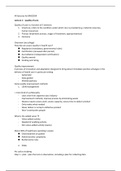
Lecture 1 – quality of care
Quality of case is a function of 3 domains
1. Structure; refers to the condition under which care is provided (e.g. material resources,
human resources)
2. Process (treatment process, stages of treatment, appropriateness)
3. Outcome
Overview (zie college)
How doe we assure quality in health care?
◼ Regulation (mandatory, governmental rules)
◼ Certification (renewed after period)
◼ Accreditation (independent certification)
◼ Quality awards
◼ Grading and rating
Quality improvement
A process of innovation and adaptation designed to bring about immediate positive achanges in the
delivery of health care in particular setting
- Systematic
- Data-guided
- Multidisciplinary
Some quality improvement methods
1. LEAN management
= more kind of a philosophy
- Lean arise from Japanese auto industry
- Improvement methods, improve process by eliminating waste
- Wastes require excess work, excess capacity, excess time to deliver product
- Only makes what needed
- Never deliver or accept a defective product
- Won’t overburden people
What is the added value →
- Value-added activity
- Needed of enabling activity
- Non value-added activity (waste)
About 30% of healthcare spending is waste
◼ Overtreatment of patient
◼ Administrative complexity
◼ Burdensome rules
2. PDSA
Act cyclus studying
Step 1 – plan – plan the test or observation, including a plan for collecting data
,Step 2 – do – try out….
3. Many other….
Safety in quality of healthcare
What steps could be taken tot prevent to happen the problem of children and adulting medication
again?
◼ Send nursed and doctors involved on a leave
◼ New safeguards to prevent a recurrence. E.g. procedures requiring a minimum of two nurses
to verify and dose of blood thinner in the newborn and pediatric critical care units
◼ Another system, using bar codes to track medications needed to be installed
◼ Food and drug administration had required that drug makers place supermarket-style bar
codes on their drugs. Many hospitals have installed bar-code scanners to make sure
medication matches the recipient and is given at the right time.
Unfortunately it didn’t help that much
Safe environment = low risk of accidents
◼ The prevention of errors and adverse events to patients associated with health care
◼ Examples errors: bleeding, falls, intoxication, inflections, dehydration
◼ Results in damage
Why?
1. Attention to safety of all times
2. Pressure to control costs
3. More complex care due to diagnostics, options and technology
4. Demand on safe care due to media attention
➔ High priority of institutions, insurers, inspectorates and politicians
Expectations of safety
◼ Innovations, specializations, improve quality of care
◼ 30-40% percent of patients receive not the care in according to the evidence, best available
knowledge
◼ 20% provided care is not needed or potentially harmful
◼ Do you expect 100% safe care in a hospital?
How serious is the problem?
➔ In the Netherlands there are not many figures
➔ US: 44000 to 98000 patients die every year due to medical errors
➔ Canada; 70000 patients in 2000 experienced a preventable adverse event
➔ The Netherlands; between 1482 and 2002 potentially preventable deaths occurred in Dutch
hospitals in 2004
How often do incidents happen?
Harvard medical practice study
◼ Type of adverse event
- Drug compications = 19%
- Wound infections = 14%
- Technical complications = 13%
,Quality of care versus safety
- QOC = effective, efficient, patient oriented
- Safety = reducing risks, limiting damage
- Safety = intrinsic part of QOC
High quality of care + safe care
LOW quality of care = unsafe care
High safety is not the same as good QoC
➔ Physical restraints are often used with the intention to reduce falls but reduces QoL
Causes can be:
1. Organizational
➔ Insufficient amount of staff, unclear work procedures, culture, no guidelines
2. Technical
➔ Lack of malfunctioning devices
3. Human
➔ Lack of knowledge or skills, attitude
4. Patient related
➔ Noncomplying therapy, insufficient understanding
Human factors can be on purpose or non-intentional
Two approaches of error
1. Personal approach
➔ Errors occur because the person is incompetent
➔ Person must adapt; training or sanction
2. System approach
➔ Error occurs because of the work environment/system
➔ System must be changed
So; personal approaches focus on the unsafe acts
System approach errors seen as consequence not cause; aim to build defenses and safeguards
By fixing the system 90% of the failures will be reduced
= more valuable and more worth-while by changing the system
Causes of system error:
1. Overall culture
2. Education/training/experience
3. System design
4. Resource availability
5. Demand/volume
6. Shiftwork/schedules
The system approach is not about changing the human conditions but rather the conditions under
which humans work
J.T. Reason
Safety improvement models
◼ Focus on creating a safe culture
, - Leadership
- Organizational aspects; checking with 2 persons
- Trust
Swiss cheese model
◼ 4 layers representing risk trajectory
1. Organizational factors
2. Unsafe supervision
3. Preconditions
4. Unsafe acts
The best way is focusing on the structural factors
Example:
How incidents occur
Patients falls out of transfer lift
◼ Technique inapproiate: belts
◼ Devices: different types of lifts
◼ Too little staff: time pressure
◼ Little attention training safety and risks: no user manual, no training
➔ First glance; individual human error
Every country has their own institutional for safe care
Lecture 1 – quality of care
Quality of case is a function of 3 domains
1. Structure; refers to the condition under which care is provided (e.g. material resources,
human resources)
2. Process (treatment process, stages of treatment, appropriateness)
3. Outcome
Overview (zie college)
How doe we assure quality in health care?
◼ Regulation (mandatory, governmental rules)
◼ Certification (renewed after period)
◼ Accreditation (independent certification)
◼ Quality awards
◼ Grading and rating
Quality improvement
A process of innovation and adaptation designed to bring about immediate positive achanges in the
delivery of health care in particular setting
- Systematic
- Data-guided
- Multidisciplinary
Some quality improvement methods
1. LEAN management
= more kind of a philosophy
- Lean arise from Japanese auto industry
- Improvement methods, improve process by eliminating waste
- Wastes require excess work, excess capacity, excess time to deliver product
- Only makes what needed
- Never deliver or accept a defective product
- Won’t overburden people
What is the added value →
- Value-added activity
- Needed of enabling activity
- Non value-added activity (waste)
About 30% of healthcare spending is waste
◼ Overtreatment of patient
◼ Administrative complexity
◼ Burdensome rules
2. PDSA
Act cyclus studying
Step 1 – plan – plan the test or observation, including a plan for collecting data
,Step 2 – do – try out….
3. Many other….
Safety in quality of healthcare
What steps could be taken tot prevent to happen the problem of children and adulting medication
again?
◼ Send nursed and doctors involved on a leave
◼ New safeguards to prevent a recurrence. E.g. procedures requiring a minimum of two nurses
to verify and dose of blood thinner in the newborn and pediatric critical care units
◼ Another system, using bar codes to track medications needed to be installed
◼ Food and drug administration had required that drug makers place supermarket-style bar
codes on their drugs. Many hospitals have installed bar-code scanners to make sure
medication matches the recipient and is given at the right time.
Unfortunately it didn’t help that much
Safe environment = low risk of accidents
◼ The prevention of errors and adverse events to patients associated with health care
◼ Examples errors: bleeding, falls, intoxication, inflections, dehydration
◼ Results in damage
Why?
1. Attention to safety of all times
2. Pressure to control costs
3. More complex care due to diagnostics, options and technology
4. Demand on safe care due to media attention
➔ High priority of institutions, insurers, inspectorates and politicians
Expectations of safety
◼ Innovations, specializations, improve quality of care
◼ 30-40% percent of patients receive not the care in according to the evidence, best available
knowledge
◼ 20% provided care is not needed or potentially harmful
◼ Do you expect 100% safe care in a hospital?
How serious is the problem?
➔ In the Netherlands there are not many figures
➔ US: 44000 to 98000 patients die every year due to medical errors
➔ Canada; 70000 patients in 2000 experienced a preventable adverse event
➔ The Netherlands; between 1482 and 2002 potentially preventable deaths occurred in Dutch
hospitals in 2004
How often do incidents happen?
Harvard medical practice study
◼ Type of adverse event
- Drug compications = 19%
- Wound infections = 14%
- Technical complications = 13%
,Quality of care versus safety
- QOC = effective, efficient, patient oriented
- Safety = reducing risks, limiting damage
- Safety = intrinsic part of QOC
High quality of care + safe care
LOW quality of care = unsafe care
High safety is not the same as good QoC
➔ Physical restraints are often used with the intention to reduce falls but reduces QoL
Causes can be:
1. Organizational
➔ Insufficient amount of staff, unclear work procedures, culture, no guidelines
2. Technical
➔ Lack of malfunctioning devices
3. Human
➔ Lack of knowledge or skills, attitude
4. Patient related
➔ Noncomplying therapy, insufficient understanding
Human factors can be on purpose or non-intentional
Two approaches of error
1. Personal approach
➔ Errors occur because the person is incompetent
➔ Person must adapt; training or sanction
2. System approach
➔ Error occurs because of the work environment/system
➔ System must be changed
So; personal approaches focus on the unsafe acts
System approach errors seen as consequence not cause; aim to build defenses and safeguards
By fixing the system 90% of the failures will be reduced
= more valuable and more worth-while by changing the system
Causes of system error:
1. Overall culture
2. Education/training/experience
3. System design
4. Resource availability
5. Demand/volume
6. Shiftwork/schedules
The system approach is not about changing the human conditions but rather the conditions under
which humans work
J.T. Reason
Safety improvement models
◼ Focus on creating a safe culture
, - Leadership
- Organizational aspects; checking with 2 persons
- Trust
Swiss cheese model
◼ 4 layers representing risk trajectory
1. Organizational factors
2. Unsafe supervision
3. Preconditions
4. Unsafe acts
The best way is focusing on the structural factors
Example:
How incidents occur
Patients falls out of transfer lift
◼ Technique inapproiate: belts
◼ Devices: different types of lifts
◼ Too little staff: time pressure
◼ Little attention training safety and risks: no user manual, no training
➔ First glance; individual human error
Every country has their own institutional for safe care