Inhoudsopgave
Lecture 1: Introduction & Fundamentals of HSOM.......................................................................................... 3
Vissers & Beech, Chapter 1 Introduction .......................................................................................................... 17
Vissers & Beech, Chapter 3 Basic Concepts and Approaches ........................................................................... 19
Fitzsimmons & Fitzsimmons, Chapter 1 The Service Economy, pages 13-24 (Version 9: pages 11-22) ............ 21
Fitzsimmons & Fitzsimmons, Chapter 3 New Service Development. pages 69-71: Service design elements.
(Version 9: page 72-73, a small part is missing, I uploaded this part as pdf-file in Literature) ........................ 25
Fitzsimmons & Fitzsimmons, Chapter 6, Service Quality, pages 143-157 (In version 9, pages 149-163) ......... 27
Bowers MR, Swan JE, Koehler WF. (1994). What attributes determine quality and satisfaction with health
care delivery? Health Care Management Review 19(4):49-55. ........................................................................ 33
Ahaus, C.T.B. (2018). Perceptions of practitioners and experts on value-based healthcare: a mixed-methods
study. EurOMA proceedings ............................................................................................................................. 34
Lecture 2: Operation Management of units: characteristics, analyses and improvement .............................. 37
Vissers & Beech, Chapter 4 Unit Logistics......................................................................................................... 47
Veen van-Berkx E; Korne de, DF. Olivier, OS; Bal RA; Kazemier G. (2016) "Benchmarking operating room
departments in the Netherlands: Evaluation of a benchmarking collaborative between eight university
medical centres", Benchmarking: An International Journal, Vol. 23 Issue: 5, pp.1171-1192, DOI 10.1108/BIJ-
04-2014-0035 ................................................................................................................................................... 52
De Bruin, AM,· Bekker, R, Van Zanten, L., Koole, GM. 2010. Dimensioning hospital wards using the Erlang loss
model. Ann Oper Res (2010) 178: 23–43. DOI 10.1007/s10479-009-0647-8 ................................................... 54
Zhang, Y., Puterman, M. L., & Atkins, D. (2012). Residential long-term care capacity planning: The
shortcomings of ratio-based forecasts. Healthcare Policy, 7(4), 68. ................................................................ 57
Special Delivery Unit 2007. Technical Guidance Introducing Demand and Capacity Planning.pdf. pages 8-26
......................................................................................................................................................................... 59
Lecture 3: Operations management of pathways and chains ........................................................................ 63
Vissers & Beech, Chapter 5 Chain Logistics. Analysis of Care Chain. ................................................................ 73
Fitzsimmons & Fitzsimmons, Chapter 3 New Service Development. Service Blueprinting: pages 72-73 (Version
9: pages 74-76, until Taxonomy of ...) .............................................................................................................. 79
Vanhaecht K, De Witte K, Panella, M, Sermeus, W, 2009. Do pathways lead to better organized care
processes? Journal of Evaluation in Clinical Practice 15:782-788. ................................................................... 80
Lovelle, J., 2001, Mapping the Value Stream, IIE Solutions, vol 33, issue 2, pag 27-33 .................................... 81
Bredenhoff, Eelco; van Lent, Wineke A. M.; van Harten, Wim H. Exploring types of focused factories in
hospital care: a multiple case study. BMC Health Services Research 10, DOI: 10.1186/1472-6963-10-154. JUN
7 2010. Only pages 1-3 (until ‘Methods’) and 12-16 (from “cross case analysis…”) ........................................ 83
Hyer, N.L., Wemmerlöv, U., and Morris Jr, J.A. (2009). Performance analysis of a focused hospital unit: the
case of an integrated trauma center. Journal of Operations Management, 27, 203-219. .............................. 85
Lecture 4: Variability, uncertainly & flexibility .............................................................................................. 87
Fitzsimmons & Fitzsimmons (2014), Service Management, Chapter 13 Capacity planning and queuing
models, pages 355-372. McGraw Hill. (Version 9: also Chapter 13; only minor differences in some sentences,
content is the same.) ........................................................................................................................................ 96
, Song, H., Tucker, A. L., & Murrell, K. L. (2015). The diseconomies of queue pooling: An empirical investigation
of emergency department length of stay. Management Science, 61(12), 3032-3053. (The following sections
are not mandatory for examination: 3.3-3.6.4; 4.4-4.5) ................................................................................ 102
Song, H., Tucker, A. L., Graue, R., Moravick, S., & Yang, J. J. (2020). Capacity pooling in hospitals: The hidden
consequences of off-service placement. Management Science, 66(9), 3825-3842. (The following sections are
not mandatory for examination: 3.1-5.3)....................................................................................................... 103
Lecture 5: Continuous Improvement, Theory of Constraints & Six Sigma .................................................... 105
Fitzsimmons & Fitzsimmons, Chapter 6 Service Quality, pages 157-167 (Version 9: pages 163-174) ........... 120
Fitzsimmons & Fitzsimmons, Chapter 7, pages 181-196, until Lean Services. (Version 9: pages 187-200, until
Lean Services) ................................................................................................................................................. 124
Watson, K. J., Blackstone, J. H., & Gardiner, S. C. (2007). The evolution of a management philosophy: The
theory of constraints. Journal of operations Management, 25(2), 387-402. ................................................. 128
Nave, D. (2002). How to compare six sigma, lean and the theory of constraints. Quality progress, 35(3), 73-
80. .................................................................................................................................................................. 130
Lecture 6: Lean management ..................................................................................................................... 135
Roemeling, O., Land, M., & Ahaus, C. (2017). Does lean cure variability in health care? International Journal
of Operations & Production Management, 37(9), 1229-1245 ....................................................................... 149
Bijl, A., Ahaus, K., Ruël, G., Gemmel, P., Meijboom, B. (2019). Role of lean leadership in the lean maturity-
second-order problem solving relationship: a mixed methods study. BMJ Open 2019. 9 [e026737]. ............ 151
,Lecture 1: Introduction & Fundamentals of HSOM
Video 1.1: Introduction
Health Service Operation Management (HSOM)
The analysis, design, planning and control of all the steps necessary to deliver services to
clients in healthcare
à Coordinating and organization care, in the organization of between organizations
Video 1.2: Research field & concepts
Health Service Operation Management (HSOM)
The analysis, design, planning and control of all the steps necessary to deliver services to
clients in healthcare
Service management + operation management = service operations management
Service operation management + health services = health service operation management
From 1800: Moving from agriculture towards manufacturing towards service economy
Agriculture > manufacturing (producing goods, creating markets/ possibilities) > service
economy
Service economy: buy services, for example entertainment (money and time to enjoy
services, restaurant, movie etc.)
Operations management
regulations
input operation output
resources
Operation: an activity that transforms input into output, and thereby adding value
- Input is for example a patient in need
- Resources can be used and re-used
- Regulations/ guidelines you have to apply, medical guidelines
, components Assemble a
materials table
carpenter
Differences between materials and tools
- Materials: used for this specific table, you can’t use them for the next table
- Tools: used for this specific table (hammer), this can use again for the next table
Types of operations
- Alteration: you change something (wood to table)
- Transportation: movement from the one place to the next place
- Inspection: non-inspection to inspection
- Storage (in services: not an operation, but is seen as a delay between different
operations)
In services: storage as an operation or as a delay in operations?
Hierarchy from Operations Management perspective
Operations consist of different activities. In between those activities there can be some
waiting times. The differences between an activity and an operation:
- Operation: transformation between input and output
- Activity: there can be an activity, without a specific transformation
o Divided in tasks and subtasks
Lecture 1: Introduction & Fundamentals of HSOM.......................................................................................... 3
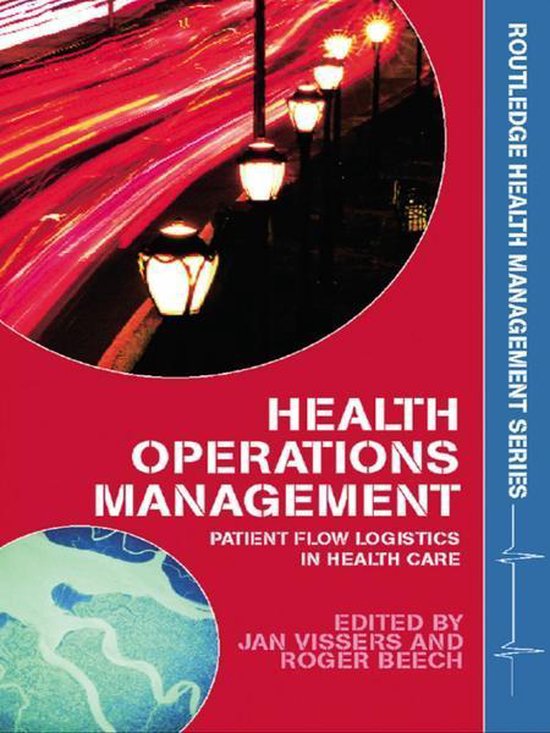
Vissers & Beech, Chapter 1 Introduction .......................................................................................................... 17
Vissers & Beech, Chapter 3 Basic Concepts and Approaches ........................................................................... 19
Fitzsimmons & Fitzsimmons, Chapter 1 The Service Economy, pages 13-24 (Version 9: pages 11-22) ............ 21
Fitzsimmons & Fitzsimmons, Chapter 3 New Service Development. pages 69-71: Service design elements.
(Version 9: page 72-73, a small part is missing, I uploaded this part as pdf-file in Literature) ........................ 25
Fitzsimmons & Fitzsimmons, Chapter 6, Service Quality, pages 143-157 (In version 9, pages 149-163) ......... 27
Bowers MR, Swan JE, Koehler WF. (1994). What attributes determine quality and satisfaction with health
care delivery? Health Care Management Review 19(4):49-55. ........................................................................ 33
Ahaus, C.T.B. (2018). Perceptions of practitioners and experts on value-based healthcare: a mixed-methods
study. EurOMA proceedings ............................................................................................................................. 34
Lecture 2: Operation Management of units: characteristics, analyses and improvement .............................. 37
Vissers & Beech, Chapter 4 Unit Logistics......................................................................................................... 47
Veen van-Berkx E; Korne de, DF. Olivier, OS; Bal RA; Kazemier G. (2016) "Benchmarking operating room
departments in the Netherlands: Evaluation of a benchmarking collaborative between eight university
medical centres", Benchmarking: An International Journal, Vol. 23 Issue: 5, pp.1171-1192, DOI 10.1108/BIJ-
04-2014-0035 ................................................................................................................................................... 52
De Bruin, AM,· Bekker, R, Van Zanten, L., Koole, GM. 2010. Dimensioning hospital wards using the Erlang loss
model. Ann Oper Res (2010) 178: 23–43. DOI 10.1007/s10479-009-0647-8 ................................................... 54
Zhang, Y., Puterman, M. L., & Atkins, D. (2012). Residential long-term care capacity planning: The
shortcomings of ratio-based forecasts. Healthcare Policy, 7(4), 68. ................................................................ 57
Special Delivery Unit 2007. Technical Guidance Introducing Demand and Capacity Planning.pdf. pages 8-26
......................................................................................................................................................................... 59
Lecture 3: Operations management of pathways and chains ........................................................................ 63
Vissers & Beech, Chapter 5 Chain Logistics. Analysis of Care Chain. ................................................................ 73
Fitzsimmons & Fitzsimmons, Chapter 3 New Service Development. Service Blueprinting: pages 72-73 (Version
9: pages 74-76, until Taxonomy of ...) .............................................................................................................. 79
Vanhaecht K, De Witte K, Panella, M, Sermeus, W, 2009. Do pathways lead to better organized care
processes? Journal of Evaluation in Clinical Practice 15:782-788. ................................................................... 80
Lovelle, J., 2001, Mapping the Value Stream, IIE Solutions, vol 33, issue 2, pag 27-33 .................................... 81
Bredenhoff, Eelco; van Lent, Wineke A. M.; van Harten, Wim H. Exploring types of focused factories in
hospital care: a multiple case study. BMC Health Services Research 10, DOI: 10.1186/1472-6963-10-154. JUN
7 2010. Only pages 1-3 (until ‘Methods’) and 12-16 (from “cross case analysis…”) ........................................ 83
Hyer, N.L., Wemmerlöv, U., and Morris Jr, J.A. (2009). Performance analysis of a focused hospital unit: the
case of an integrated trauma center. Journal of Operations Management, 27, 203-219. .............................. 85
Lecture 4: Variability, uncertainly & flexibility .............................................................................................. 87
Fitzsimmons & Fitzsimmons (2014), Service Management, Chapter 13 Capacity planning and queuing
models, pages 355-372. McGraw Hill. (Version 9: also Chapter 13; only minor differences in some sentences,
content is the same.) ........................................................................................................................................ 96
, Song, H., Tucker, A. L., & Murrell, K. L. (2015). The diseconomies of queue pooling: An empirical investigation
of emergency department length of stay. Management Science, 61(12), 3032-3053. (The following sections
are not mandatory for examination: 3.3-3.6.4; 4.4-4.5) ................................................................................ 102
Song, H., Tucker, A. L., Graue, R., Moravick, S., & Yang, J. J. (2020). Capacity pooling in hospitals: The hidden
consequences of off-service placement. Management Science, 66(9), 3825-3842. (The following sections are
not mandatory for examination: 3.1-5.3)....................................................................................................... 103
Lecture 5: Continuous Improvement, Theory of Constraints & Six Sigma .................................................... 105
Fitzsimmons & Fitzsimmons, Chapter 6 Service Quality, pages 157-167 (Version 9: pages 163-174) ........... 120
Fitzsimmons & Fitzsimmons, Chapter 7, pages 181-196, until Lean Services. (Version 9: pages 187-200, until
Lean Services) ................................................................................................................................................. 124
Watson, K. J., Blackstone, J. H., & Gardiner, S. C. (2007). The evolution of a management philosophy: The
theory of constraints. Journal of operations Management, 25(2), 387-402. ................................................. 128
Nave, D. (2002). How to compare six sigma, lean and the theory of constraints. Quality progress, 35(3), 73-
80. .................................................................................................................................................................. 130
Lecture 6: Lean management ..................................................................................................................... 135
Roemeling, O., Land, M., & Ahaus, C. (2017). Does lean cure variability in health care? International Journal
of Operations & Production Management, 37(9), 1229-1245 ....................................................................... 149
Bijl, A., Ahaus, K., Ruël, G., Gemmel, P., Meijboom, B. (2019). Role of lean leadership in the lean maturity-
second-order problem solving relationship: a mixed methods study. BMJ Open 2019. 9 [e026737]. ............ 151
,Lecture 1: Introduction & Fundamentals of HSOM
Video 1.1: Introduction
Health Service Operation Management (HSOM)
The analysis, design, planning and control of all the steps necessary to deliver services to
clients in healthcare
à Coordinating and organization care, in the organization of between organizations
Video 1.2: Research field & concepts
Health Service Operation Management (HSOM)
The analysis, design, planning and control of all the steps necessary to deliver services to
clients in healthcare
Service management + operation management = service operations management
Service operation management + health services = health service operation management
From 1800: Moving from agriculture towards manufacturing towards service economy
Agriculture > manufacturing (producing goods, creating markets/ possibilities) > service
economy
Service economy: buy services, for example entertainment (money and time to enjoy
services, restaurant, movie etc.)
Operations management
regulations
input operation output
resources
Operation: an activity that transforms input into output, and thereby adding value
- Input is for example a patient in need
- Resources can be used and re-used
- Regulations/ guidelines you have to apply, medical guidelines
, components Assemble a
materials table
carpenter
Differences between materials and tools
- Materials: used for this specific table, you can’t use them for the next table
- Tools: used for this specific table (hammer), this can use again for the next table
Types of operations
- Alteration: you change something (wood to table)
- Transportation: movement from the one place to the next place
- Inspection: non-inspection to inspection
- Storage (in services: not an operation, but is seen as a delay between different
operations)
In services: storage as an operation or as a delay in operations?
Hierarchy from Operations Management perspective
Operations consist of different activities. In between those activities there can be some
waiting times. The differences between an activity and an operation:
- Operation: transformation between input and output
- Activity: there can be an activity, without a specific transformation
o Divided in tasks and subtasks