
Lecture 1
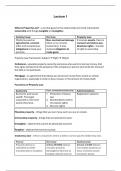
What is Property Law? – Law that governs the relationship and most importantly
ownership with things (tangible or intangible).
Contract Law Tort Law Property Law
Mostly focused on Non-contractual damage It involves assets, there is
agreements, consent (there is no consent - consent and status quo.
(o<er and acceptance), involuntary). It also Absolute rights – transfer
obligations to keep your involves obligation to of right to ownership.
promise. make good.
Property Law Framework: Subject à Right à Object
Collateral – valuable property owned by someone who wants to borrow money, that
they agree will become the property of the company or person who lends the money if
the debt is not paid back.
Mortgage - an agreement that allows you to borrow money from a bank or similar
organization, especially in order to buy a house, or the amount of money itself.
Functions of Property Law
Autonomy Trust, consistent and security Administrations
Economic and social 1. Protection of status Registration systems
wealth. The larger quo
corporate is, the more 2. Standardized content
assets they have. of property rights
3. Security rights
Movable property – things that you can move such as a car or a book.
Immovable property - things that are attached to land.
Intangible – objects that cannot be physically touched.
Tangible – objects that can be touched.
Insolvency law - refers to situations where a debtor cannot pay the debts they owe.
France Germany Netherlands
Property (biens) is Article 90 BGB defines Article 3:3 BW defines
classified as either movable property immovable property as
movable (biens meubles) (bewegliche Sachen) as land, minerals not yet
tangible objects that are extracted, plants
, or immovable (biens not permanently attached connected to the land, and
immeubles). to land . buildings or constructions
durably united with the
Article 517 CC defines Article 94 BGB defines land.
immovable property as immovable property
property that is immovable (Grundstücke) as land and Movable property includes
by its nature, purpose, or objects permanently all other tangible objects
the intended use for which attached to it, including not permanently attached
it is designated. This buildings and the produce to land.
includes land, buildings, of the land as long as it
and things permanently remains connected (e.g.,
attached to the land (such crops, planted trees) .
as crops still attached to
the soil or fixtures like German law applies the
fitted kitchen units) principles of abstraction
and separation, meaning
that the contract for sale
and the contract for
transfer of ownership are
distinct; ownership of
immovable property
requires registration in the
land register (Grundbuch),
while movable property
requires delivery for
ownership transfer.
Objective Legal framework Principles
Maximizing value in Proper frameworks for Concursus creditorum,
bankruptcy and given each faciliate liquidation and paritas creditorum, pari-
stakeholder what is due fair allocation passu principle.
based on rights
Restructuring laws – restructuting business structure.
Objective Legal framework Implementation
technicalities
Saving a business with a Provide a legal framework Financial restructuring,
viable business case to for restructuring debt write-o< (hair-cut),
survive going concern operational restructuring,
improving performance,
etc.
Lecture 2
,Historical feudal pyramid of power
KING – provides land to nobles, gets money and knights.
NOBLES – provides land (fief) to the knights, gets protection and military service
KNIGHTS – provide protection, gets food and services
PEASANTS – provide food and services, get protection
11th Century – Corpus Juris Civilis was rediscovered. New interest in Roman Law and
taught at the University of Bologna.
After the abolition of feudalism – Code Civil of France (Droit Intermediaire)
Battle of Hastings 1066 – William the Conqueror brought the French System to
England.
CIVIL LAW:
Ownership Legal entitlement a person can have to a
thing/an object. Ownership is a right.
Article 544 of CC: Ownership is the right
to enjoy and dispose of things in the most
absolute manner, provided that one does
not make use of them in a way prohibited
by laws or regulations.
903 BGB: The owner of a thing may, to the
extent that a statute or third-party rights
does not conflict with this, deal with the
thing at their discretion and exclude
others from exercising any influence
whatsoever. In exercising their powers,
the owner of an animal is to take into
account the special provisions for the
protection of animals.
Article 5:1 BW:
1. Ownership is the most comprehensive
property right that a person, the ‘owner’,
can have to (in) a thing.
2. The owner is free to use the thing to
the exclusion of everyone else, provided
that he respects the rights and
entitlements of others to the thing and
observes the restrictions based on rules
of written and unwritten law.
, 3. The owner of the thing becomes the
owner of its separated fruits and benefits,
except when another person is entitled to
them.
Possession The factual control over an object in their
power. Possession indicates:
- Existence of a Property Right
- Publicity regarding the situation of
an object
Article 2276 CC: In matters of movable
property, possession constitutes title.
Nevertheless, a person who has lost or
had stolen something may claim it for
three years from the date of loss or theft
against the person in whose hands it was
found; this person may not have recourse
against the person in whose possession it
was found.
Article 1006 BGB:
(1) It is presumed to the benefit of the
possessor of a movable thing that
they are the owner of the thing.
However, this does not apply in
relation to a former possessor from
whom the thing was stolen or who
lost it or whose possession of it ended
in another way, unless the thing is
money or bearer instruments.
(2) It is presumed to the benefit of a
former possessor that during the
period of their possession they were
the owner.
(3) In the case of indirect possession,
the presumption is to the benefit of
the indirect possessor.
Detention It means that you cannot acquire
ownership based on his holding of the
object. For example: rental agreements.
You do not own the house that you live in,
although you use this daily.
Civil Law Common Law
What is Property Law? – Law that governs the relationship and most importantly
ownership with things (tangible or intangible).
Contract Law Tort Law Property Law
Mostly focused on Non-contractual damage It involves assets, there is
agreements, consent (there is no consent - consent and status quo.
(o<er and acceptance), involuntary). It also Absolute rights – transfer
obligations to keep your involves obligation to of right to ownership.
promise. make good.
Property Law Framework: Subject à Right à Object
Collateral – valuable property owned by someone who wants to borrow money, that
they agree will become the property of the company or person who lends the money if
the debt is not paid back.
Mortgage - an agreement that allows you to borrow money from a bank or similar
organization, especially in order to buy a house, or the amount of money itself.
Functions of Property Law
Autonomy Trust, consistent and security Administrations
Economic and social 1. Protection of status Registration systems
wealth. The larger quo
corporate is, the more 2. Standardized content
assets they have. of property rights
3. Security rights
Movable property – things that you can move such as a car or a book.
Immovable property - things that are attached to land.
Intangible – objects that cannot be physically touched.
Tangible – objects that can be touched.
Insolvency law - refers to situations where a debtor cannot pay the debts they owe.
France Germany Netherlands
Property (biens) is Article 90 BGB defines Article 3:3 BW defines
classified as either movable property immovable property as
movable (biens meubles) (bewegliche Sachen) as land, minerals not yet
tangible objects that are extracted, plants
, or immovable (biens not permanently attached connected to the land, and
immeubles). to land . buildings or constructions
durably united with the
Article 517 CC defines Article 94 BGB defines land.
immovable property as immovable property
property that is immovable (Grundstücke) as land and Movable property includes
by its nature, purpose, or objects permanently all other tangible objects
the intended use for which attached to it, including not permanently attached
it is designated. This buildings and the produce to land.
includes land, buildings, of the land as long as it
and things permanently remains connected (e.g.,
attached to the land (such crops, planted trees) .
as crops still attached to
the soil or fixtures like German law applies the
fitted kitchen units) principles of abstraction
and separation, meaning
that the contract for sale
and the contract for
transfer of ownership are
distinct; ownership of
immovable property
requires registration in the
land register (Grundbuch),
while movable property
requires delivery for
ownership transfer.
Objective Legal framework Principles
Maximizing value in Proper frameworks for Concursus creditorum,
bankruptcy and given each faciliate liquidation and paritas creditorum, pari-
stakeholder what is due fair allocation passu principle.
based on rights
Restructuring laws – restructuting business structure.
Objective Legal framework Implementation
technicalities
Saving a business with a Provide a legal framework Financial restructuring,
viable business case to for restructuring debt write-o< (hair-cut),
survive going concern operational restructuring,
improving performance,
etc.
Lecture 2
,Historical feudal pyramid of power
KING – provides land to nobles, gets money and knights.
NOBLES – provides land (fief) to the knights, gets protection and military service
KNIGHTS – provide protection, gets food and services
PEASANTS – provide food and services, get protection
11th Century – Corpus Juris Civilis was rediscovered. New interest in Roman Law and
taught at the University of Bologna.
After the abolition of feudalism – Code Civil of France (Droit Intermediaire)
Battle of Hastings 1066 – William the Conqueror brought the French System to
England.
CIVIL LAW:
Ownership Legal entitlement a person can have to a
thing/an object. Ownership is a right.
Article 544 of CC: Ownership is the right
to enjoy and dispose of things in the most
absolute manner, provided that one does
not make use of them in a way prohibited
by laws or regulations.
903 BGB: The owner of a thing may, to the
extent that a statute or third-party rights
does not conflict with this, deal with the
thing at their discretion and exclude
others from exercising any influence
whatsoever. In exercising their powers,
the owner of an animal is to take into
account the special provisions for the
protection of animals.
Article 5:1 BW:
1. Ownership is the most comprehensive
property right that a person, the ‘owner’,
can have to (in) a thing.
2. The owner is free to use the thing to
the exclusion of everyone else, provided
that he respects the rights and
entitlements of others to the thing and
observes the restrictions based on rules
of written and unwritten law.
, 3. The owner of the thing becomes the
owner of its separated fruits and benefits,
except when another person is entitled to
them.
Possession The factual control over an object in their
power. Possession indicates:
- Existence of a Property Right
- Publicity regarding the situation of
an object
Article 2276 CC: In matters of movable
property, possession constitutes title.
Nevertheless, a person who has lost or
had stolen something may claim it for
three years from the date of loss or theft
against the person in whose hands it was
found; this person may not have recourse
against the person in whose possession it
was found.
Article 1006 BGB:
(1) It is presumed to the benefit of the
possessor of a movable thing that
they are the owner of the thing.
However, this does not apply in
relation to a former possessor from
whom the thing was stolen or who
lost it or whose possession of it ended
in another way, unless the thing is
money or bearer instruments.
(2) It is presumed to the benefit of a
former possessor that during the
period of their possession they were
the owner.
(3) In the case of indirect possession,
the presumption is to the benefit of
the indirect possessor.
Detention It means that you cannot acquire
ownership based on his holding of the
object. For example: rental agreements.
You do not own the house that you live in,
although you use this daily.
Civil Law Common Law



