

GLOBAL HEALTH SEMESTER 5
Week 1 - Sustainable
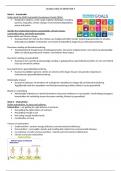
Understand the WHO Sustainable Development Goals (SDGs)
Designed to address a wide range of global challenges, including
poverty, inequality, climate change, environmental degradation,
peace and justice.
Identify the relationship between sustainability, climate change,
sustainable eating, and health promotion.
Sustainability and climate change
Duurzaamheid richt zich op het voldoen aan huidige behoeften zonder toekomstige generaties te schaden.
Onhoudbare praktijken (verbranden van fossiele brandstoffen) dragen bij aan klimaatverandering.
Duurzame voeding en klimaatverandering
Voedselproductie draagt bij aan broeikasgasemissies. Duurzame eetgewoonten, met nadruk op plantaardige
diëten en lokaal geproduceerd voedsel, verminderen deze impact.
Duurzame voeding en gezondheid
Duurzaam eten, gericht op plantaardige voeding, is gekoppeld aan gezondheidsvoordelen en een verminderd
risico op chronische ziekten.
Duurzaamheid en gezondheidsbevordering
Duurzame praktijken (groene ruimtes en schone lucht) dragen bij aan een gezonde omgeving en
ondersteunen gezondheidsbevordering.
Wederzijdse invloed
Duurzame eetkeuzes verminderen de ecologische voetafdruk en dragen bij aan klimaatverandering.
Tegelijkertijd heeft het aanpakken van klimaatverandering positieve effecten op de gezondheid.
Beleid en voorlichting
Wereldwijde initiatieven en beleid bevorderen duurzame landbouw en consumptie. Voorlichtingscampagnes
benadrukken de verbinding tussen duurzame voeding, klimaat en gezondheid.
Week 2 - Malnutrition
Define malnutrition, its types and subform.
Malnutrition = not getting the right balance of nutrients.
Not getting the right balance of nutrients
Not getting enough to eat
Not eating enough healthy foods
Combination of more
4 forms of malnutrition:
1. Undernutrition = protein-energy deficiency and micronutrient deficiency
2. Overnutrition = overweight, obesity and resulting diet-related non-communicable diseases
3. Co-existence of under and overnutrition = obesity and micronutrient deficiencies
4. Chronic and acute malnutrition
, TOFI (thin on the outside, fat inside), MONW (metabolic obesity normal weight), skinny fat, normal weight obesity =
refers to individuals with a healthy BMI and large amount of visceral fat around organs.
-> Increases risk of DM2, hypertension, heart diseases.
Hidden hunger = form of undernutrition that occurs when intake and absorption of vitamins and minerals are too
low to sustain good health and development.
-> Factors that contribute poor diet, increased micronutrient needs, health problems.
Vulnerable to undernutrition:
Physical diseases (Crohn disease, colitis ulcerous, coeliac, cancer)
Chewing or swallowing disorders
Sensory loss
Disorder of the upper limbs
Elderly people living alone.
Affected bij poverty or social isolation.
Difficulty accessing food.
Explain nutrition policies and intervention that tackle under- and overnutrition.
Nutrition policies:
Policies and programs entail setting clear nutrition objectives.
Monitoring nutritional impact.
Improving nutrition knowledge and practices
Diversifying food production
Ensuring food safety
Reducing food losses
Generating income for the poor
Policies for overnutrition
Nutri-score
Sugar tax
Discuss the dietitians’ roles in managing malnutrition at different levels.
Strategic level: influence and create policy, develop and implement standards of care to improve quality, enz.
Educational level: educational and resource role for the public and the professional target groups about nutrition.
Clinical level: nutrition is imbedded in the management of chronic diseases, malnutrition, and functional abilities of
the individuals.
Evaluator: essential in closing the circle of dietetic management in nutritional care. Responsibility to evaluate the
effectiveness of their actions.
Week 3 – Impact lifestyle
Explain the effect of lifestyle & nutrition on health & quality of life.
Explain the impact of overweight and obesity on healthcare and society.
Explain the role of overweight & obesity as a riskfactor for diabetes and cardiovascular diseases.
Explain the effect on health of the shifting from a traditional nutrition & lifestyle towards western style high calory,
fat and protein diet.
Describe the effect of high calory, fat and protein diet on environment and climate.
Week 4 – stages of life
Week 1 - Sustainable
Understand the WHO Sustainable Development Goals (SDGs)
Designed to address a wide range of global challenges, including
poverty, inequality, climate change, environmental degradation,
peace and justice.
Identify the relationship between sustainability, climate change,
sustainable eating, and health promotion.
Sustainability and climate change
Duurzaamheid richt zich op het voldoen aan huidige behoeften zonder toekomstige generaties te schaden.
Onhoudbare praktijken (verbranden van fossiele brandstoffen) dragen bij aan klimaatverandering.
Duurzame voeding en klimaatverandering
Voedselproductie draagt bij aan broeikasgasemissies. Duurzame eetgewoonten, met nadruk op plantaardige
diëten en lokaal geproduceerd voedsel, verminderen deze impact.
Duurzame voeding en gezondheid
Duurzaam eten, gericht op plantaardige voeding, is gekoppeld aan gezondheidsvoordelen en een verminderd
risico op chronische ziekten.
Duurzaamheid en gezondheidsbevordering
Duurzame praktijken (groene ruimtes en schone lucht) dragen bij aan een gezonde omgeving en
ondersteunen gezondheidsbevordering.
Wederzijdse invloed
Duurzame eetkeuzes verminderen de ecologische voetafdruk en dragen bij aan klimaatverandering.
Tegelijkertijd heeft het aanpakken van klimaatverandering positieve effecten op de gezondheid.
Beleid en voorlichting
Wereldwijde initiatieven en beleid bevorderen duurzame landbouw en consumptie. Voorlichtingscampagnes
benadrukken de verbinding tussen duurzame voeding, klimaat en gezondheid.
Week 2 - Malnutrition
Define malnutrition, its types and subform.
Malnutrition = not getting the right balance of nutrients.
Not getting the right balance of nutrients
Not getting enough to eat
Not eating enough healthy foods
Combination of more
4 forms of malnutrition:
1. Undernutrition = protein-energy deficiency and micronutrient deficiency
2. Overnutrition = overweight, obesity and resulting diet-related non-communicable diseases
3. Co-existence of under and overnutrition = obesity and micronutrient deficiencies
4. Chronic and acute malnutrition
, TOFI (thin on the outside, fat inside), MONW (metabolic obesity normal weight), skinny fat, normal weight obesity =
refers to individuals with a healthy BMI and large amount of visceral fat around organs.
-> Increases risk of DM2, hypertension, heart diseases.
Hidden hunger = form of undernutrition that occurs when intake and absorption of vitamins and minerals are too
low to sustain good health and development.
-> Factors that contribute poor diet, increased micronutrient needs, health problems.
Vulnerable to undernutrition:
Physical diseases (Crohn disease, colitis ulcerous, coeliac, cancer)
Chewing or swallowing disorders
Sensory loss
Disorder of the upper limbs
Elderly people living alone.
Affected bij poverty or social isolation.
Difficulty accessing food.
Explain nutrition policies and intervention that tackle under- and overnutrition.
Nutrition policies:
Policies and programs entail setting clear nutrition objectives.
Monitoring nutritional impact.
Improving nutrition knowledge and practices
Diversifying food production
Ensuring food safety
Reducing food losses
Generating income for the poor
Policies for overnutrition
Nutri-score
Sugar tax
Discuss the dietitians’ roles in managing malnutrition at different levels.
Strategic level: influence and create policy, develop and implement standards of care to improve quality, enz.
Educational level: educational and resource role for the public and the professional target groups about nutrition.
Clinical level: nutrition is imbedded in the management of chronic diseases, malnutrition, and functional abilities of
the individuals.
Evaluator: essential in closing the circle of dietetic management in nutritional care. Responsibility to evaluate the
effectiveness of their actions.
Week 3 – Impact lifestyle
Explain the effect of lifestyle & nutrition on health & quality of life.
Explain the impact of overweight and obesity on healthcare and society.
Explain the role of overweight & obesity as a riskfactor for diabetes and cardiovascular diseases.
Explain the effect on health of the shifting from a traditional nutrition & lifestyle towards western style high calory,
fat and protein diet.
Describe the effect of high calory, fat and protein diet on environment and climate.
Week 4 – stages of life



