
School Grade
Grade 4 Level 4
Daily Lesson Teaching Learning SCIENCE Quarter
Plan Dates and Area 2
Time
Signature
Prepared Inspected Week 6
by: by:
I. OBJECTIVES
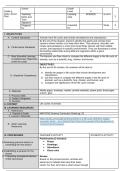
A. Content Standards Animals have life cycles that include development and reproduction.
By the end of the Quarter, learners identify that plants and animals have
systems whose function is to keep them alive. They observe, describe, and
create representations to show how living things interact with their habitat,
B. Performance Standards
survive, and reproduce in specific environments. They use flowcharts to show
the feeding relationship among different organisms within a given
environment.
C. Most Essential Learning The learners use flow charts to compare the different stages in the life cycle of
Competencies/ Objectives animals, such as a butterfly, frog, chicken, and human.
(write the code)
OBJECTIVES:
By the end of 45 minutes, the students will be able to:
A. Identify the stages in life cycles that include development and
D. Unpacked Competency reproduction,
B. use flow charts to compare the different stages in the life cycle of
animals, such as a butterfly, frog, chicken, and human; and,
C. recognize the significance of the life cycle concept.
E. Materials Manila paper, envelope, marker, printed materials, power point, bond paper,
scissor, glue.
F. Process Skills
G. Subject Integration
H. Duration
II. CONTENT Life cycles of animals
III. LEARNING RESOURCES
A. References
1. Teacher’s Guide MATATAG Science Curriculum Guide pg. 25
2. Learner’s Materials
https://study.com/academy/lesson/what-is-a-life-cycle-definition-stages-
examples.html#:~:text=What%20is%20an%20example%20of,fledgling%2C
B. Other Learning %20and%204)%20adult.
Resources
IV. PROCEDURES TEACHER’S ACTIVITY STUDENT’S ACTIVITY
Preliminaries (5 minutes)
A.Reviewing previous lesson or Prayer
presenting the new lesson Greetings
Attendance
B.Establishing a purpose for the Class rules
lesson
C. Presenting examples/instances Review
of the new lesson Based on the previous lesson, animals and
plants live in habitats that meet their basic
needs. For that, let’s have a short review through
, a guessing game called “Where Do I Live?”
I will show you a picture of an animal and plants
you have to guess where the animal and plants
lives (in land, water, or air).
1.
All students shout, it live in
the land
2.
All students shout, it live in
the water
3.
All students shout, it live in
the air
4.
All students shout, it live in
the water
5.
All students shout, it live in
the land
ENGAGE (5 minutes)
From these pictures, can you tell me which of
these come from egg?
All students: The fish and
the eagle, sir.
How about being born as a baby/ies or live
young? All students: The carabao,
sir.
Very good.
What can you observe to both animals at birth
until they become adult?
Yes, Marjorie?
Marjorie: Sir, both animals
are born different until they
became adult.
Based on your ideas, what do you think will be
our topic for today?
Yes, Jica? Jica: Sir! life cycles of



