Aylin European Union Law
PROBLEM 7
Learning objective:
1. What are the rules regarding the prohibition of abuse of a dominant position in European competition law?
/ When is collecting large amounts of personal data by an undertaking prohibited under European Union
competition law?
2. Solve the problem: Has Instagram breached European competition law and, if so, what specific article
applies to this situation?
Literature:
- E-lesson on the Prohibition of the abuse of dominant position: Article 102 TFEU
- Webcast on Article 102 TFEU: Prohibition of the abuse of dominant position
Other:
- Commission Notice on the definition of relevant market for the purposes of Community competition law,
[1997] OJ C 372/5 (in the case law compilation)
- ‘NAAT’, Commission, ‘Guidelines on the Effect on Trade Concept Contained in Articles [101 and 102] of the
Treaty’ [2004] (in the case law compilation)
- Council Regulation (EC) No 1/2003 of 16 December 2002 on the implementation of the rules on competition
laid down in Article 81 en 82 of the Treaty (in Repasi’s treaty and legislation compilation)
Case law:
Höfner and Elser-case (C-41/90) AKZO-case (C-62/86)
Hoffmann-La Roche-case (85/76) Consten and Grundig-case (C-56/64 and C-58/64)
CEWAL-case (C-395/96 and 396/96) Société Technique Minière (56/65)(Only Rule)
Piau-case (T-193/02) Microsoft-case (T-201/04)
1. WHAT ARE THE RULES REGARDING THE PROHIBITON OF ABUSE OF A
DOMINANT POSITION IN EUROPEAN COMPETITION LAW?
Article 102 TFEU prohibits any abuse by one or more undertakings of a dominant position within the
internal market or in a substantial part of it, insofar it potentially affects trade between Member States.
Article 102 TFEU requires the fulfillment of four criteria:
1. The definition of undertaking needs to be fulfilled
o The notion of undertaking is the same as for the application of Article 101 TFEU
2. The undertaking needs to be in a dominant position within the internal market or in a substantial
part of it
3. The undertaking must have ‘abused’ its dominance
4. This must have led to a potential effect on the trade between Member States
In addition, a prohibited abuse of a dominant position may be objectively justified.
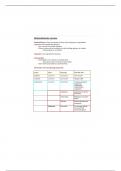
In order to determine
whether the four criteria are
fulfilled, the following
overview with the three steps
may be used:
, Aylin European Union Law
(1) Undertaking
- The Court provided a definition of ‘undertaking’ in the Höfner and Elser-case (paras. 21-22)
- The undertaking must be engaged in an economic activity
1. The undertaking is defined through reference to its function, which must be an economic
activity; hence this is considered a functional approach.
§ According to the CJEU the basic features for an activity to be considered
“economic” are (1) the offering of goods or services on the market and (2) the fact
that the activity could at least in principle be carried on by a private undertaking in
order to make profits.
- Article 102 makes reference to “one or more undertakings”
1. This refers to a situation of collective dominance: when more undertakings act as
independent economic entities but their economic link is so strong to consider them as
holding a dominant position all together.
§ A typical example of this particular situation is a group of companies active in the
same market.
(2) Market dominance: establishing dominance
- Dominance can be defined as a position of economic strength that allows a company to dictate
rules in the market and behave independently of its competitors, its customers, and its consumers
- Establishing dominance consists of two parts:
1. The identification of the relevant market and
2. The definition of the position that the undertaking has on the market
Relevant market: product and geographic dimensions
In order to provide guidance as to how the Commission applies the concept of relevant product and
geographic market in its ongoing enforcement of EU
competition law, the Commission has established a
‘Commission Notice on the definition of relevant
market for the purposes of Community competition
law, [1997] OJ C 372/5
The relevant market can be established by identifying
the product market and the geographical market. The
definition of the relevant market is essential to
individuate competitors of the undertaking.
The relevant product market is understood as a market
comprising all those products and/or services which are regarded as interchangeable or substitutable
by the consumer, by reason of the products' characteristics, their prices and their intended use
(Hoffman-La Roche (para. 28; also see para. 7 of the aforementioned Commission Notice).
• In other words, the relevant product market defines the type of good and services offered by
the undertaking in question.
The relevant geographical market is defined as comprising the area in which the undertakings
concerned are involved in the supply and demand of products or services, in which the conditions of
competition are sufficiently homogeneous and which can be distinguished from neighboring areas
because the conditions of competition are appreciably different in those areas.
• In other words, the geographical market concerns the place where the offer takes place.
The product market
The cross-elasticity of demand and supply, and the interchangeability of a particular product (which
products may be regarded as substitutes for each other) play a role in the establishment of the relevant
PROBLEM 7
Learning objective:
1. What are the rules regarding the prohibition of abuse of a dominant position in European competition law?
/ When is collecting large amounts of personal data by an undertaking prohibited under European Union
competition law?
2. Solve the problem: Has Instagram breached European competition law and, if so, what specific article
applies to this situation?
Literature:
- E-lesson on the Prohibition of the abuse of dominant position: Article 102 TFEU
- Webcast on Article 102 TFEU: Prohibition of the abuse of dominant position
Other:
- Commission Notice on the definition of relevant market for the purposes of Community competition law,
[1997] OJ C 372/5 (in the case law compilation)
- ‘NAAT’, Commission, ‘Guidelines on the Effect on Trade Concept Contained in Articles [101 and 102] of the
Treaty’ [2004] (in the case law compilation)
- Council Regulation (EC) No 1/2003 of 16 December 2002 on the implementation of the rules on competition
laid down in Article 81 en 82 of the Treaty (in Repasi’s treaty and legislation compilation)
Case law:
Höfner and Elser-case (C-41/90) AKZO-case (C-62/86)
Hoffmann-La Roche-case (85/76) Consten and Grundig-case (C-56/64 and C-58/64)
CEWAL-case (C-395/96 and 396/96) Société Technique Minière (56/65)(Only Rule)
Piau-case (T-193/02) Microsoft-case (T-201/04)
1. WHAT ARE THE RULES REGARDING THE PROHIBITON OF ABUSE OF A
DOMINANT POSITION IN EUROPEAN COMPETITION LAW?
Article 102 TFEU prohibits any abuse by one or more undertakings of a dominant position within the
internal market or in a substantial part of it, insofar it potentially affects trade between Member States.
Article 102 TFEU requires the fulfillment of four criteria:
1. The definition of undertaking needs to be fulfilled
o The notion of undertaking is the same as for the application of Article 101 TFEU
2. The undertaking needs to be in a dominant position within the internal market or in a substantial
part of it
3. The undertaking must have ‘abused’ its dominance
4. This must have led to a potential effect on the trade between Member States
In addition, a prohibited abuse of a dominant position may be objectively justified.
In order to determine
whether the four criteria are
fulfilled, the following
overview with the three steps
may be used:
, Aylin European Union Law
(1) Undertaking
- The Court provided a definition of ‘undertaking’ in the Höfner and Elser-case (paras. 21-22)
- The undertaking must be engaged in an economic activity
1. The undertaking is defined through reference to its function, which must be an economic
activity; hence this is considered a functional approach.
§ According to the CJEU the basic features for an activity to be considered
“economic” are (1) the offering of goods or services on the market and (2) the fact
that the activity could at least in principle be carried on by a private undertaking in
order to make profits.
- Article 102 makes reference to “one or more undertakings”
1. This refers to a situation of collective dominance: when more undertakings act as
independent economic entities but their economic link is so strong to consider them as
holding a dominant position all together.
§ A typical example of this particular situation is a group of companies active in the
same market.
(2) Market dominance: establishing dominance
- Dominance can be defined as a position of economic strength that allows a company to dictate
rules in the market and behave independently of its competitors, its customers, and its consumers
- Establishing dominance consists of two parts:
1. The identification of the relevant market and
2. The definition of the position that the undertaking has on the market
Relevant market: product and geographic dimensions
In order to provide guidance as to how the Commission applies the concept of relevant product and
geographic market in its ongoing enforcement of EU
competition law, the Commission has established a
‘Commission Notice on the definition of relevant
market for the purposes of Community competition
law, [1997] OJ C 372/5
The relevant market can be established by identifying
the product market and the geographical market. The
definition of the relevant market is essential to
individuate competitors of the undertaking.
The relevant product market is understood as a market
comprising all those products and/or services which are regarded as interchangeable or substitutable
by the consumer, by reason of the products' characteristics, their prices and their intended use
(Hoffman-La Roche (para. 28; also see para. 7 of the aforementioned Commission Notice).
• In other words, the relevant product market defines the type of good and services offered by
the undertaking in question.
The relevant geographical market is defined as comprising the area in which the undertakings
concerned are involved in the supply and demand of products or services, in which the conditions of
competition are sufficiently homogeneous and which can be distinguished from neighboring areas
because the conditions of competition are appreciably different in those areas.
• In other words, the geographical market concerns the place where the offer takes place.
The product market
The cross-elasticity of demand and supply, and the interchangeability of a particular product (which
products may be regarded as substitutes for each other) play a role in the establishment of the relevant