Learninggoals case 8
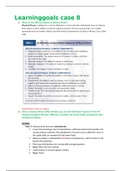
1. What are the different aspects of physical fitness?
Physical fitness is defined as a set of attributes or characteristics individuals have or achieve
that relates to their ability to perform physical activity. These characteristics are usually
separated into the health-related and skill-related components of physical fitness. (see, other
task)
Coordination is also an aspect.
2. How can physical fitness differ between age, sex and individuals in general? (how PA
changes throughout life span, difference in gender and woman being menopausel, after
menopauser blabla).
GENDER
- Man influenced by hormone testosterone
Lower fat percentage, due to testosterone, which promotes bone growth and
muscle protein synthesis. The distribution of muscle mass is different: more in
the upper body as compared to the lower body.
Kidneys produce erythropoietin EPO due to testosterone, which enhances red
blood cell production.
Fibre type distributions are comparable amongst genders.
Bigger fibre size than woman
Capilarization of muscle appears similar.
Bigger heart
, During exercise lower HR, bigger SV and higher VO2.
Physical fitness and testosterone are not in a relationship, muscle strength and
testosterone on the other hand are.
- Female influenced by estrogen
Increases fat deposition, especially at thighs and hips, due to increased
lipoprotein lipase activity in these regions.
Increases bone growth, but the growth ceases earlier than for males, therefore
females are…
o 13 cm shorter
o 14-19 kg lighter in total weight
o 3-6 kg heavier in fat mass
o 6-10% higher in relative body fat
Strength: women tend to be 40-60% weaker in their upper body and 20-30% in
their lower body. But when you correct these for differences in length, the
differences aren’t that big.
Fibre type distributions are comparable amongst genders.
Smaller fibre size than man
Capillarization of muscle appears similar.
Woman tend to have a greater resistance to fatigue!
Hb content in woman is lower
Smaller hearts (smaller body size + low testosterone)
Smaller blood volume (related to size)
HR is higher during exercise, SV lower, VO2 lower
Woman have lower haemoglobin content, less potential for increasing their peak
(a-v)O2 difference reason for lower VO2max
With aerobic training, women experience similar gains in VO2max and similar
changes in body composition
AGING
- Osteopenia = reduction in bone mineral density below normal
Woman age 40 – 50
Man age 50 – 60
- Osteoporosis = severe loss of bone mass with deterioration of the microarchitecture of
bone, increased risk of fracture. Influenced by:
Poor lifestyle
Genetic factors
Menopause (reduced estrogen concentrations)
- Weight gains
Reduced PA levels
Excess caloric intake
Reduced ability to mobilize fat
- Weight loss = because of reduced appetite (60 – 70 years)
- Fat distribution = more towards the visceral vs. subcutaneous site
- Fat free mass = decreases due to decreased muscle and bone mass, there is an reduced
rate of muscle protein synthesis. This is due to declines in the growth hormone, insulin
like frowth factor-1 and decreased cell signalling. Body mass can remain relatively
1. What are the different aspects of physical fitness?
Physical fitness is defined as a set of attributes or characteristics individuals have or achieve
that relates to their ability to perform physical activity. These characteristics are usually
separated into the health-related and skill-related components of physical fitness. (see, other
task)
Coordination is also an aspect.
2. How can physical fitness differ between age, sex and individuals in general? (how PA
changes throughout life span, difference in gender and woman being menopausel, after
menopauser blabla).
GENDER
- Man influenced by hormone testosterone
Lower fat percentage, due to testosterone, which promotes bone growth and
muscle protein synthesis. The distribution of muscle mass is different: more in
the upper body as compared to the lower body.
Kidneys produce erythropoietin EPO due to testosterone, which enhances red
blood cell production.
Fibre type distributions are comparable amongst genders.
Bigger fibre size than woman
Capilarization of muscle appears similar.
Bigger heart
, During exercise lower HR, bigger SV and higher VO2.
Physical fitness and testosterone are not in a relationship, muscle strength and
testosterone on the other hand are.
- Female influenced by estrogen
Increases fat deposition, especially at thighs and hips, due to increased
lipoprotein lipase activity in these regions.
Increases bone growth, but the growth ceases earlier than for males, therefore
females are…
o 13 cm shorter
o 14-19 kg lighter in total weight
o 3-6 kg heavier in fat mass
o 6-10% higher in relative body fat
Strength: women tend to be 40-60% weaker in their upper body and 20-30% in
their lower body. But when you correct these for differences in length, the
differences aren’t that big.
Fibre type distributions are comparable amongst genders.
Smaller fibre size than man
Capillarization of muscle appears similar.
Woman tend to have a greater resistance to fatigue!
Hb content in woman is lower
Smaller hearts (smaller body size + low testosterone)
Smaller blood volume (related to size)
HR is higher during exercise, SV lower, VO2 lower
Woman have lower haemoglobin content, less potential for increasing their peak
(a-v)O2 difference reason for lower VO2max
With aerobic training, women experience similar gains in VO2max and similar
changes in body composition
AGING
- Osteopenia = reduction in bone mineral density below normal
Woman age 40 – 50
Man age 50 – 60
- Osteoporosis = severe loss of bone mass with deterioration of the microarchitecture of
bone, increased risk of fracture. Influenced by:
Poor lifestyle
Genetic factors
Menopause (reduced estrogen concentrations)
- Weight gains
Reduced PA levels
Excess caloric intake
Reduced ability to mobilize fat
- Weight loss = because of reduced appetite (60 – 70 years)
- Fat distribution = more towards the visceral vs. subcutaneous site
- Fat free mass = decreases due to decreased muscle and bone mass, there is an reduced
rate of muscle protein synthesis. This is due to declines in the growth hormone, insulin
like frowth factor-1 and decreased cell signalling. Body mass can remain relatively