Summary
Business
dimension
of
Europe
Sophie
2019/20
Lecture
1
The
European
Union
513
million
people,
28
countries
and
24
official
languages
Pioneers
of
the
European
Union:
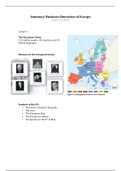
Figure
1:
Enlargement
from
6
to
28
countries
Symbols
of
the
EU:
• The
motto:
United
in
diversity
• The
euro
• The
European
flag
• The
European
anthem
• Europe
day
on
the
9th
of
May
,Figure
2:
population
The
big
enlargement
uniting
east
and
west:
1989
Fall
of
Berlin
wall
and
end
of
communism
EU
economic
help
begins
with
Phare
program
1992
Criteria
set
for
a
country
to
join
the
EU:
• Democracy
and
rule
of
law
• Functioning
market
economy
• Ability
to
implement
EU
laws
1998
Formal
negotiations
on
enlargement
begin
2002
Copenhagen
summit
agrees
to
a
big
enlargement
of
10
new
countries
2004
Ten
new
members:
Cyprus,
Czech
Republic,
Estonia,
Hungary,
Latvia,
Lithuania,
Malta,
Poland,
Slovakia,
and
Slovenia
2007
Bulgaria
and
Romania
join
the
EU
2013
Croatia
joins
on
1st
of
July
Figure
3:
candidate
countries
and
potential
candidates
, The
treaties:
1952
The
European
Coal
and
Steel
Community
1958
The
treaties
of
Rome:
• The
European
Economic
Community
• The
European
Atomic
Energy
Community
(EURATOM)
1987
The
European
Single
Act:
the
Single
Market
1993
Treaty
of
European
Union
–
Maastricht
1999
Treaty
of
Amsterdam
2003
Treaty
of
Nice
2009
Treaty
of
Lisbon
In
2008
there
was
a
worldwide
financial
crisis,
which
started
in
the
US,
and
there
was
a
coordinated
response
from
European
leaders:
• Commitment
to
the
euro
and
to
financial
stability
• New
crisis
management
tools
and
reforms
of
rules
o European
Stability
Mechanism:
fund
to
help
countries
in
extraordinary
economic
difficulties
o New
laws
for
stability
of
banks
o Banking
Union:
EU-‐wide
supervision
of
banks
and
a
mechanism
to
close
down
failing
banks
• Better
economic
governance
o European
Semester:
annual
procedure
to
coordinate
public
budgets
o Euro+
pact
(fiscal
compact
treaty):
mutual
commitment
to
sound
public
finances
The
growth
of
Europe
2010
EU
leaders
agreed
on
overall
strategy
yo
get
out
of
the
economic
crisis
by
means
of:
• Smart
growth
o Better
education,
more
research,
greater
use
of
communication
technologies
• Sustainable
growth
o A
resource
efficient,
greener
and
more
competitive
economy
• Inclusive
growth
o More
and
better
jobs,
investment
in
skills
and
training,
modernisation
of
the
labour
market
and
welfare
systems,
spreading
the
benefits
of
growth
to
all
parts
of
the
EU
• Good
economic
governance
o Better
coordination
of
economic
policy
Business
dimension
of
Europe
Sophie
2019/20
Lecture
1
The
European
Union
513
million
people,
28
countries
and
24
official
languages
Pioneers
of
the
European
Union:
Figure
1:
Enlargement
from
6
to
28
countries
Symbols
of
the
EU:
• The
motto:
United
in
diversity
• The
euro
• The
European
flag
• The
European
anthem
• Europe
day
on
the
9th
of
May
,Figure
2:
population
The
big
enlargement
uniting
east
and
west:
1989
Fall
of
Berlin
wall
and
end
of
communism
EU
economic
help
begins
with
Phare
program
1992
Criteria
set
for
a
country
to
join
the
EU:
• Democracy
and
rule
of
law
• Functioning
market
economy
• Ability
to
implement
EU
laws
1998
Formal
negotiations
on
enlargement
begin
2002
Copenhagen
summit
agrees
to
a
big
enlargement
of
10
new
countries
2004
Ten
new
members:
Cyprus,
Czech
Republic,
Estonia,
Hungary,
Latvia,
Lithuania,
Malta,
Poland,
Slovakia,
and
Slovenia
2007
Bulgaria
and
Romania
join
the
EU
2013
Croatia
joins
on
1st
of
July
Figure
3:
candidate
countries
and
potential
candidates
, The
treaties:
1952
The
European
Coal
and
Steel
Community
1958
The
treaties
of
Rome:
• The
European
Economic
Community
• The
European
Atomic
Energy
Community
(EURATOM)
1987
The
European
Single
Act:
the
Single
Market
1993
Treaty
of
European
Union
–
Maastricht
1999
Treaty
of
Amsterdam
2003
Treaty
of
Nice
2009
Treaty
of
Lisbon
In
2008
there
was
a
worldwide
financial
crisis,
which
started
in
the
US,
and
there
was
a
coordinated
response
from
European
leaders:
• Commitment
to
the
euro
and
to
financial
stability
• New
crisis
management
tools
and
reforms
of
rules
o European
Stability
Mechanism:
fund
to
help
countries
in
extraordinary
economic
difficulties
o New
laws
for
stability
of
banks
o Banking
Union:
EU-‐wide
supervision
of
banks
and
a
mechanism
to
close
down
failing
banks
• Better
economic
governance
o European
Semester:
annual
procedure
to
coordinate
public
budgets
o Euro+
pact
(fiscal
compact
treaty):
mutual
commitment
to
sound
public
finances
The
growth
of
Europe
2010
EU
leaders
agreed
on
overall
strategy
yo
get
out
of
the
economic
crisis
by
means
of:
• Smart
growth
o Better
education,
more
research,
greater
use
of
communication
technologies
• Sustainable
growth
o A
resource
efficient,
greener
and
more
competitive
economy
• Inclusive
growth
o More
and
better
jobs,
investment
in
skills
and
training,
modernisation
of
the
labour
market
and
welfare
systems,
spreading
the
benefits
of
growth
to
all
parts
of
the
EU
• Good
economic
governance
o Better
coordination
of
economic
policy