3.9 Astrophysics
3.9.1. Telescopes
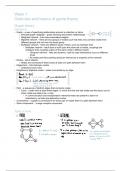
Astronomical Telescope Consisting of Two Converging Lenses:
A lens forms an image by refracting light There are two types of lenses:
A convex/converging lens --> This is all that’s covered in the syllabus
A concave/diverging lens
In a converging lens:
Principal Axis = An imaginary line passing
through the centre of a lens.
Focal Point = The point at which rays
parallel to the principal axis are brought
to a focus.
Focal Length = The distance from the
center of the lens to the focal point.
o More curved/thicker lens, the shorter the focal length.
o If the focal length is shorter, the lens is more powerful.
The image produced by a lens is either real or virtual:
Real Image Virtual Image
Light converges towards a focal point. Light diverges away from a focal point.
Always inverted (upside down). Always upright.
Can be projected onto a screen. Cannot be projected onto a screen.
Intersection of two solid lines. Intersection of two dashed lines/a dashed and
solid line.
E.g. Image from a projector onto screen. E.g. Image in a mirror.
Ray Diagrams:
Rays passing through the optical center of the lens will be undeviated.
Rays parallel to the principal axis will be refracted and pass through the focal point, f.
Rays passing through the focal point, f (on the left side), will emerge parallel to the principal
axis.
The nature of an image formed by a lens is described by its:
o Nature: Real or virtual
o Orientation: Inverted or upright (compared to the object)
o Size: Magnified (larger), diminished (smaller, or same size.
1. Object Distance > 2f:
You don’t need to memorise these because can work it out by
drawing a diagram. To do this, you can decide where the focal
points on either side are and draw accordingly. Only a line parallel
to the principal axis and a line through the center of the lens are
needed.
The image formed is between f and 2f, real,
inverted and diminished.
1
,2. Object Distance = 2f: 3. Object Distance Between 2f and f:
Image is at 2f, real, inverted, the same size.
Image is beyond 2f, real, inverted, magnified.
4. Object Distance < f:
E.g. a magnifying glass.
You draw dashed lines back to the left side from where the rays
emerge from the lens.
Image is at 2f on the same side as the object, virtual, upright,
magnified.
The lens equation (only works for thin lenses): --> Not given.
f = focal length (m)
u = distance of the object from lens (m)
v = distance of the image from lens (m)
If the image is real, v is positive, if the image is virtual, v is negative.
Refracting Telescopes:
An astronomical refracting telescope consists of two lenses:
Objective lens: Collects the light from a distance object and brings it to a focus at its focal
length, fo.
Eyepiece lens: Placed at a distance of its focal length, f e , away from the image and produced
parallel rays of light to be analysed.
The lenses are adjusted to normal adjustment, where
the final image is at infinity:
Both lenses must be adjusted so their focal
points meet in the same place.
The objective lens focal length must be
longer than the eyepiece lens focal length.
fo > fe.
You should draw three non-axial (not parallel to principal axis) rays.
2
, How to Draw a Refractor Ray Diagram:
1. Draw and label the two lenses (and principal axis if not already there).
2. Mark and label the common principal foci. The
objective focal length must be longer than the eyepiece focal length.
3. Draw an off-axis ray through the center of
the objective to the eyepiece.
4. Draw an arrow to show the intermediate image.
5. Draw a construction dashed line from the
intermediate image through the centre of the eyepiece.
6. Draw two parallel rays refracting at the
objective to the eyepiece, crossing where the focal lengths meet. They must be parallel to
the ray you drew.
7. Draw them refracting at the eyepiece, parallel to the construction line, and draw dashed
lines to the left. These dashes are the virtual image at infinity.
3
3.9.1. Telescopes
Astronomical Telescope Consisting of Two Converging Lenses:
A lens forms an image by refracting light There are two types of lenses:
A convex/converging lens --> This is all that’s covered in the syllabus
A concave/diverging lens
In a converging lens:
Principal Axis = An imaginary line passing
through the centre of a lens.
Focal Point = The point at which rays
parallel to the principal axis are brought
to a focus.
Focal Length = The distance from the
center of the lens to the focal point.
o More curved/thicker lens, the shorter the focal length.
o If the focal length is shorter, the lens is more powerful.
The image produced by a lens is either real or virtual:
Real Image Virtual Image
Light converges towards a focal point. Light diverges away from a focal point.
Always inverted (upside down). Always upright.
Can be projected onto a screen. Cannot be projected onto a screen.
Intersection of two solid lines. Intersection of two dashed lines/a dashed and
solid line.
E.g. Image from a projector onto screen. E.g. Image in a mirror.
Ray Diagrams:
Rays passing through the optical center of the lens will be undeviated.
Rays parallel to the principal axis will be refracted and pass through the focal point, f.
Rays passing through the focal point, f (on the left side), will emerge parallel to the principal
axis.
The nature of an image formed by a lens is described by its:
o Nature: Real or virtual
o Orientation: Inverted or upright (compared to the object)
o Size: Magnified (larger), diminished (smaller, or same size.
1. Object Distance > 2f:
You don’t need to memorise these because can work it out by
drawing a diagram. To do this, you can decide where the focal
points on either side are and draw accordingly. Only a line parallel
to the principal axis and a line through the center of the lens are
needed.
The image formed is between f and 2f, real,
inverted and diminished.
1
,2. Object Distance = 2f: 3. Object Distance Between 2f and f:
Image is at 2f, real, inverted, the same size.
Image is beyond 2f, real, inverted, magnified.
4. Object Distance < f:
E.g. a magnifying glass.
You draw dashed lines back to the left side from where the rays
emerge from the lens.
Image is at 2f on the same side as the object, virtual, upright,
magnified.
The lens equation (only works for thin lenses): --> Not given.
f = focal length (m)
u = distance of the object from lens (m)
v = distance of the image from lens (m)
If the image is real, v is positive, if the image is virtual, v is negative.
Refracting Telescopes:
An astronomical refracting telescope consists of two lenses:
Objective lens: Collects the light from a distance object and brings it to a focus at its focal
length, fo.
Eyepiece lens: Placed at a distance of its focal length, f e , away from the image and produced
parallel rays of light to be analysed.
The lenses are adjusted to normal adjustment, where
the final image is at infinity:
Both lenses must be adjusted so their focal
points meet in the same place.
The objective lens focal length must be
longer than the eyepiece lens focal length.
fo > fe.
You should draw three non-axial (not parallel to principal axis) rays.
2
, How to Draw a Refractor Ray Diagram:
1. Draw and label the two lenses (and principal axis if not already there).
2. Mark and label the common principal foci. The
objective focal length must be longer than the eyepiece focal length.
3. Draw an off-axis ray through the center of
the objective to the eyepiece.
4. Draw an arrow to show the intermediate image.
5. Draw a construction dashed line from the
intermediate image through the centre of the eyepiece.
6. Draw two parallel rays refracting at the
objective to the eyepiece, crossing where the focal lengths meet. They must be parallel to
the ray you drew.
7. Draw them refracting at the eyepiece, parallel to the construction line, and draw dashed
lines to the left. These dashes are the virtual image at infinity.
3