HSP 3U9 A—AP Psychology, Sociology, Anthropology
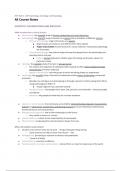
All Course Notes
SCIENTIFIC FOUNDATIONS AND METHODS
#004 Introduction to Social Science
● Social science: the scientific study of human relationships and social behaviour
● Anthropology: the scientific study of humans as a species and as members of different cultures
○ Physical anthropology: origins of humans as a species
■ Ways humans are similar to and different from other species
■ Topics may include: human family tree, natural selection, evolutionary psychology,
the Great Apes
○ Cultural anthropology: how culture shapes the way that people live in the world today and
how they lived in the past
■ Culture: learned behaviours, beliefs, ways of knowing, world views, values of a
particular society
● Sociology: the scientific study of humans in groups/society
○ The actions and responses of individuals within a group to detect general patterns/innate
characteristics of human behaviour
○ Agents of socialization: how the groups to which we belong shape our experiences
● Psychology: the scientific study of humans as individuals and the science of behaviour and mental
processes
○ Basically, you can figure out what’s going on through a person’s mind by asking them OR by
using technology (ex. fMRI, CT)
■ People might lie if you ask them directly
○ Mental processes: how people think, learn, feel, perceive, and remember + their personality
and identity
○ Behaviour: why people do what they do in certain situations
● Nature vs. nurture debate: the controversy as to whether inherited biological/genetic characteristics
(nature) or experiences, environment, and learning (nurture) are more influential in determining
human behaviour and characteristics
● Biopsychosocial approach: look at the relationships of the factors
○ Very similar to nature vs. nurture
● Cultural relativism: culture is best understood by its own people
● Ethnocentrism: comparing other culture based on biases from own
What is the need for social sciences?
● Intuition and common sense do not work → the gut often gets things wrong
○ Social sciences can help us move from illusion → fact
● Hindsight bias: perceiving an outcome as obvious and predictable
○ “I knew it all along”
● Overconfidence: excessive confidence
● Perceiving order in random events/patterns: derived from our need to make sense of the world
, ● Schemas: a mental (cognitive) map, mental filter, or representation of an idea made up of associations
and connections
○ Humans are always making associations and connections → often relating specific subjects to
others
○ Relates to neuroplasticity and neural connections
○ Can make you see something that doesn’t actually exist
○ Can cause stereotypes, preconceived prejudice, and notions
● Pareidolia: the science behind seeing faces in everyday objects
#010 and #011 Research Methods
The Scientific Method and Descriptive Studies
● Scientific method: a process of systematic observation measurement, and experiment to formulate
and test a hypothesis
○ Hypothesis: usually takes the form of an if-then statement, is a testable prediction, and has
specific variables
● Operational definitions: clear statements about what the variables are and how they will be measured
● Correlation ≠ causation
● Replication: repeating the essence of a research study to see whether the basic findings extend to
other participants and circumstances
● Confirmation bias: searching for information that supports preconceptions while ignoring or distorting
contradictory information
Descriptive Research Methods
● Descriptive research: to describe, observe, and record behaviour without using experiments but still
following the scientific method
● When can you not do an experiment? If it’s unethical + in areas where descriptive research is more
beneficial/suitable
○ Sometimes you need to observe behaviour instead of actually manipulating any variables
○ Cannot show cause and effect with these kinds of studies
● Case study: one individual or group studied over a long/extended period of time
○ No variety of perspectives
○ Longitudinal study: case study that goes on for a long time
● Naturalistic observation: observing and recording behaviour in naturally occurring situations with
trying to manipulate or control any of the variables
○ Structured vs. unstructured
○ Participant vs. non-participant
● Survey: obtains the attitudes, opinions, perceptions, or behaviours of a particular group by questioning
a representative sample of that group
○ Subjective self reporting: writing what you think the surveyor wants or what will make you look
good
● Population: everyone that can be in a study
● Sample: those that actually participate in a study
● Sampling bias: a flawed sampling process that produces an unrepresentative sample
○ Allows some members of the population to be more likely to be included than others
● Random sample/selection: a sample that fairly represents a population because each member has an
equal change of inclusion
All Course Notes
SCIENTIFIC FOUNDATIONS AND METHODS
#004 Introduction to Social Science
● Social science: the scientific study of human relationships and social behaviour
● Anthropology: the scientific study of humans as a species and as members of different cultures
○ Physical anthropology: origins of humans as a species
■ Ways humans are similar to and different from other species
■ Topics may include: human family tree, natural selection, evolutionary psychology,
the Great Apes
○ Cultural anthropology: how culture shapes the way that people live in the world today and
how they lived in the past
■ Culture: learned behaviours, beliefs, ways of knowing, world views, values of a
particular society
● Sociology: the scientific study of humans in groups/society
○ The actions and responses of individuals within a group to detect general patterns/innate
characteristics of human behaviour
○ Agents of socialization: how the groups to which we belong shape our experiences
● Psychology: the scientific study of humans as individuals and the science of behaviour and mental
processes
○ Basically, you can figure out what’s going on through a person’s mind by asking them OR by
using technology (ex. fMRI, CT)
■ People might lie if you ask them directly
○ Mental processes: how people think, learn, feel, perceive, and remember + their personality
and identity
○ Behaviour: why people do what they do in certain situations
● Nature vs. nurture debate: the controversy as to whether inherited biological/genetic characteristics
(nature) or experiences, environment, and learning (nurture) are more influential in determining
human behaviour and characteristics
● Biopsychosocial approach: look at the relationships of the factors
○ Very similar to nature vs. nurture
● Cultural relativism: culture is best understood by its own people
● Ethnocentrism: comparing other culture based on biases from own
What is the need for social sciences?
● Intuition and common sense do not work → the gut often gets things wrong
○ Social sciences can help us move from illusion → fact
● Hindsight bias: perceiving an outcome as obvious and predictable
○ “I knew it all along”
● Overconfidence: excessive confidence
● Perceiving order in random events/patterns: derived from our need to make sense of the world
, ● Schemas: a mental (cognitive) map, mental filter, or representation of an idea made up of associations
and connections
○ Humans are always making associations and connections → often relating specific subjects to
others
○ Relates to neuroplasticity and neural connections
○ Can make you see something that doesn’t actually exist
○ Can cause stereotypes, preconceived prejudice, and notions
● Pareidolia: the science behind seeing faces in everyday objects
#010 and #011 Research Methods
The Scientific Method and Descriptive Studies
● Scientific method: a process of systematic observation measurement, and experiment to formulate
and test a hypothesis
○ Hypothesis: usually takes the form of an if-then statement, is a testable prediction, and has
specific variables
● Operational definitions: clear statements about what the variables are and how they will be measured
● Correlation ≠ causation
● Replication: repeating the essence of a research study to see whether the basic findings extend to
other participants and circumstances
● Confirmation bias: searching for information that supports preconceptions while ignoring or distorting
contradictory information
Descriptive Research Methods
● Descriptive research: to describe, observe, and record behaviour without using experiments but still
following the scientific method
● When can you not do an experiment? If it’s unethical + in areas where descriptive research is more
beneficial/suitable
○ Sometimes you need to observe behaviour instead of actually manipulating any variables
○ Cannot show cause and effect with these kinds of studies
● Case study: one individual or group studied over a long/extended period of time
○ No variety of perspectives
○ Longitudinal study: case study that goes on for a long time
● Naturalistic observation: observing and recording behaviour in naturally occurring situations with
trying to manipulate or control any of the variables
○ Structured vs. unstructured
○ Participant vs. non-participant
● Survey: obtains the attitudes, opinions, perceptions, or behaviours of a particular group by questioning
a representative sample of that group
○ Subjective self reporting: writing what you think the surveyor wants or what will make you look
good
● Population: everyone that can be in a study
● Sample: those that actually participate in a study
● Sampling bias: a flawed sampling process that produces an unrepresentative sample
○ Allows some members of the population to be more likely to be included than others
● Random sample/selection: a sample that fairly represents a population because each member has an
equal change of inclusion