Introduction to Media Studies II (LJX011P05)
Seminar group 1 - instructor Kim Smeenk
07-06-2019
Word count: 1098
APA 6th edition annotation system
Literature review
Net neutrality regulation by the FCC in the global age
Introduction
According to Choi et al. (2018) the debate about net neutrality has been the most
important and controversial regulatory agenda since the inception of the Internet. The internet
can be regulated with or without network neutrality. Schaub (2018), Lessig (2006), Kourandi et
al (2015) and Choi et al. (2018) define network neutrality, or net neutrality, as being based on the
principle that the technology and entities that provide internet connectivity and access must treat
all internet communications equally. This means that Internet service providers (ISPs) cannot
discriminate content providers and Internet users in charging them differently for specific online
content or in intentionally blocking content, or slowing down the traffic (Schaub, 2018). The
goal of this paper is to review literature to describe the context of the global age, to elaborate on
what regulation is and how it is implemented in relation to net neutrality regulation and to
describe decisions of the FCC as an important organization regarding the net neutrality debate in
the United States. The following research question is researched: “What link can be made
between the FCC decisions regarding net neutrality regulation and the global age in which we
live?”.
Literature review
Context of the global age
Through globalization, large conglomerates exist whom can have much power in
determining the manner in which access to content on the Internet is provided (Long and Wall,
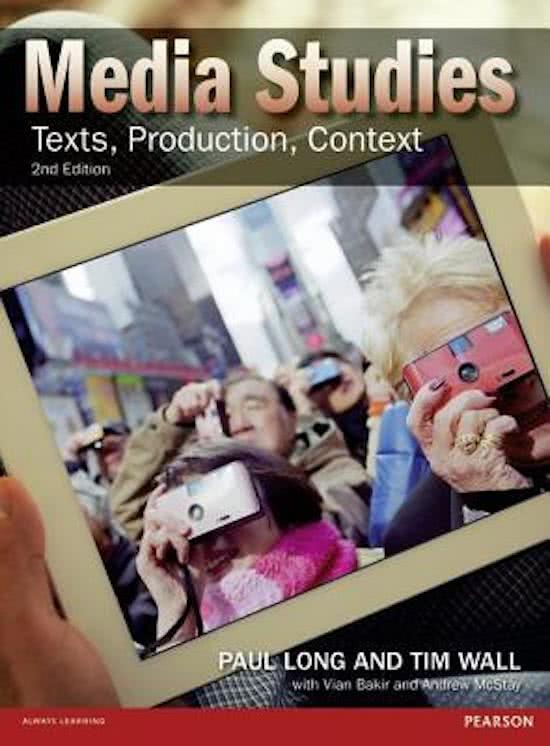
2012). Long and Wall explain in their book ‘Media Studies: Text, Production, Context’, that big
companies in the current global age are likely to be owned by international shareholders.
Therefore, they must constantly be focused on profits to keep their shareholders happy and
investment funds flowing. Long and Wall (2012) state that the key site of internet regulation is
our point of access. If people want to obtain access to the internet, they have to subscribe to an
ISP. Schaub (2018) provides an example of how the large United States ISPs have also become
Seminar group 1 - instructor Kim Smeenk
07-06-2019
Word count: 1098
APA 6th edition annotation system
Literature review
Net neutrality regulation by the FCC in the global age
Introduction
According to Choi et al. (2018) the debate about net neutrality has been the most
important and controversial regulatory agenda since the inception of the Internet. The internet
can be regulated with or without network neutrality. Schaub (2018), Lessig (2006), Kourandi et
al (2015) and Choi et al. (2018) define network neutrality, or net neutrality, as being based on the
principle that the technology and entities that provide internet connectivity and access must treat
all internet communications equally. This means that Internet service providers (ISPs) cannot
discriminate content providers and Internet users in charging them differently for specific online
content or in intentionally blocking content, or slowing down the traffic (Schaub, 2018). The
goal of this paper is to review literature to describe the context of the global age, to elaborate on
what regulation is and how it is implemented in relation to net neutrality regulation and to
describe decisions of the FCC as an important organization regarding the net neutrality debate in
the United States. The following research question is researched: “What link can be made
between the FCC decisions regarding net neutrality regulation and the global age in which we
live?”.
Literature review
Context of the global age
Through globalization, large conglomerates exist whom can have much power in
determining the manner in which access to content on the Internet is provided (Long and Wall,
2012). Long and Wall explain in their book ‘Media Studies: Text, Production, Context’, that big
companies in the current global age are likely to be owned by international shareholders.
Therefore, they must constantly be focused on profits to keep their shareholders happy and
investment funds flowing. Long and Wall (2012) state that the key site of internet regulation is
our point of access. If people want to obtain access to the internet, they have to subscribe to an
ISP. Schaub (2018) provides an example of how the large United States ISPs have also become